
Key Points
- Firefighters were called to a field fire near the A10 at Meldreth, Melbourn, at 6.25pm on Sunday, August 2, 2026.
- Crews from Gamlingay and Cambridge stations attended the incident.
- The fire affected a field and spread to fencing and the tree line.
- Firefighters used beaters and hose reels to put out the blaze.
- All crews returned to their stations by 8.15pm.
- The cause of the fire is believed to be deliberate.
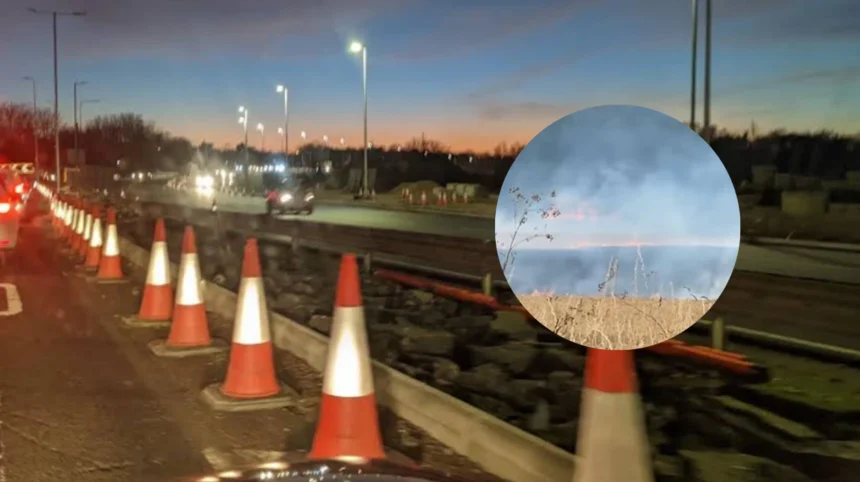
Cambridge Fire (Cambridge Tribune) August 03, 2026 – Firefighters were called to a field fire near the A10 at Meldreth, Melbourn, at 6.25pm on Sunday evening. On arrival, crews found a field affected by flames which had spread to nearby fencing and the tree line.
- Key Points
- How did firefighters tackle the blaze near the A10?
- Why is the Meldreth fire being treated as deliberate?
- What is the wider context of field fires in Cambridgeshire?
- Drought and hot weather increase fire risk
- How can the public help with investigations into deliberate fires?
- Background to the development at Meldreth
- Prediction: How could this development affect local residents and road users?
As reported by Cambridge News, a fire spokesperson said:
“Firefighters responded to a field fire near the A10 at Meldreth, Melbourn at 6.25pm yesterday evening. Crews from Gamlingay and Cambridge responded. Firefighters arrived to find a field affected, which spread to fencing and the tree line. Firefighters used beaters and hose reels to extinguish the fire. Crews returned to their stations by 8.15pm.”
The cause of the fire is believed to be deliberate, according to reporting from Cambridge News.
How did firefighters tackle the blaze near the A10?
Cambridgeshire Fire and Rescue deployed crews from Gamlingay and Cambridge to the scene. On arrival, firefighters assessed the extent of the fire, which had moved beyond the field itself to involve fencing and vegetation along the tree line.
The fire service said crews used beaters hand tools designed to smother low-level vegetation fires alongside hose reels to bring the blaze under control and fully extinguish it. Operations concluded with all crews back at their stations by 8.15pm, the fire service confirmed.
Why is the Meldreth fire being treated as deliberate?
The cause of the fire is believed to be deliberate, Cambridge News reported. The wording indicates that initial assessments by responders or subsequent inquiries point towards human action rather than an accidental ignition.
Cambridgeshire Fire and Rescue routinely works with Cambridgeshire Police on incidents where arson is suspected, and members of the public with information are often encouraged to contact police via the force’s website or Crimestoppers. In this case, the reporting does not include a direct police statement, but the classification as “deliberate” signals that investigators are treating the incident accordingly.
What is the wider context of field fires in Cambridgeshire?
Cambridgeshire has seen a series of field and farm-related fires in recent weeks, with the fire service warning that dry conditions increase the risk of rapidly spreading blazes.
In late July, Cambridgeshire Fire and Rescue attended more than 20 fires within a matter of hours, with farmland identified as the biggest risk at the time. On Sunday, around 50 firefighters dealt with a suspected arson at a field at Whittlesey, while another deliberate bales fire in a field at Ramsey required crews to work through the night to prevent spread.
The service has previously highlighted that accidental ignitions – such as from agricultural machinery – also occur, including a combine harvester fire in Meldreth that spread to five acres of farmland in July, which was recorded as accidental.
Drought and hot weather increase fire risk
The broader backdrop includes very low rainfall and hot weather, which led to a drought being declared across Cambridgeshire. Under such conditions, dry grass, crops and hedgerows ignite more easily and fires can spread quickly, particularly in open countryside and near transport corridors such as the A10.
Fire crews have repeatedly urged the public to take extra care not to start fires, whether through discarded smoking materials, barbecues, or other heat sources in rural and semi-rural areas.
How can the public help with investigations into deliberate fires?
Where fires are suspected to be deliberate, authorities rely on information from local residents, motorists and landowners. Cambridgeshire Police encourages anyone with information to submit an online report via the force’s website or to contact Crimestoppers anonymously on 0800 555111.
Witnesses who saw people in the area before the fire started, or who noticed vehicles or unusual activity near fields or tree lines, can provide crucial details for investigators.
Background to the development at Meldreth
The Meldreth field fire fits into a pattern of open-land incidents across Cambridgeshire during a prolonged dry spell. The A10 corridor has seen multiple grass and field fires in recent weeks, some accidental and some treated as deliberate.
Cambridgeshire Fire and Rescue maintains an incidents log on its website, recording time, location, resources deployed and, where known, the cause. For the Meldreth incident, the service recorded the 6.25pm call time, attendance by Gamlingay and Cambridge crews, involvement of fencing and tree line, use of beaters and hose reels, and an 8.15pm conclusion. The “deliberate” classification places this incident alongside other suspected arson cases in the county during the same period.
Prediction: How could this development affect local residents and road users?
If fires near major routes such as the A10 continue to occur, especially where they are suspected to be deliberate, local residents, commuters and businesses could face several effects.
- Road safety and disruption: Fires close to the carriageway can produce smoke that reduces visibility and may lead to temporary lane closures or speed restrictions while crews work. Repeated incidents could increase journey-time uncertainty for those using the A10 between Meldreth, Melbourn and surrounding villages.
- Pressure on emergency services: Each additional call-out draws crews and appliances away from other potential incidents, particularly during periods when the service is already dealing with a high volume of fires. This can lengthen response times elsewhere if multiple incidents occur simultaneously.
- Environmental and property risk: Fires that spread to fencing, tree lines and nearby structures increase the risk of damage to private property and habitats, especially in dry conditions where flames can move quickly.
- Community confidence: A pattern of deliberate ignitions can affect how safe residents feel in rural and semi-rural areas, potentially prompting calls for more visible patrols, lighting or other preventive measures.
For regular road users and local communities, the most likely near-term impact is an elevated risk of short-term disruption when fires occur, alongside a greater reliance on public cooperation to help identify those responsible.