

Key Points
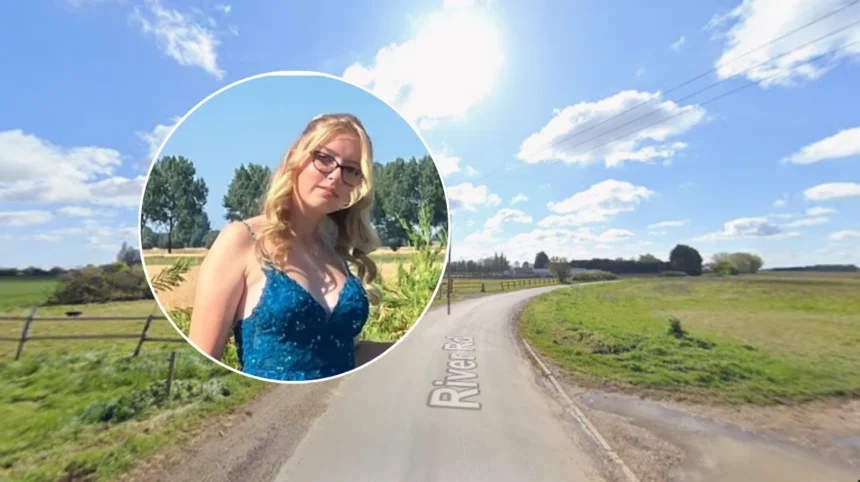
- Sixteen-year-old Eden Bunn screamed “Declan” seconds before the Volkswagen Polo rolled and plunged into the River Nene on North Brink, Wisbech.
- Eden and the 18-year-old driver, Declan Berry, died in the crash on March 17.
- An inquest at Vantage House in Huntingdon concluded that Eden died from a head injury caused by the collision.
- Evidence presented in court showed Declan was driving at speeds up to 90mph on a 60mph road in an attempt to show off.
- A front-seat passenger asked Declan to slow down, but he replied, “We will be fine.”
- Written statements indicated the car may have hit a pothole or uneven patch of road before Declan lost control, shouted “Oh shit,” and went into the water.
- Three surviving teenage passengers climbed out through a broken window in the dark to reach safety.
- A separate inquest found that Declan died from drowning and had three penalty points on his licence at the time of the crash.
WISBECH (Cambridge Tribune) September 22, 2026— A 16-year-old girl screamed her driver’s name seconds before the vehicle she was travelling in rolled through the air and plunged into the River Nene, an inquest has heard. Eden Bunn, from Sutton Bridge in Lincolnshire, died alongside 18-year-old driver Declan Berry when the Volkswagen Polo they were in left the road at high speed on North Brink, Wisbech.
- Key Points
- What evidence was presented regarding the vehicle’s speed and road conditions?
- How did the surviving passengers escape the submerged vehicle?
- Background of Road Safety Concerns and Infrastructure along North Brink
- Future Impact: What This Outcome Means for Young Drivers and Regional Road Infrastructure
The formal inquest into the death of Eden Bunn concluded at Vantage House in Huntingdon on Tuesday, September 22, 2026. Area Coroner Elizabeth Gray confirmed that the cause of Eden’s death was a head injury sustained during the road traffic collision.
What evidence was presented regarding the vehicle’s speed and road conditions?
As reported by Hunni Haynes of Cambridgeshire Live, the court heard written statements from the surviving passengers who were inside the car at the time of the crash. The vehicle contained five teenagers aged between 16 and 18 when the incident occurred on March 17.
According to evidence read in court from a front-seat passenger, Declan Berry had been driving at speeds of around 90mph along North Brink, a rural route subject to a 60mph limit. As reported by John Elworthy of the Wisbech Standard, the witness stated that they had met Declan at a local McDonald’s before accepting an invitation to go for a drive, believing that Declan “intended to show off”.
When the front seat passenger asked Declan to “slow down”, the teenage driver reportedly replied: “We will be fine”. A second passenger described the atmosphere in the vehicle as “eerie”, adding that they had not voiced concern regarding the speed because they were already “accustomed” to Declan driving fast.
Written statements further detailed that the rural road contained “numerous potholes” and “uneven surfaces along its length”. The front-seat passenger told the court that a pothole possibly caused the vehicle to suddenly lose control. Another survivor recalled hearing a distinct “thud” moments before the vehicle began to destabilise.
How did the surviving passengers escape the submerged vehicle?
As detailed by reporting from ITV News Anglia and Cambridgeshire Live, the unnamed 18-year-old front passenger recalled Declan attempting to regain control of the Volkswagen Polo before shouting “Oh shit” as the car left the carriageway.
A local resident, identified in court as Thomas, was near the River Nene when the incident occurred. In a written statement read to the court, Thomas described hearing a “loud impact” and seeing the car “rolling through the air” before crashing into the water. He noted hearing “multiple people screaming” and immediately contacted emergency services before rushing toward the river to assist survivors.
One surviving passenger recalled the car “flipping” and rolling down the embankment into the river, noting that at one point they feared they “may not be able to escape”. Three passengers—two 16-year-old girls and an 18-year-old boy—managed to free themselves from the submerged wreck. The 18-year-old witness explained that he escaped through a broken passenger window into pitch-black water, telling police officers he was unable to see where the other occupants were as he swam to safety.
Statements read in court confirmed that Eden Bunn shouted “Declan” moments before the car entered the water.
A separate inquest into the death of Declan Berry, conducted on Monday, September 21, established that the 18-year-old died of drowning. The court was told that Declan held three penalty points on his driving licence at the time of the crash.
Following her passing, Eden’s family released a tribute describing her as the “kindest” and “most loving girl”. They added: “Her horses – Daisy and Dolly – were her world, and she was ours. Words cannot describe the tragedy that will stay with us until we are able to meet her again”.
Background of Road Safety Concerns and Infrastructure along North Brink
The tragedy on North Brink brings renewed focus to long-standing issues surrounding rural road safety, young driver casualties, and highway maintenance across Cambridgeshire. North Brink runs parallel to the River Nene, featuring stretches of narrow carriage, steep bankings leading directly to deep water, and limited barrier protection along specific sections.
According to road safety statistics from the Department for Transport (DfT), young drivers aged 17 to 24 remain disproportionately represented in fatal rural crashes across the United Kingdom. Factors such as high speed, nighttime driving with multiple peer passengers, and limited road experience frequently contribute to loss-of-control incidents.
Additionally, rural routes like North Brink are susceptible to severe surface degradation caused by heavy agricultural traffic and seasonal weather cycles. The presence of significant potholes and uneven road surfaces on high-speed rural routes has been a persistent subject of debate among local residents and regional parish councils, who have repeatedly called for enhanced surface repairs, lower speed limits, and improved safety barriers adjacent to open waterways.
Future Impact: What This Outcome Means for Young Drivers and Regional Road Infrastructure
The findings from this inquest are expected to have a direct and lasting impact on young motorists, local residents of Wisbech, and regional transport authorities across Cambridgeshire.
- Heightened Scrutiny on Rural Road Maintenance: The court’s highlight of “numerous potholes” and uneven surfaces as contributing factors to a fatal loss of control at high speeds will likely increase public pressure on Cambridgeshire County Council and highways maintenance contractors. Local communities along the River Nene corridor are expected to demand urgent road resurfacing and structural inspections to address hazardous surface defects.
- Renewed Calls for Speed and Safety Measures on Riverbank Routes: Community advocacy groups and local representatives may use the inquest’s findings to campaign for reduced speed limits along North Brink—lowering the current 60mph limit—alongside the installation of continuous safety barrier fencing to prevent vehicles from entering the River Nene during severe collisions.
- Impact on Young Driver Policy and Road Safety Campaigns: Educational institutions and road safety charities across the East of England are likely to integrate the circumstances of this case into regional safety campaigns. The case underscores the extreme hazards of peer-pressure driving, carrying multiple passengers, excessive speeding, and rural hazard perception for newly qualified drivers.