Key Points
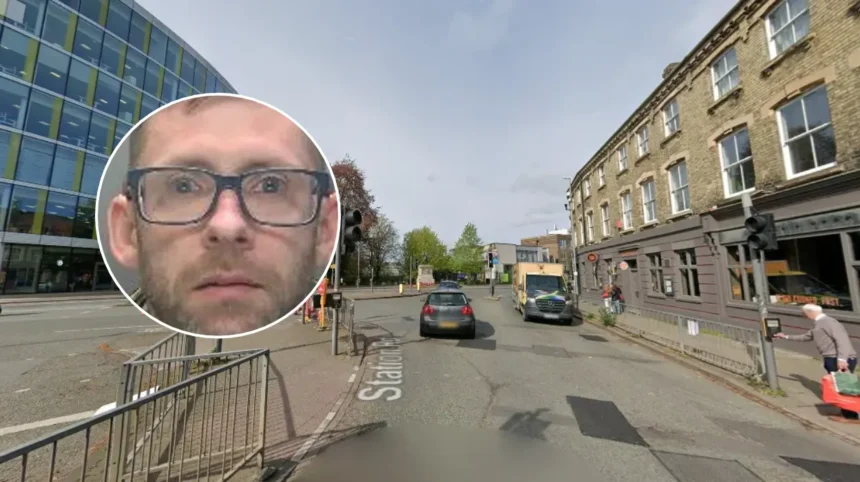
- Cambridge Crown Court sentenced 38-year-old Jamie Keegan, of Vars Road, Hampton Hargate, Peterborough, to two years and two months in prison.
- Keegan pleaded guilty to stalking involving serious alarm or distress after a brief relationship ended.
- Over nearly two years, Keegan created fake social media accounts, sent threats of self-harm, found the victim’s home address, and sent her a photograph of himself holding a rope nearby.
- Keegan also contacted the victim’s family, friends, and colleagues, leading her workmates to escort her to her car after shifts.
- Detective Constable Ryan Burke of Cambridgeshire Constabulary stated that repeated unwanted contact constitutes stalking rather than persistent affection.
Peterborough (Cambridge Tribune) October 20, 2026 – A 38-year-old Peterborough man who subjected his ex-partner to a terrifying, long-running stalking campaign after refusing to accept the breakdown of their brief relationship has been jailed for more than two years at Cambridge Crown Court.
- Key Points
- Why Was Jamie Keegan Sentenced to Prison at Cambridge Crown Court?
- How Did the Harassment Escalate Over Time?
- What Actions Led to Keegan Tracking the Victim’s Home?
- What Impact Did Keegan’s Actions Have on the Victim’s Daily Routine?
- Background of the Particular Development
- Prediction: How This Development Can Affect Victims of Stalking and the Local Community
Why Was Jamie Keegan Sentenced to Prison at Cambridge Crown Court?
As reported by John Elworthy of CambsNews, Jamie Keegan, of Vars Road, Hampton Hargate, Peterborough, appeared at Cambridge Crown Court on 15 October 2026, where he was sentenced to two years and two months in prison after pleading guilty to stalking involving serious alarm or distress.
The court heard that Keegan began harassing the victim in December 2024 after she brought an end to their relationship, which had lasted just one month.
Throughout the following year, the victim attempted to remain supportive, but Keegan continued to pursue a romantic connection and reacted with anger whenever she reasserted that she wished to remain strictly friends.
How Did the Harassment Escalate Over Time?
According to reporting by The Hunts Post, when the victim attempted to sever all contact, Keegan’s conduct became increasingly manipulative and threat-driven.
The victim attempted to block Keegan across multiple social media platforms, but he circumvented her efforts by setting up numerous fake accounts to maintain a constant stream of unwanted communication.
By December 2025, after the victim directly told him to leave her alone, Keegan escalated his efforts by sending images of self-harm and threatening to take his own life in order to distress and coerce her.
What Actions Led to Keegan Tracking the Victim’s Home?
As reported by Hits Radio, Keegan’s dangerous fixations reached a climax when he succeeded in discovering the physical location of the victim’s home address.
Upon locating her residence, Keegan sent the victim a sinister photograph of himself holding a length of rope in close proximity to her house.
Furthermore, Keegan broadened his harassment beyond the victim by attempting to contact her relatives, personal friends, and workplace colleagues.
As reported by The Hunts Post, Detective Constable Ryan Burke of Cambridgeshire Constabulary stated: “Keegan simply refused to accept that the victim did not want a relationship with him. She repeatedly made her wishes clear and tried to cut contact, but he continued to pursue her, creating fake accounts and contacting her friends, family and workplace.”
What Impact Did Keegan’s Actions Have on the Victim’s Daily Routine?
The psychological and practical impact on the victim was severe, significantly altering her everyday life and instilling a persistent sense of alarm.
At her place of work, the distress caused by Keegan’s intrusive contact reached a level where colleagues had to routinely escort the victim to her car after her work shifts ended.
During a formal interview with Cambridgeshire Police officers, Keegan openly admitted to sending a very high volume of messages, attempting to justify his actions by claiming he was seeking “accountability” from the victim.
As reported by Hits Radio, Detective Constable Ryan Burke further stated: “His relentless behaviour caused her serious distress and affected her day-to-day life, including leaving her reliant on colleagues to walk her to her car after work. This case is a reminder that if someone tells you they do not want contact, you must respect that. Repeated unwanted contact is not romantic or persistent affection; it can amount to stalking.”
Background of the Particular Development
Stalking and harassment cases involving digital circumvention—such as fake profiles and unwanted location tracking—have increasingly become a core priority for local law enforcement agencies across Cambridgeshire and the wider United Kingdom.
In recent years, legislative adjustments and updated police procedures have placed greater focus on early intervention when domestic or relational breakups transition into obsessive conduct.
Cambridgeshire Constabulary regularly urges individuals who experience non-consensual contact, social media monitoring, or threats to make formal reports early, emphasizing that coercive behaviours, threats of self-harm, and persistent unsolicited messages form clear legal evidence of stalking under current statutory definitions.
Prediction: How This Development Can Affect Victims of Stalking and the Local Community
This sentencing outcome is expected to reinforce legal boundaries within the Peterborough area and offer reassurance to individuals experiencing domestic harassment or obsessive contact following relationship breakups.
For victims of stalking, the custodial sentence of 26 months handed to Jamie Keegan serves as a visible precedent that law enforcement and the judicial system treat persistent messaging, multi-account harassment, and physical intimidation as serious criminal acts rather than private disputes.
For the wider community and potential offenders, the case highlights that breaching personal boundaries and failing to respect an individual’s explicit refusal of contact carries direct criminal consequences, which can lead to immediate imprisonment.