
Key Points
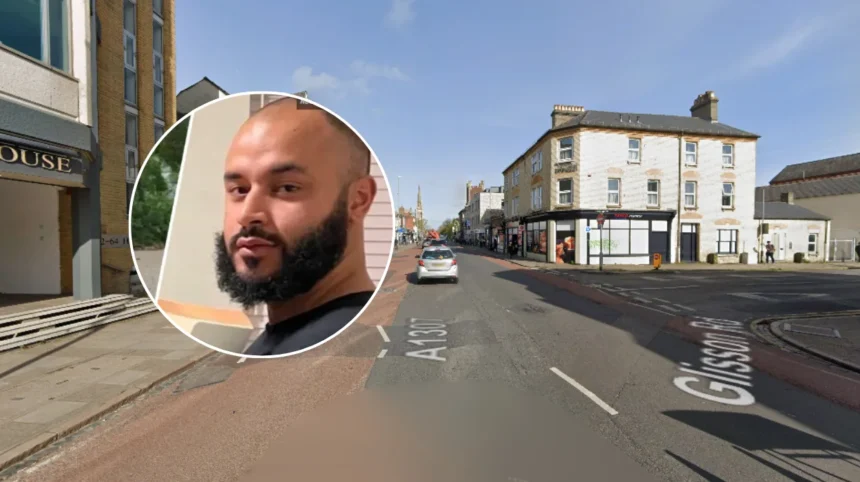
- Authorities arrested 29-year-old Rayquon Brown of Canton, Massachusetts, charging him with murder, carrying a firearm without a license, being an armed career criminal, and conspiracy to commit murder.
- The victim, 32-year-old Xavier Bautista, was a Cambridge Department of Public Works employee and father to a five-year-old son.
- Multiple masked individuals confronted Bautista at around 4:00 a.m. on July 4, 2026, as he walked to an early overtime shift in his navy-blue city uniform.
- Prosecutors said security camera footage shows Brown aiming what appeared to be a handgun while acting as a lookout and potential backup during the shooting.
- Brown was held without bail following his arraignment in Cambridge District Court, with investigators noting no known prior link between Brown and Bautista.
- The fatal shooting raised safety worries among residents in The Port neighbourhood and renewed local debate over the city’s decision to deactivate its ShotSpotter system.
CAMBRIDGE (Cambridge Tribune) September 17, 2026 — A 29-year-old Canton resident has been arrested and remanded in custody without bail in connection with the fatal Fourth of July shooting of an off-duty Cambridge Department of Public Works employee who was ambushed on his way to work.
As reported by Benjamin Pierce of Patch, Rayquon Brown was taken into custody following an extensive joint investigation conducted by local and state authorities. Brown faces charges of murder, carrying a firearm without a license, being an armed career criminal, and conspiracy to commit murder in relation to the death of 32-year-old Xavier Bautista.
As detailed in an official press release issued by Middlesex District Attorney Marian Ryan and Cambridge Police Commissioner Pauline Wells, emergency services received a 911 call from pedestrians at approximately 5:24 a.m. on July 4, 2026. Responding officers and medical personnel located Bautista lying between a parked vehicle and the curb near the intersection of Norfolk Street and Broadway. Bautista was pronounced dead at the scene, with an autopsy performed by the Office of the Chief Medical Examiner confirming he died from two gunshot wounds.
What Led to the Fatal Ambush of Xavier Bautista?
Investigators established that Bautista left his residence at approximately 4:00 a.m. dressed in his navy-blue Cambridge Department of Public Works uniform. As reported by Marc Levy of Cambridge Day, Bautista was a two-year city employee within the Solid Waste Division and was scheduled to work an early overtime shift over the holiday weekend.
According to official police statements cited by Boston 25 News, Bautista was confronted shortly after leaving his home by multiple masked individuals who shot him and fled the scene in a white Dodge Ram pickup truck.
As reported by Patch, law enforcement officials utilized CCTV surveillance footage and witness statements to identify Brown’s vehicle at the scene. Prosecutors allege that during the attack, Brown acted as a lookout and potential backup, holding an object consistent with a handgun and extending his arm as if aiming. Authorities confirmed there is currently no known prior connection between Brown and Bautista, and the motive remains under active investigation.
Following the arraignment in Cambridge District Court, City Manager Yi-An Huang sent a statement to municipal staff, describing Bautista as “a valued colleague and beloved by his family and friends,” while calling on the community to support his family, including his fiancée Demetris Grimsley and their five-year-old son.
What Is the Background of This Particular Development?
The murder of Xavier Bautista occurred against a backdrop of ongoing civic debate regarding public safety infrastructure and police technology within the city of Cambridge.
In the months preceding the shooting, the Cambridge City Council made the policy decision to deactivate the city’s ShotSpotter acoustic gunshot detection system. The decision followed widespread council discussions on police surveillance, budget allocation, and the overall efficacy of automated gunshot alerts.
Following Bautista’s death, local residents and civic commentators raised critical questions regarding whether the presence of active gunshot detection technology would have alerted first responders to the scene immediately at 4:30 a.m., rather than relying on pedestrians who discovered the victim nearly an hour later at 5:24 a.m.. In response to community concerns regarding safety, particularly within The Port neighbourhood, the Cambridge Police Department confirmed it has deployed increased patrols across the district to reassure residents while state and local detectives continue to hunt for the remaining masked suspects.
What Is the Prediction for How This Development Will Affect the Local Community and Municipal Workforce?
This development is likely to have significant long-term effects on municipal operational protocols, local law enforcement strategies, and civic policy in Cambridge.
For the municipal workforce and Department of Public Works staff, the arrest provides an initial measure of legal accountability, yet safety concerns regarding early-morning shifts will remain paramount. Municipal unions and city administrators are expected to evaluate employee safety protocols, potentially introducing enhanced security measures, buddy systems, or adjusted dispatch procedures for workers commuting during off-peak hours.
For the residents of Cambridge and elected officials, the court proceedings against Rayquon Brown will keep public safety policies at the forefront of local governance. The ongoing debate over police surveillance tools, including acoustic gunshot detection systems, is expected to intensify as residents demand reassurances regarding response times and preventative policing. Consequently, the City Council may face renewed political pressure to re-examine technology-driven public safety solutions as the legal case against the suspects progresses through the court system.