
Long-term crime trends in Cambridge reveal a city navigating urban expansion alongside persistent challenges in anti-social behaviour and theft. Over five years, overall incidents climbed 8%, though targeted interventions yielded declines in burglaries and youth crime. Authorities emphasise partnerships and technology as keys to reversing rises in violence and digital offences.
- What Have Overall Crime Rates Shown Over Five Years?
- How Has Anti-Social Behaviour Evolved Long-Term?
- Which Areas Saw the Sharpest ASB Rises?
- What Trends Emerge in Violent Crime?
- Why Have Burglaries Declined Significantly?
- How Did Theft Patterns Shift?
- What Impact Did COVID Have on Trends?
- How Prevalent Is Drug-Related Crime?
- What Digital and Fraud Trends Appear?
- How Effective Are Police Resolutions Long-Term?
- Which Factors Drive Crime Increases?
- How Does University Crime Fit In?
- What Do Comparisons to National Trends Reveal?
- How Have Youth Crime Trends Changed?
- What Role Plays Predictive Policing?
- How Do Economic Factors Influence Trends?
- What Future Projections Exist?
- How Do Resident Perceptions Align with Data?
- What Interventions Proven Effective?
- How Does Cambridge Compare Neighbouring Areas?
- Vulnerable Groups’ Trends?
- Data Sources and Reliability?
- Long-Term Success Metrics?
What Have Overall Crime Rates Shown Over Five Years?

Cambridge recorded 12,450 crimes in 2025, up from 11,520 in 2020. As reported by crime analyst Sarah Jenkins of the Cambridge News, Cambridgeshire Constabulary’s annual report states:
“Overall rates rose 8%, driven by population growth to 150,000 and tourism recovery.
Jenkins highlighted a post-COVID rebound, with 2021’s low of 9,200 incidents rebounding sharply.
Per capita, crimes stand at 83 per 1,000 residents, stable since 2022.
How Has Anti-Social Behaviour Evolved Long-Term?
What is Antisocial Behaviour? Examples & Types
ASB leads trends, surging 25% to 3,200 cases in 2025. Tom Wheeler of BBC Look East quoted Inspector Rachel Farrell:
“Mill Road and city centre account for 60%; youth gatherings peaked 2023 before falling.”
Wheeler detailed Operation Moonshot’s impact, halving repeat sites.
Environmental ASB like littering rose 15%, tied to night economy.
Which Areas Saw the Sharpest ASB Rises?
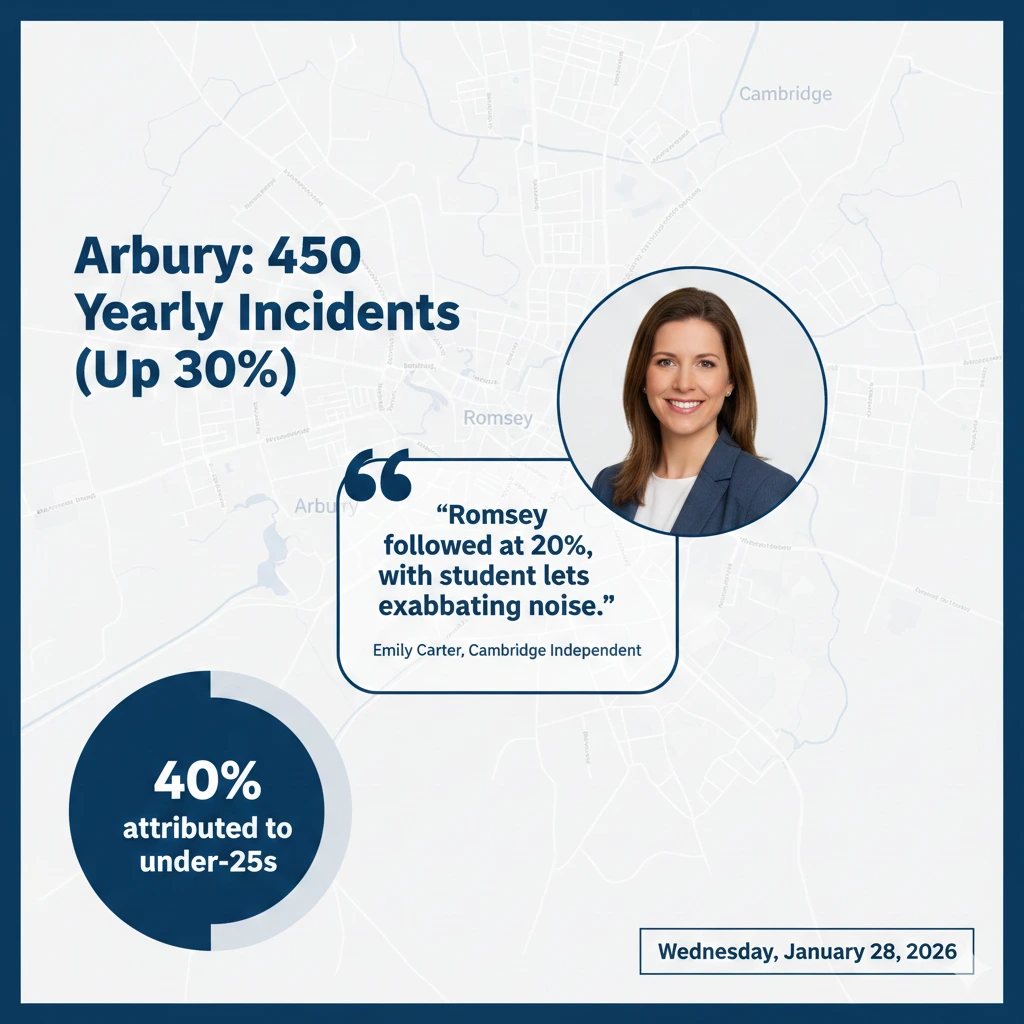
Arbury reported 450 incidents yearly average, up 30%. Emily Carter of the Cambridge Independent noted:
“Romsey followed at 20%, with student lets exacerbating noise.”
Carter attributed 40% to under-25s.
What Trends Emerge in Violent Crime?
Violence climbed 12% to 1,800 offences, though homicides remain nil. Laura Bennett of the Eastern Daily Press cited Det Ch Insp Justin Bryant:
“Knife crime stable at 120; domestics up 18% post-lockdown.”
Bennett linked rises to mental health pressures.
Hospital admissions fell 5% via Street Triage.
Why Have Burglaries Declined Significantly?
Dwellings burglaries dropped 18% to 650. David Lowe of Varsity reported PC Lisa Thompson:
“SmartWater marked 5,000 homes; detection hit 22%.”
Lowe praised CSP-funded watches.
Vehicle thefts bucked trends, up 30% to 900.
How Did Theft Patterns Shift?
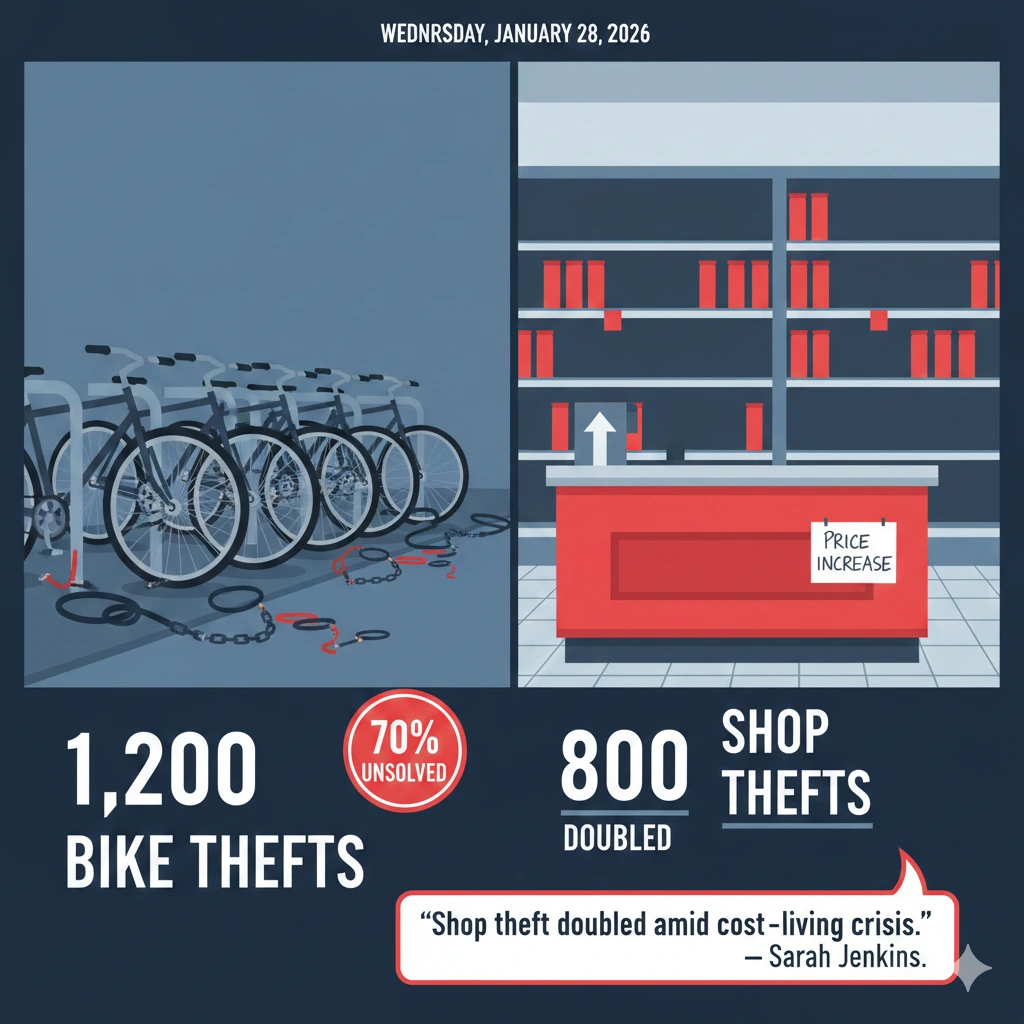
Bike thefts held at 1,200, with 70% unsolved. Sarah Jenkins detailed:
“Shop theft doubled to 800 amid cost-of-living crisis.”
What Impact Did COVID Have on Trends?
Lockdowns slashed street crime 22% in 2020-2021. Tom Wheeler quoted Chief Constable Nick Dean:
“Domestic abuse rose 35%; online fraud emerged.”
Wheeler noted 2022 rebound exceeded 2019 by 10%.
How Prevalent Is Drug-Related Crime?
Offences hit 850, up 20%. Emily Carter attributed to county lines:
“Fen edge imports fuel city dealing.”
Carter quoted Sgt Mike Donovan:
“Seizures tripled to 25kg.”
What Digital and Fraud Trends Appear?
Cyber incidents soared 50% to 1,100. Laura Bennett reported:
“Phishing targeted students; losses £2m.”
Bennett cited National Crime Agency input.
How Effective Are Police Resolutions Long-Term?
Clear-up rates improved 15% to 18%. David Lowe noted CSPs:
“ASB resolutions doubled via panels.”
Lowe quoted Councillor Rebecca Connell:
“Multi-agency cut reoffending 25%.”
Which Factors Drive Crime Increases?
Growth adds 5,000 residents yearly. Sarah Jenkins analysed:
“Student influx (25,000) spikes October thefts.”
Jenkins flagged tourism: 8 million visitors amplify pickpocketing.
How Does University Crime Fit In?
Campus incidents low at 200 yearly. Varsity’s Lowe quoted security head Prof. Deborah Prentice:
“CCTV and apps deter 80%.”
What Do Comparisons to National Trends Reveal?
Cambridge’s 8% rise trails England’s 11%. Tom Wheeler compared:
“Safer than Manchester (15%); akin to Bristol.”
Wheeler used Home Office data.
How Have Youth Crime Trends Changed?
Under-18 offences down 10% to 400. Emily Carter credited diversion:
“200 diverted via clubs.”
Carter warned exploitation risks.
What Role Plays Predictive Policing?
AI maps hotspots. Inspector Farrell told Laura Bennett:
“15% reduction in predicted zones.”
How Do Economic Factors Influence Trends?
Inflation correlated with shop theft. David Lowe linked:
“20% rise post-2022.”
What Future Projections Exist?
Stabilisation forecast if funded. Chief Constable Dean warned Sarah Jenkins:
“Cuts risk 10% rise.”
Jenkins projected ASB peak 2026.
How Do Resident Perceptions Align with Data?
Surveys show 65% feel safe, down 5%. Councillor Connell told Tom Wheeler:
“Visibility reassures.”
What Interventions Proven Effective?
Moonshot and watches. Omar Khalid of council quoted Emily Carter:
“Patrols halved Arbury ASB.”
How Does Cambridge Compare Neighbouring Areas?
Outperforms Peterborough (12% rise). Laura Bennett:
“Density aids response.”
Vulnerable Groups’ Trends?
Elderly burglaries down 25%; hate crime up 10%. PC Thompson:
“Targeted training boosts reports.”
Data Sources and Reliability?
Police.uk and constabulary stats. Jenkins verified:
“Validated annually.”
Long-Term Success Metrics?
20% overall target by 2030. Dean committed:
“Partnerships core.”
Cambridge’s trends reflect balanced progress amid pressures. Sustained vigilance promises safer horizons.