
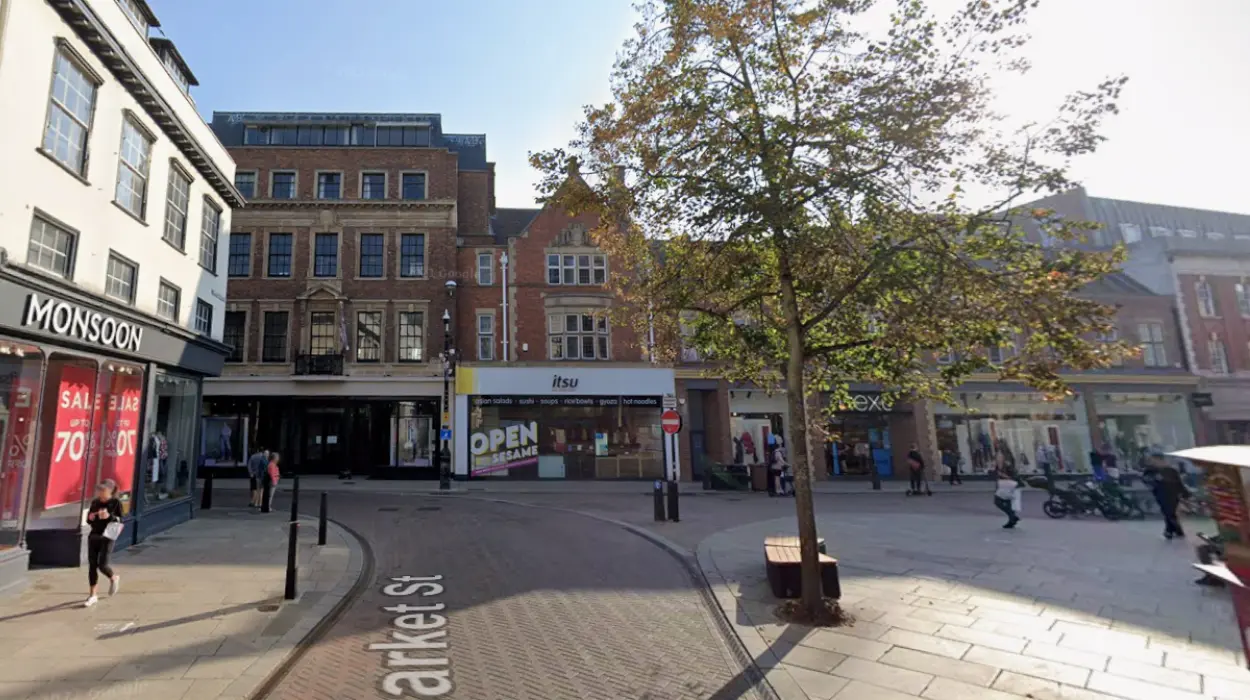
Market Ward is the bustling civic and commercial core of Cambridge, covering much of the historic city centre and its busiest streets, from the market square and surrounding lanes to key shopping frontages and public spaces. It is home to a dense mix of independent shops, national chains, cafés, restaurants, cultural venues and visitor attractions, making it one of the most visible barometers of Cambridge’s economic health.
- A Historic Market Core Shaped By Retail
- High Business Rates And Fixed Property Costs
- The Online Shift And Changing Shopping Habits
- Mixed Uses, Visitor Pressure And Retail Balance
- Policy Framework, Reliefs And Local Support
- The Cost Squeeze On Independent Traders
- The Role Of Markets, Public Realm And Experience
- Long‑Term Outlook: Adapting A High‑Cost City Centre
Yet behind the lively streetscape, many Market Ward businesses are grappling with high and rising costs, squeezed margins and structural shifts in the way people shop and spend time in the city. For small retailers and hospitality venues, the challenge is no longer just footfall, but whether the traditional city‑centre model can absorb higher overheads and still remain profitable in the long term.
A Historic Market Core Shaped By Retail
Market Ward’s identity is rooted in its historic role as Cambridge’s central trading area, anchored by the daily market on Market Hill and surrounded by a tight grid of streets lined with shops and services. The market has long provided an essential layer of flexible, lower‑cost retail space, adding diversity and accessibility to the city’s offer and drawing residents, students and tourists into the heart of the ward.
Over time, this traditional street‑and‑market retail has been joined by modern comparison‑goods centres such as the Grafton and other shopping hubs within the wider city centre, producing a multi‑node retail structure in which Market Ward remains the symbolic and practical core. Policy documents emphasise the importance of preserving a strong retail frontage, with guidance that primary shopping streets retain retail as the predominant use and that a mix of smaller and larger units is encouraged, particularly to support independents.
This historic and policy emphasis makes Market Ward central not only to shopping, but to Cambridge’s urban identity, place‑branding and visitor economy. When shops in the ward struggle, the effects are felt widely: empty units stand out in a compact centre, and any erosion of variety quickly affects perceptions of Cambridge as a vibrant, liveable city.
High Business Rates And Fixed Property Costs
One of the most significant pressures on Market Ward shops is the burden of business rates and property‑related fixed costs, which are typically higher in premium central locations. Business rates in Cambridge are calculated by multiplying the property’s rateable value by a uniform business rate multiplier, which has been rising over time; in 2024/25 the multiplier was 54.6p for standard properties and 49.9p for small businesses for every £1 of rateable value, before any relief is applied.
Because Market Ward units often have high rateable values driven by central location, historic character and strong demand for ground‑floor frontage, even modest changes in the multiplier can translate into substantial annual bills. Rates are an annual charge, normally collected in monthly installments, which means they behave as a fixed overhead rather than a flexible cost that shops can easily adjust in quieter trading periods. For small independents, this rigidity can be particularly difficult, especially when combined with rent obligations under long leases and service charges for shared spaces.
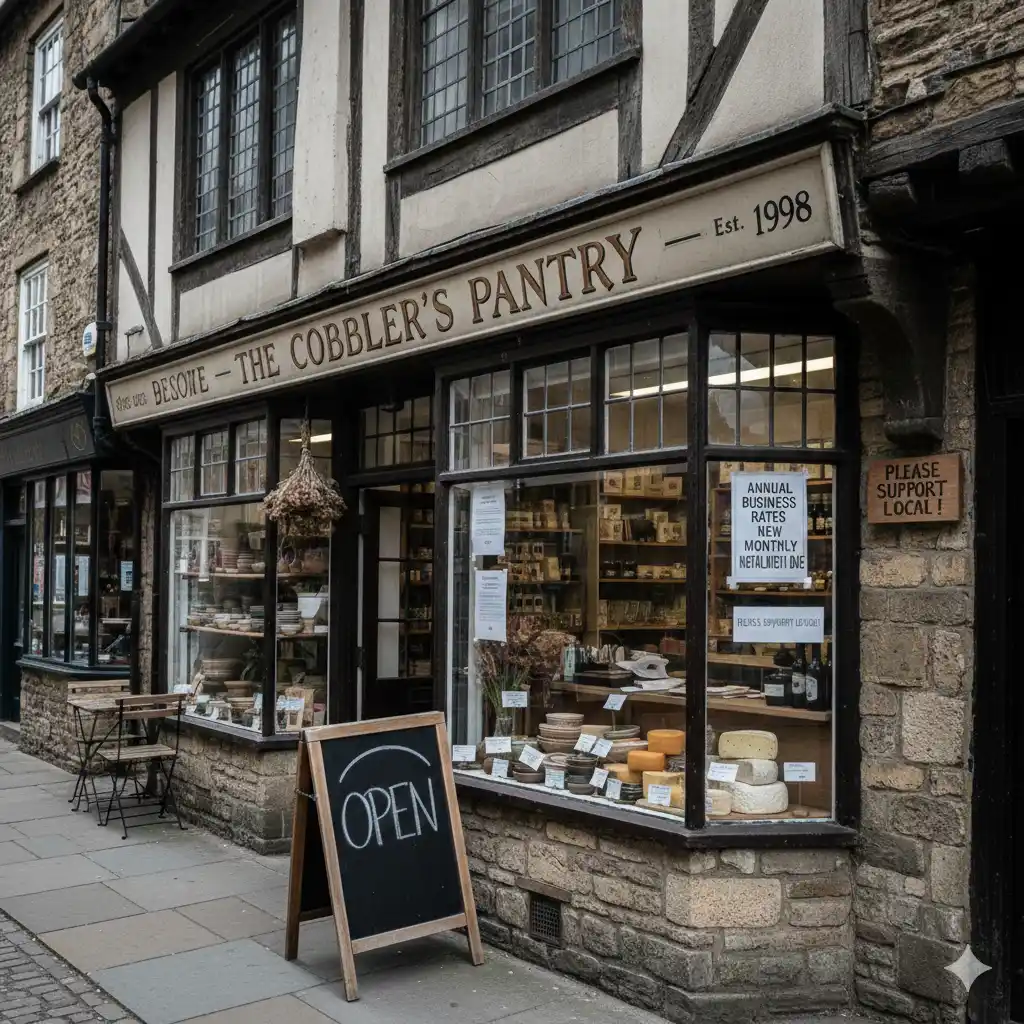
Local policy recognises the importance of smaller units and aims to resist the merging of premises in secondary frontages, partly to protect demand from small traders. However, even with zoning policies that favour diversity, the underlying level of property costs in a high‑value city such as Cambridge can still push some businesses to the brink, especially when they are competing with lower‑cost online models that do not face the same high central‑area overheads.
The Online Shift And Changing Shopping Habits
Long‑term structural changes in retail have intensified the pressure on Market Ward shops. Retail studies for Cambridge and the wider sub‑region show that online spending has grown rapidly over the past two decades, driven by convenience, competitive pricing and the proliferation of e‑retailing platforms. Even during periods of broader economic uncertainty, online channels have continued to capture a rising share of comparison‑goods expenditure, reshaping expectations of what a “trip to town” is for.
These studies highlight that while overall retail expenditure grew faster than incomes for many years, much of this growth did not translate into proportional demand for traditional floorspace because it was absorbed by more space‑efficient formats and digital channels. In the future, forecast growth in comparison‑goods spending is expected to be more modest, at around 1.5 – 2.5% per year in real terms, meaning the era of easy, high‑growth retail expansion is over.
For Market Ward this presents a strategic challenge. Central Cambridge is less about bulk purchases and more about experience, browsing, hospitality and culture, but even in these sectors online options from food delivery platforms to digital entertainment compete for the same household budgets. Shops that once relied on steady local custom must now differentiate themselves through service, curation and events, all while managing high fixed costs that their online rivals do not share.
Mixed Uses, Visitor Pressure And Retail Balance
Market Ward functions as far more than a discrete shopping district; it is a dense mixed‑use urban core that combines retail, hospitality, offices, cultural venues, university uses and public spaces. Planning studies for Greater Cambridge emphasise the need to maintain a balanced mix, with retail remaining the predominant use along key frontages but with complementary leisure and service uses strengthening the overall city‑centre offer.
This mix brings both opportunities and pressures. High visitor numbers, including tourists and students, support spending on food, drink and souvenirs, but also contribute to competition for space, higher rents and the prioritisation of certain “safe” formats that can reliably pay top‑end property costs. Some policy documents identify specific areas, such as the Fitzroy/Burleigh Street/Grafton corridor, as primary locations for additional comparison retail and mixed uses, highlighting a strategy to absorb growth while managing impacts across the centre.
For Market Ward’s smaller streets and historic lanes, this can create a delicate balancing act. On the one hand, they benefit from the gravitational pull of larger centres and anchor stores; on the other, they risk being overshadowed if larger schemes draw too much trade or drive up local expectations for commercial returns. Maintaining an active frontage with a core of independent shops, cafés and specialist services becomes essential for preserving character, yet these are precisely the operators most exposed to rising costs and volatile takings.

Policy Framework, Reliefs And Local Support
The policy environment in Cambridge plays a central role in shaping how Market Ward businesses experience high costs. Business rates are set within a national framework, but the City Council has responsibility for administering bills, advising on reliefs and managing aspects of local economic development. Retail, hospitality and leisure businesses can benefit from targeted rate relief schemes in some years, and there is often a differentiated multiplier for small businesses with lower rateable values, though thresholds may exclude many high‑value city‑centre properties.
From April 2026, Cambridge has signalled a banded approach for business rate multipliers, with distinct rates for small businesses, standard properties and high‑value premises with rateable values of £500,000 or more. In principle, such banding can introduce a degree of progressivity, but again, Market Ward’s central units often sit in higher‑value categories, meaning that reliefs do not fully offset the pressure of underlying valuations.
Beyond rates, planning policies aim to support the vitality of the city centre by: keeping retail as the dominant use in primary frontages, resisting excessive amalgamation of units, and ensuring new developments accommodate smaller spaces suitable for local traders. Strategic studies also stress the importance of protecting a diverse mix of retail, recognising that an over‑dominance of a few large formats can undermine long‑term resilience and local distinctiveness. However, turning these principles into day‑to‑day security for individual shops is complex, particularly when broader market dynamics continue to push costs upward.
The Cost Squeeze On Independent Traders
Independents are often at the heart of Market Ward’s appeal, offering niche products, local food, specialist books, crafts and services that differentiate Cambridge from generic high‑street destinations. Yet these businesses typically operate on thinner margins and have less ability to absorb shocks than national chains, making them particularly vulnerable to the combined effects of high rent, rates, energy costs and staff expenses.
Retail studies in the region underline a wider pattern in which small shops across traditional centres face a multi‑layered squeeze: slower growth in consumer spending, intense price competition, the rise of multi‑channel retailing and increased operating costs, from utilities to compliance. In a compact, high‑profile ward such as Market, these pressures may manifest quickly in the form of turnover in tenancies, short‑term pop‑ups and occasional vacant units, which in turn affect the perception of stability and confidence.
Independents often respond with creative strategies: focusing on curated ranges, offering in‑person expertise, organising events and leveraging online channels for marketing and sales while using their central premises as a showroom and community hub. However, these innovations demand time, skills and investment that some smaller operators struggle to provide while managing day‑to‑day survival, making support from local networks, advisers and business organisations a critical part of the ward’s ecosystem.
The Role Of Markets, Public Realm And Experience
A distinctive advantage for Market Ward lies in its public realm and the presence of a long‑standing daily market, which adds texture and accessibility to the retail offer. Public markets can create lower‑barrier opportunities for micro‑businesses, seasonal traders and start‑ups to test products and build a customer base before moving into more permanent premises, enriching the overall retail ecology.
Planning and economic studies in the wider Cambridge area emphasise the importance of high‑quality public spaces, active ground floors and cultural vibrancy in sustaining central districts under modern retail conditions. Streets that are pleasant to walk, safe, well‑maintained and animated by events encourage longer dwell times, higher incidental spending and repeat visits, all of which can help offset cost pressures by raising revenue potential.

For Market Ward shops, investment in the public realm, wayfinding and cultural programming can be as significant as direct financial support, because they expand the underlying “pie” of footfall and engagement. However, these improvements must be balanced against concerns that enhancements can further raise area values and, over time, feed back into higher rents and rateable values, reinforcing the high‑cost cycle that the ward is already experiencing.
Long‑Term Outlook: Adapting A High‑Cost City Centre
Looking ahead, evidence from retail and leisure studies suggests that city centres like Cambridge’s core will remain central to regional economies, but that their roles will continue to evolve away from purely transactional shopping towards experience‑rich, mixed‑use environments. Growth in retail expenditure is expected to be modest, and much of the dynamism will come from services, leisure, culture and hybrid models that blend online and offline presence.
For Market Ward, this implies a long‑term need to: keep a critical mass of active retail frontages, nurture independent and niche offers that differentiate Cambridge, and ensure that public spaces and transport connections support high, sustainable levels of footfall. At the same time, policy‑makers will need to consider how tools such as rate reliefs, zoning, flexible use‑class approaches and targeted business support can prevent the centre from becoming accessible only to the most deep‑pocketed operators.
The ward’s future resilience will likely rest on three interlocking factors: the ability of small and medium‑sized traders to adapt their business models, the willingness of landlords and institutions to take a long‑term view of occupancy and diversity, and the effectiveness of local government strategies in balancing growth with inclusion. If these elements align, Market Ward can remain a vibrant, if high‑cost, heart of Cambridge that continues to blend tradition with innovation in the decades to come.