
Shaping North Cambridge represents an 80 million pound strategic regeneration framework led by Cambridge City Council to modernise housing, retail centers, and public infrastructure across the Arbury and King’s Hedges wards. The plan targets long-standing structural issues in local estates while delivering over 400 modern homes.
- What is the history of urban development in Arbury and King’s Hedges?
- What are the key components of the North Cambridge redevelopment plan?
- How will the regeneration process be executed across local neighbourhoods?
- What real-world changes will residents and businesses experience in Arbury and King’s Hedges?
- What statistics and research support the North Cambridge framework?
- What are the long-term socioeconomic implications for Arbury and King’s Hedges?
- How will current council tenants be supported during demolition?
- What happens to existing shops at Arbury Court during construction?
- Will the total amount of social housing decrease after redevelopment?
- When will physical construction work begin on the sites?
- How will green spaces and parks be affected by the plan?
The North Cambridge Framework for Change serves as the overarching corporate strategy for long-term municipal investment in northern residential districts. Established by Cambridge City Council following initial community consultation cycles in May 2025 and formal adoption steps late in 2025, the framework establishes direct interventions for sites suffering from physical degradation, building defects, and socioeconomic challenges. The designated geographical scope focuses heavily on Arbury, King’s Hedges, and adjacent sections of Chesterton.
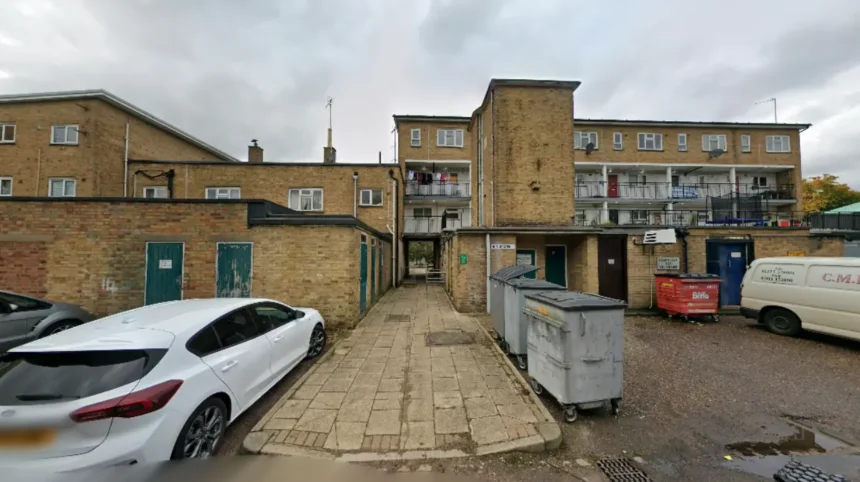
The core catalyst for the investment framework involves replacing aging council housing stock that exhibits critical structural failures, persistent damp, and elevated fire safety hazards. Municipal site assessments identified 149 council flats across Arbury Court, the Kingsway estate, and Brackley Close that require complete demolition due to prohibitive refurbishment costs. Furthermore, the city council structured compulsory acquisition pathways for 46 privately owned flats and five private houses integrated within the structural footprints of these target redevelopment sites.
Urban regeneration within this framework balances social housing replacement with open-market real estate construction. The strategic outline guarantees a minimum one-to-one replacement of all demolished social housing units while expanding total residential capacity on municipal land. By introducing private sector housing alongside upgraded local commercial space, Cambridge City Council aims to create mixed-income neighbourhoods while securing modern, energy-efficient operational standards across all replacement properties.
The framework aligns municipal housing policy with broader economic growth models across the Greater Cambridge sub-region. Because North Cambridge sits directly adjacent to major commercial employment hubs like Cambridge Science Park and St John’s Innovation Centre, civil planners designed the regeneration framework to improve spatial connectivity, pedestrian routes, and public transit linkages between working districts and residential zones.
What is the history of urban development in Arbury and King’s Hedges?
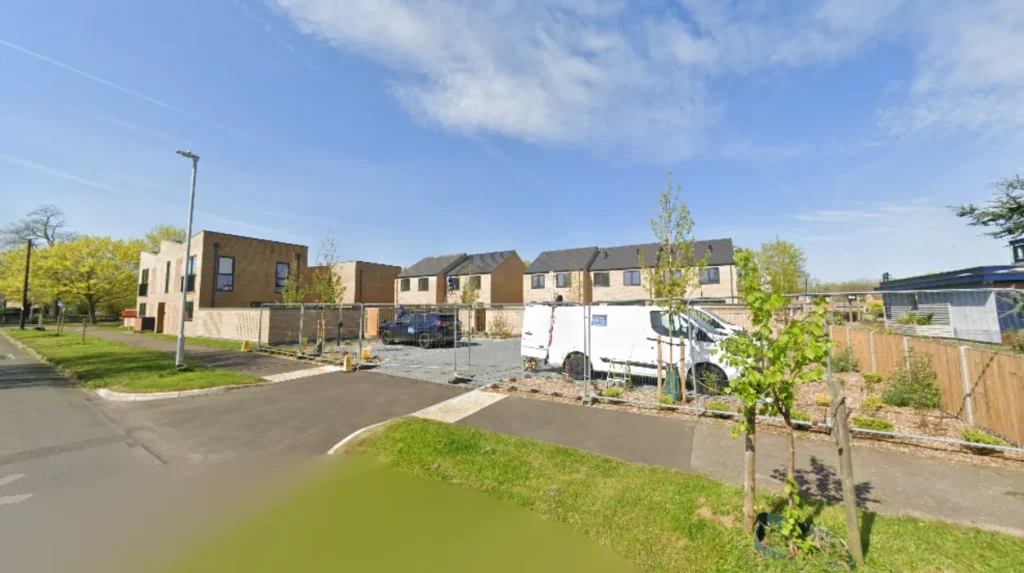
Arbury and King’s Hedges developed primarily during the post-war housing expansions of the 1950s, 1960s, and 1970s to accommodate growing industrial and university populations in northern Cambridge. Rapid construction methods yielded suburban council estates that later required substantial structural upgrades.
The historical footprint of Arbury traces back to ancient Roman transport routes, specifically Akeman Street, which ran directly through the modern ward boundaries. Agricultural fields dominated the area until Cambridge City Council initiated major residential master planning in the early 1950s. Construction of the Arbury estate began in 1957, utilizing modern suburban layouts characterized by cul-de-sacs, dedicated green space buffers, and centralised neighborhood shopping precincts.
King’s Hedges emerged shortly thereafter as a distinct municipal development zone during the late 1960s and 1970s. Named after a historic royal hunting enclosure documented in medieval land records, King’s Hedges was built to resolve severe mid-century housing shortages. Urban planners implemented industrialized construction techniques, including prefabricated concrete components and high-density flat blocks, to maximize housing output within tight capital timelines.
Commercial hubs like Arbury Court opened in the 1960s to serve as community retail cores, housing essential local amenities, independent grocers, and public library branches. However, the building materials and structural designs popular during mid-century municipal expansion proved vulnerable to long-term environmental degradation. Over decades, System Built concrete systems exposed residences to thermal inefficiency, water ingress, and localized structural decay.
By the early 2000s, targeted regeneration projects began addressing specific estate failures across northern Cambridge. Early interventions included the redevelopment of the former Manor School site into Arbury Park in the late 2000s. The 2025 North Cambridge Framework for Change represents the largest comprehensive municipal investment strategy since the original post-war construction eras, marking a complete shift from incremental estate repairs to total site replacement.
What are the key components of the North Cambridge redevelopment plan?
The redevelopment framework comprises 400 new homes, completely rebuilt commercial precincts, relocated public amenities, and reconfigured community green spaces. The physical works focus primarily on the Arbury Court retail hub and the nearby Kingsway residential estate.
The residential allocation delivers over 200 new council homes alongside over 200 market-rate private homes. At the Arbury Court site, contractor plans clear existing mixed-use structures to construct 107 council flats and 106 private residences. The Kingsway estate phase demolishes deteriorating residential blocks to build 99 brand-new council units and 98 private market properties, establishing balanced tenure distributions across both development locations.
Retail and civic infrastructure undergoes complete architectural replacement under the Arbury Court master plan. The existing shopping parade will be cleared to make way for modern commercial ground-floor units specifically engineered to host current retail tenants. Civic infrastructure components incorporate a modernized library facility, dedicated public assembly space, and structural integration with the local Gurdwara, which retains freehold rights within the redevelopment boundary.
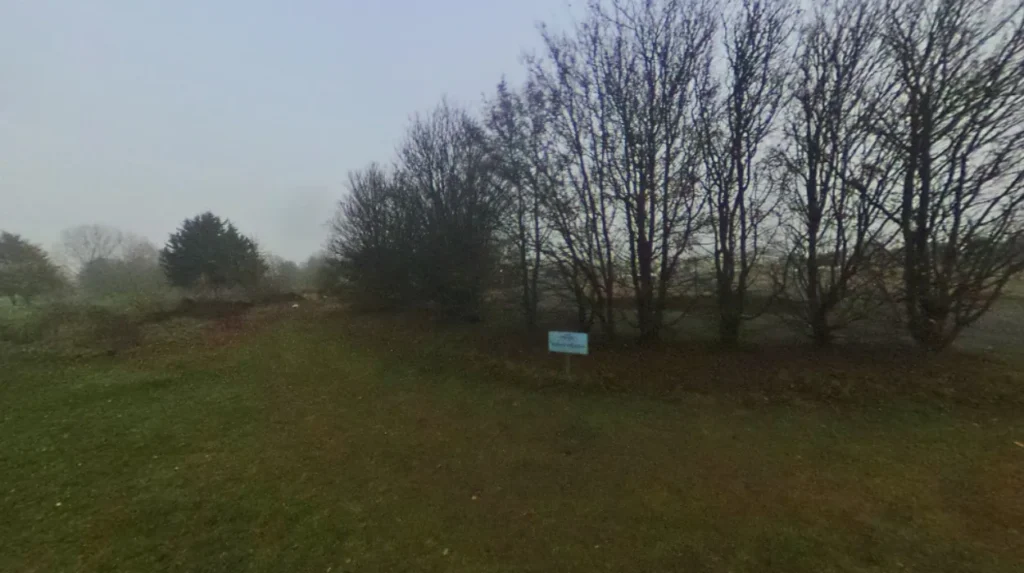
Public open space reconfiguration serves as a primary spatial anchor across all construction phases. Developers will clear the central Arbury Court park layout to construct a larger, redesigned community park and play area. Further landscape architecture improvements target green corridors across northern Cambridge, including initial investment rounds at Arbury Park and Kingsway, followed by long-term environmental works at Pulley Park, Nun’s Way Recreation Ground, and Arbury Town Park.
Transportation and street network integrations focus on creating safer pedestrian and cycle connections between key residential clusters. Works include new signalized pedestrian crossings, traffic-calming measures, and a dedicated active travel link connecting Arbury Court directly to the Kingsway housing developments. All new building structures will meet high energy-efficiency standards, utilizing modern insulation materials, heat pump systems, and solar arrays to lower household operational costs.
How will the regeneration process be executed across local neighbourhoods?
Execution occurs through phased construction schedules, formal planning applications, compulsory purchase protocols, and phased tenant relocations extending from 2025 through 2030. The council maintains strict operational rules to prevent commercial disruption and minimize resident displacement.
The project timetable established formal community engagement phases through May and November 2025 to capture localized public feedback. Following cabinet approval by Cambridge City Council in late October 2025, technical planning teams began preparing formal planning submissions targeted for official autumn 2026 application dates. Detailed site investigations, land surveys, and architectural designs continue throughout the preliminary pre-construction phase.
Tenant protection and statutory relocation frameworks enforce specific rights for displaced council residents. Starting in 2026, existing council tenants receive Band A high-priority status on the Home-Link regional housing registry to bid on alternative council properties. Statutory financial compensation mandates statutory home loss payments of 8,100 pounds for displaced council tenants, alongside full coverage of moving and logistical costs. Private homeowners facing compulsory acquisition receive 10 percent above market value for primary residences or 7.5 percent for non-resident property owners.
Phased construction sequencing guarantees that no physical resident relocation takes place prior to 2027. Construction timelines prioritize building replacement residential units in waves, allowing displaced households the statutory right to return to a newly constructed council unit once completed. Many resident groups will remain in their original properties well past 2027 until their designated replacement housing phases reach structural completion.
Commercial continuity protocols safeguard local business activity at Arbury Court throughout all construction years. Cambridge City Council established a 500,000 pound business support package to assist current retailers. Shop owners will trade continuously from existing premises or temporary local units until new commercial spaces complete construction, with full commercial transition targeting completion by 2030. Public park space access will also remain active throughout construction via temporary green space designations.
What real-world changes will residents and businesses experience in Arbury and King’s Hedges?
Residents will experience modernized living conditions with reduced utility expenses, while commercial operators transition into energy-efficient store fronts with long-term lease security. Public safety, urban accessibility, and environmental park design will see immediate physical improvements.
Housing conditions will undergo major measurable upgrades across all redeveloped council land. Residents moving out of older, damp-prone council units will transition into properties built with modern building envelopes, mechanical ventilation, and high-performance insulation. These upgrades directly lower annual heating bills for tenants while removing systemic structural defects, fire hazards, and mould issues that impacted older housing stock.
Local businesses operating in Arbury Court will shift from aging 1960s premises into state-of-the-art commercial units featuring modern utility infrastructure and improved floor layouts. The council guarantees existing shopkeepers the right to return to new leases upon completion, preserving established local retail hubs like pharmacies, post offices, and independent food markets. Financial transitional packages prevent business closures caused by temporary development disruptions.
Community safety and social spaces will change through urban design strategies like Crime Prevention Through Environmental Design. Reconfigured public squares, improved street lighting, and open sightlines across Arbury Court and Kingsway directly target historical local concerns regarding anti-social behavior and public safety. Upgraded park facilities deliver accessible play areas for children and enhanced community meeting venues.
Accessibility enhancements provide direct benefits to elderly residents and individuals with mobility impairments. Redeveloped residential buildings will incorporate level-access entries, expanded door frames, and modern elevator installations that were entirely absent in older low-rise flat blocks. Public footpaths, crossing zones, and parking arrangements will be redesigned to resolve street clutter, pavement parking, and mobility barriers across both wards.
What statistics and research support the North Cambridge framework?
Demographic statistics show elevated deprivation indicators in northern Cambridge compared to regional averages, justifying target capital expenditures. Research confirms that thermal building upgrades drastically reduce tenant health risks associated with damp and cold exposure.
Socioeconomic data published by the Ministry of Housing, Communities and Local Government places portions of King’s Hedges and Arbury within the 20 percent most deprived output areas nationally. Income deprivation, health inequalities, and lower educational attainment metrics in northern Cambridge contrast sharply with the prosperous technology-driven economy of south Cambridge. The 80 million pound municipal capital allocation represents one of the largest single public investments targeted at urban equity in the city’s modern history.
Housing quality research highlights severe structural issues across the existing 149 council homes scheduled for demolition. Municipal building surveys revealed that over 60 percent of surveyed flats in the Kingsway and Arbury Court blocks suffered from chronic thermal bridging, external wall decay, and damp penetration. UK Health Security Agency data confirms that chronic indoor damp increases respiratory illness risks by up to 40 percent, underpinning the health-based rationale for estate replacement.
Public consultation metrics recorded during the 2025 Framework for Change engagement phases demonstrated overwhelming public consensus regarding estate improvements. Over 70 percent of surveyed local residents supported structural intervention at Arbury Court and Kingsway, provided social housing capacity remained intact. Commercial feedback indicated that 85 percent of local traders viewed existing retail spaces as unfit for long-term commercial operations due to maintenance backlogs.
Environmental metrics embedded within the engineering specifications target net-zero operational standards for all new residential buildings. According to the Cambridge Local Plan carbon reduction targets, replacing post-war council stock with modern energy-efficient construction reduces annual residential carbon emissions by up to 65 percent per property. Furthermore, ecological surveys commit to achieving a minimum 10 percent net gain in local biodiversity across revised parkland layouts.
What are the long-term socioeconomic implications for Arbury and King’s Hedges?
Long-term implications include improved health outcomes, enhanced local economic activity, stabilized property values, and sustained social housing availability. The regeneration framework secures the economic and physical integration of northern Cambridge into the broader regional economy.
Socioeconomic mobility will increase as high-quality affordable housing combines with modernized commercial environments. By replacing failing housing structures with energy-efficient homes, lower-income households experience reduced fuel poverty, freeing disposable income for educational and health needs. The expanded commercial space at Arbury Court supports local business ownership and generates entry-level service employment within walking distance of primary residential areas.
Urban integration will bridge historical socioeconomic divides between northern residential wards and high-tech economic centers. Enhanced transport connections and active travel corridors link King’s Hedges and Arbury directly to employment opportunities at Cambridge Science Park and Cambridge North railway station. This spatial integration prevents geographical isolation and encourages inward private investment across northern Cambridge neighborhoods.
Community stability is protected by maintaining social housing capacity while adding open-market homes. Delivering over 200 council homes ensures that low-income families remain rooted in their historical communities rather than facing displacement to regional hinterlands. Simultaneously, introducing market-rate private housing diversifies local neighborhood demographics, encouraging broader commercial service offerings and sustained local investment.
Future municipal planning models will draw heavily from the North Cambridge Framework for Change. The successful execution of phased estate replacement, commercial support funds, and statutory tenant protections provides a scalable blueprint for urban regeneration across aging mid-century developments nationwide. Arbury and King’s Hedges will transition into resilient, modern urban districts capable of supporting healthy residential life for decades to come.
How will current council tenants be supported during demolition?
Council tenants forced to relocate receive Band A priority on the Home-Link housing system to secure alternative council housing. Displaced tenants receive 8,100 pounds in statutory compensation, moving cost support, and a guaranteed right to move into new council homes.
What happens to existing shops at Arbury Court during construction?
Shops at Arbury Court will continue operating from current premises or temporary local units throughout the construction process. Cambridge City Council offers a 500,000 pound support package and guarantees traders the right to return to new units.
Will the total amount of social housing decrease after redevelopment?
No, total social housing will not decrease under the redevelopment plan. The council is building over 200 new council homes, which completely replaces all demolished social units while expanding overall residential density.
When will physical construction work begin on the sites?
Physical relocations and site construction will not start until 2027 at the earliest, following planning approvals targeted for late 2026. Commercial transition and full project completion across all sites are scheduled to run through 2030.
How will green spaces and parks be affected by the plan?
Existing parks at Arbury Court and Kingsway will be reconfigured into modern, larger play areas and public spaces. Temporary park spaces will remain accessible during construction, followed by environmental upgrades across broader northern green spaces.