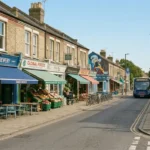

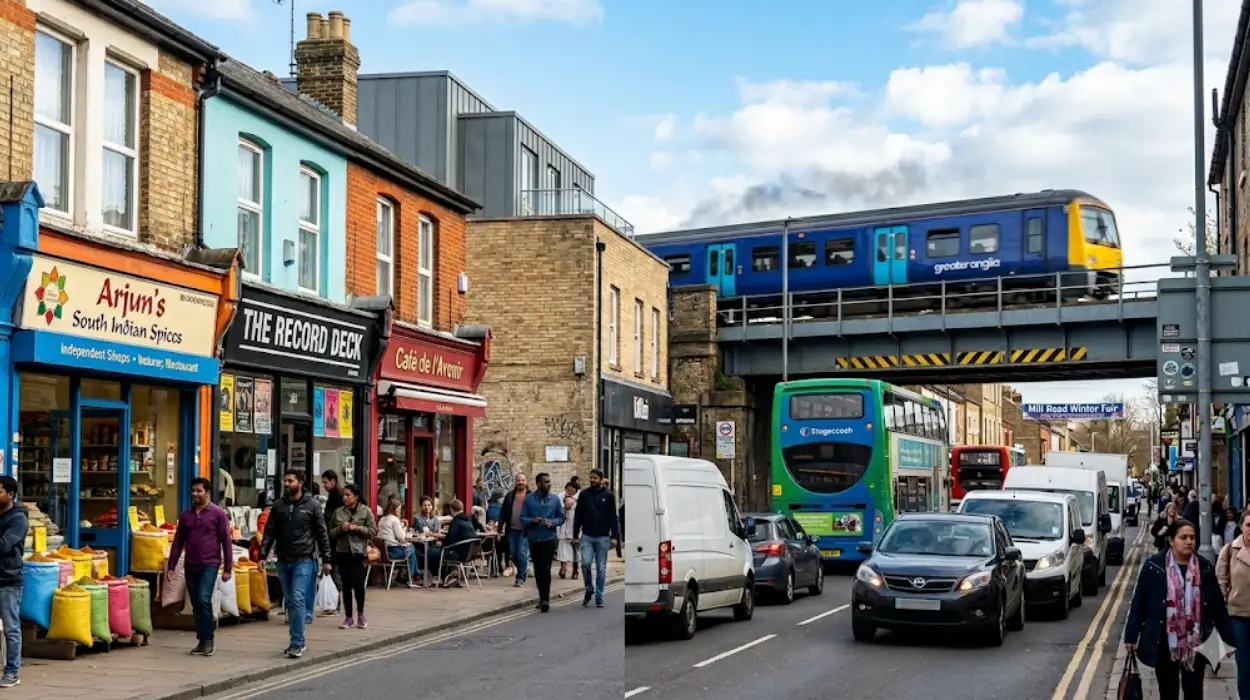
Nestled just beyond the railway bridge on Mill Road in southeast Cambridge, Romsey Town sparks debate among residents and visitors alike. This historic working-class enclave pulses with independent shops, multicultural eateries, and community spirit, yet faces criticism for traffic hum and urban clamor. Delving into its evolution reveals a neighborhood where energy often overshadows disruptions.
Historical Roots of Romsey
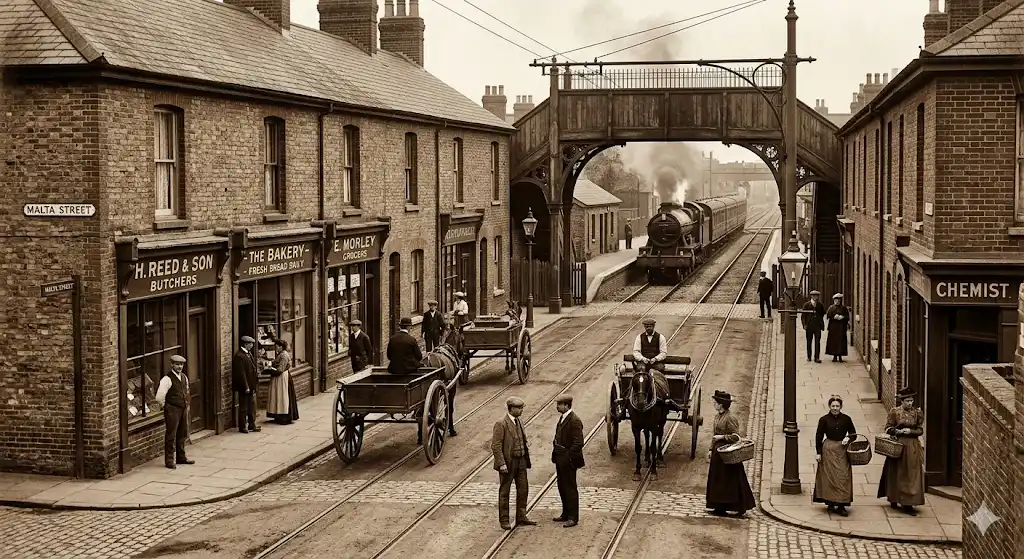
Romsey Town emerged in the late 19th century following the Enclosure Acts of the 1800s, which reshaped open fields into housing plots around Cambridge. The arrival of the railway in the mid-19th century solidified its identity as a self-contained community, separated from the city center by tracks that fostered local cohesion. Houses built primarily between 1885 and 1895 followed old field boundaries, with street names like Malta, Cyprus, and Suez evoking the British Empire era.
By 1921, Romsey boasted a population of 7,000, supported by Mill Road’s bustling array of butchers, bakers, grocers, and more, creating a world where residents could live, work, and shop without venturing far. This isolation bred strong neighborly ties, as cul-de-sac streets funneled foot traffic through the main artery, enhancing familiarity. Over decades, it transitioned from a gritty township to a bohemian hub, retaining its distinct character amid Cambridge’s expansion.
The railway’s enduring presence not only shaped its borders but also introduced early noise from trains, a precursor to modern complaints. Yet, this infrastructure spurred growth, turning Romsey into a vibrant counterpoint to the university-dominated city core.
Demographics and Community Profile
Romsey’s population skews young, with an average age of 36, nearly evenly split between men (51%) and women (49%), reflecting a dynamic mix of families, professionals, and students drawn to affordable housing near central Cambridge. Its working-class origins persist in a diverse, eclectic populace that includes upper-middle-class left-leaning residents alongside multicultural families.
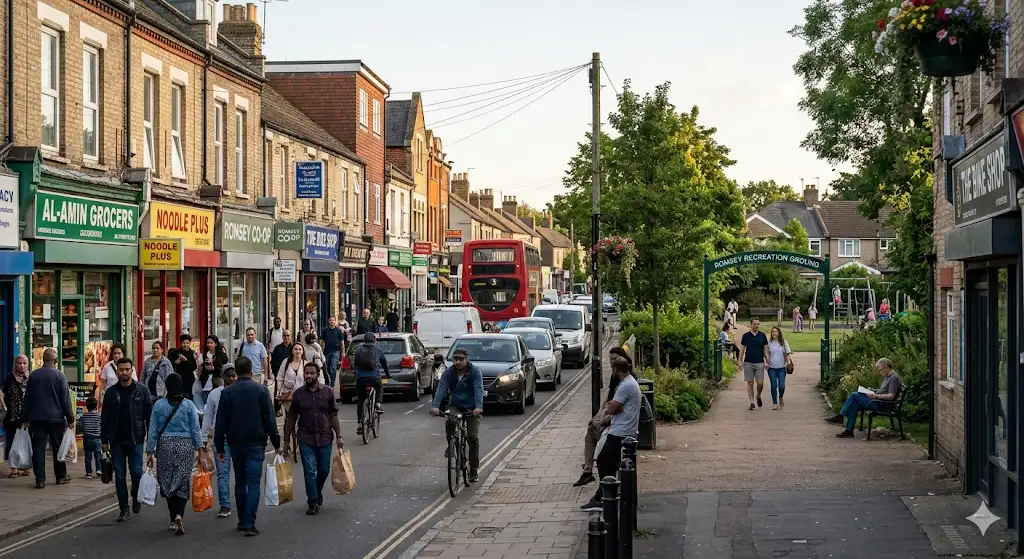
This blend fuels Romsey’s reputation as a “bohemian gem,” with independent shops, street art, and international cuisines along Mill Road defining daily life. Community centers like Ross Street and Romsey Mill charity support vulnerable youth and families, hosting skill-building programs that strengthen social bonds. Residents often praise the area’s safety and genteel vibe, countering perceptions of urban grit.
Housing remains relatively accessible compared to pricier Cambridge zones, though citywide averages hover around £509,906, underscoring Romsey’s appeal for first-time buyers seeking proximity without central premiums. This demographic vitality underpins its lively atmosphere, where daily interactions on narrow streets build enduring connections.
Vibrant Amenities and Daily Life
Mill Road serves as Romsey’s beating heart, lined with quirky cafes, vintage boutiques, and global eateries that eschew chain stores for unique, sustainable offerings. From vinyl records to handmade crafts, these independents create a tapestry of discovery, drawing locals and visitors for authentic experiences. Pubs like The Jubilee and The Empress nod to imperial history while hosting modern gatherings.
Green escapes balance the urban density, with Romsey Recreation Ground offering basketball courts, football pitches, playgrounds, and picnic spots ideal for families. Proximity to the River Cam invites scenic walks and cycling, providing serene respites amid the neighborhood’s energy. Community events at Romsey Mill and local fairs amplify this vibrancy, fostering creativity and social ties.
Everyday life hums with purpose: markets buzz with fresh produce, street art adds color, and diverse residents mingle, creating a sense of belonging rare in larger cities. These elements elevate Romsey beyond mere housing, into a thriving locale where culture thrives organically.
The Noise Factor: Sources and Complaints
Proximity to major roads like the M11, A14, and A11 encircles Cambridge, channeling traffic noise into Romsey, especially on Mill Road. Residents report a persistent hum, audible indoors even with windows closed, intensified by northerly breezes or rush hours. Railway vibrations from historic lines add to the din, echoing the area’s industrial past.
Cambridge City Council addresses statutory nuisances through abatement notices, fixed penalties up to £110 for homes or £500 for licensed venues, and potential prosecutions. While no Romsey-specific studies dominate, general urban noise from vehicles and machinery prompts ongoing complaints, with some perceiving the area as “hectic” compared to quieter suburbs.
Pandemic-era quiet revealed cars as primary culprits, with reduced traffic unveiling natural sounds a stark contrast to post-lockdown resurgence. Despite this, noise levels remain manageable for many, who view it as the price of centrality.
Resident Perspectives on Life in Romsey
Long-time dwellers rave about Romsey’s eclectic mix, with one 12-year resident loving its feel, location, and envious outsiders’ views. Safety reigns supreme, with locals dismissing “mean streets” fears as unfounded, noting harmless down-and-outs and a welcoming vibe. A lifelong resident of 24 years reports zero issues, emphasizing non-confrontational attitudes.
Citywide quality-of-life surveys mirror this positivity: 60% satisfy with social ties, aligning with national averages, though mental health and loneliness challenges persist post-pandemic. Romsey’s community spirit shines, with events and facilities empowering positive change. Critics note bustle over tranquility, but most affirm its genteel, vibrant core.
These voices paint Romsey as resilient, where minor gripes fade against strong communal fabric.
Balancing Vibrancy and Serenity
Romsey exemplifies urban vibrancy theory, where land-use diversity and intensity boost activity, as seen in Chinese studies adaptable to UK contexts. Mill Road’s mix of shops, eateries, and homes creates high footfall, enhancing economic and social life. Yet, accessibility to transport hubs amplifies noise, a trade-off for convenience.
Parks like Romsey Recreation Ground and river paths offer buffers, promoting wellbeing amid bustle. Council initiatives, including noise enforcement, mitigate disruptions while preserving energy. Academics link such built environments to lively streets, provided green spaces and mixed uses prevail.
This equilibrium positions Romsey as Cambridge’s authentic pulse, blending imperial legacy with modern multiculturalism.
Future Outlook for Romsey
Ongoing community empowerment via Cambridge City Council focuses on resident aspirations, with facilities like Ross Street Center available for hire. As Cambridge grows, Romsey’s independent ethos resists homogenization, potentially attracting more young families amid housing pressures.
Noise management evolves with sustainable transport pushes, like enhanced cycling and busways, promising quieter futures. Festivals and creative hubs, including nearby Cambridge events, could amplify vibrancy without overwhelming peace. Romsey’s trajectory favors balanced growth, sustaining its bohemian allure.
Investments in wellbeing, from youth programs to green expansions, signal a neighborhood adapting proactively.
Practical Tips for Romsey Living
Prospective residents prioritize soundproofed homes or rear gardens facing away from Mill Road to minimize traffic intrusion. Embrace evenings in quieter parks or riverside paths for respite, timing walks post-rush hour. Engage locals via community centers to unlock hidden gems and build networks swiftly.
Support independents on Mill Road to sustain vibrancy, while reporting nuisances promptly to council for swift action. Families thrive by leveraging playgrounds and sports facilities, fostering routines that highlight positives. Visitors, explore midweek for authentic vibes minus weekend peaks.
Ultimately, Romsey rewards those valuing community over silence.
Why Romsey Endures as Vibrant
Romsey transcends noise debates through its unyielding spirit: historic self-sufficiency evolved into bohemian charm. Diverse amenities, green havens, and resident pride affirm vibrancy trumps clamor for most. In Cambridge’s shadow, it stands as a testament to urban life’s rewarding huma place alive, not just loud.
Where is Romsey in Cambridge?
Romsey, located on the eastern side of Cambridge along Mill Road, is a lively and diverse neighbourhood with a rich working-class history. Originally developed in the late 19th century to house railway workers, Romsey has retained much of its original character and charm while evolving into one of the most vibrant areas in the city.
Is Romsey a ‘hippest’ place in the UK?
Romsey in Cambridge is considered one of the ‘hippest’ places in the UK, according to a country-wide ranking produced by the Travelsupermarket website. The community spirit of this neighborhood is what local people say lies at its heart.
What is it like living in Romsey?
Living in Romsey is described as ‘a place with a community feel’ by Helen Woods, a 26-year-old barista at the Urban Larder café on Mill Road. She loves living there and mentioned, “There’s so much to do, so many things around.” The area is quite mixed with various people, and Helen enjoys the numerous coffee shops and the abundance of choices around her.
What is Romsey known for?
Originally developed in the late 19th century to house railway workers, Romsey has retained much of its original character and charm while evolving into one of the most vibrant areas in the city. The neighbourhood is known for its strong sense of community, independent shops, cafés, and an eclectic cultural scene.