
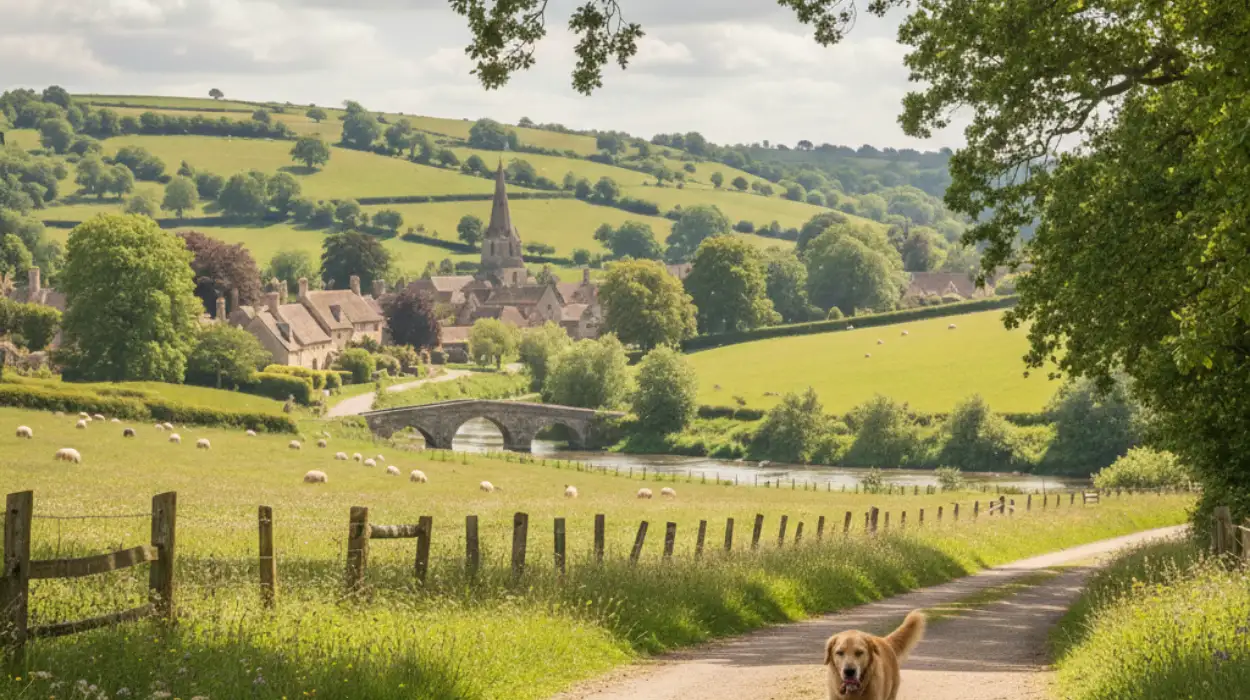
Grantchester is a small village and civil parish on the River Cam in South Cambridgeshire, about two miles south of Cambridge city centre. It occupies a stretch of low, green river meadow and gently rising farmland just before the Cam enters the city from the south‑west, giving it a noticeably rural feel despite its close proximity to a major university city.
- How deep are Grantchester’s historical roots?
- How does Grantchester balance village life with proximity to Cambridge?
- What cultural and literary associations shape perceptions of the village?
- What is everyday community life like in Grantchester?
- How does the landscape shape daily experience?
- What housing and population patterns define the village?
- How do transport and connectivity affect countryside living?
- What role do local businesses and attractions play in village life?
- How does Grantchester fit into the wider picture of rural Cambridgeshire?
- What is the lived reality of countryside life in Grantchester?
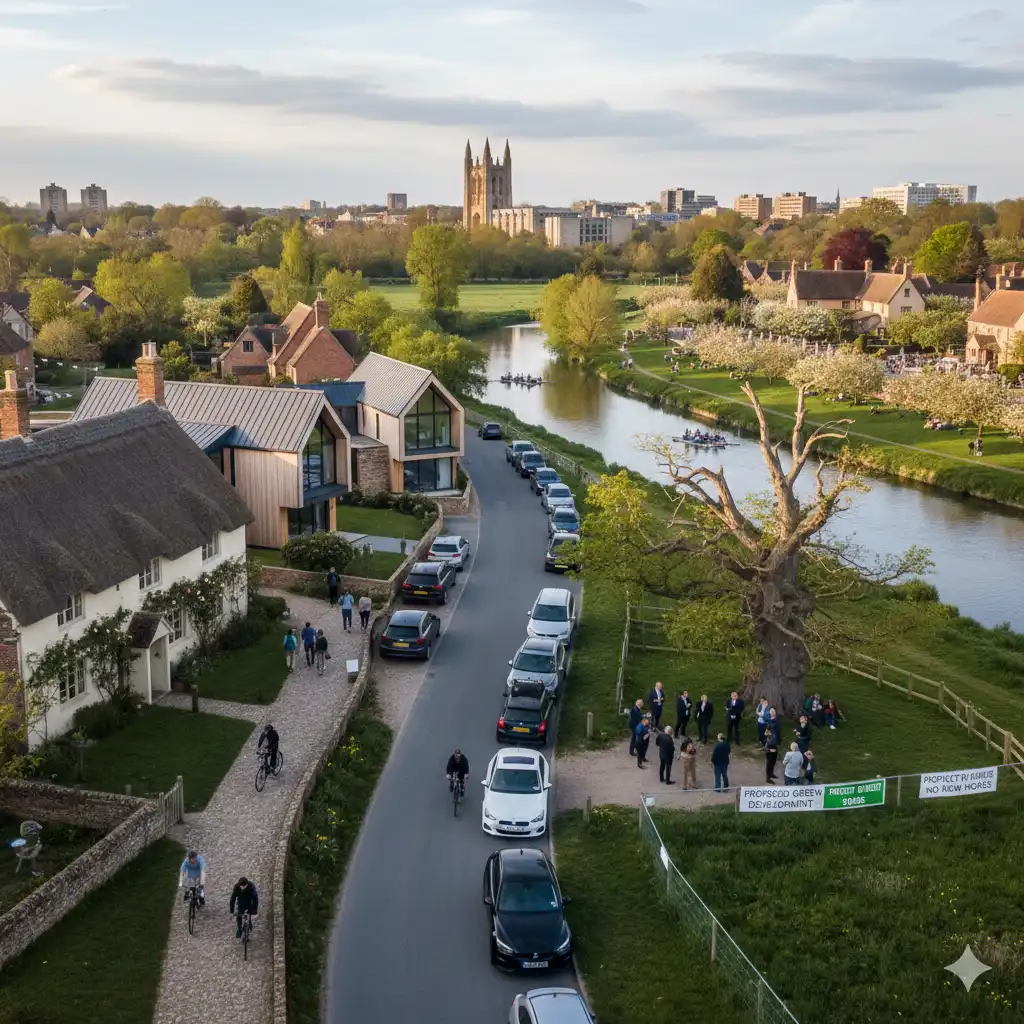
The village is framed by open fields, grazing land and the famous Grantchester Meadows, a long riverside pasture where paths follow the water and sheep often graze in summer. This landscape has drawn poets, academics and day‑trippers for generations, and today it remains a popular route for walkers and cyclists heading out of Cambridge in search of quieter, greener surroundings. For many residents, this immediate access to meadow, river and big skies is the core of the countryside living experience in Grantchester.
How deep are Grantchester’s historical roots?
Archaeological evidence shows that the parish has been settled since prehistoric times, with traces from Roman occupation and Saxon remains recorded in the area. The Domesday Book provides one of the first detailed written records of land ownership and farming here, indicating that Grantchester then probably called “Grantasete” was already an organised agrarian community when Cambridge itself carried a version of the name it bears today.
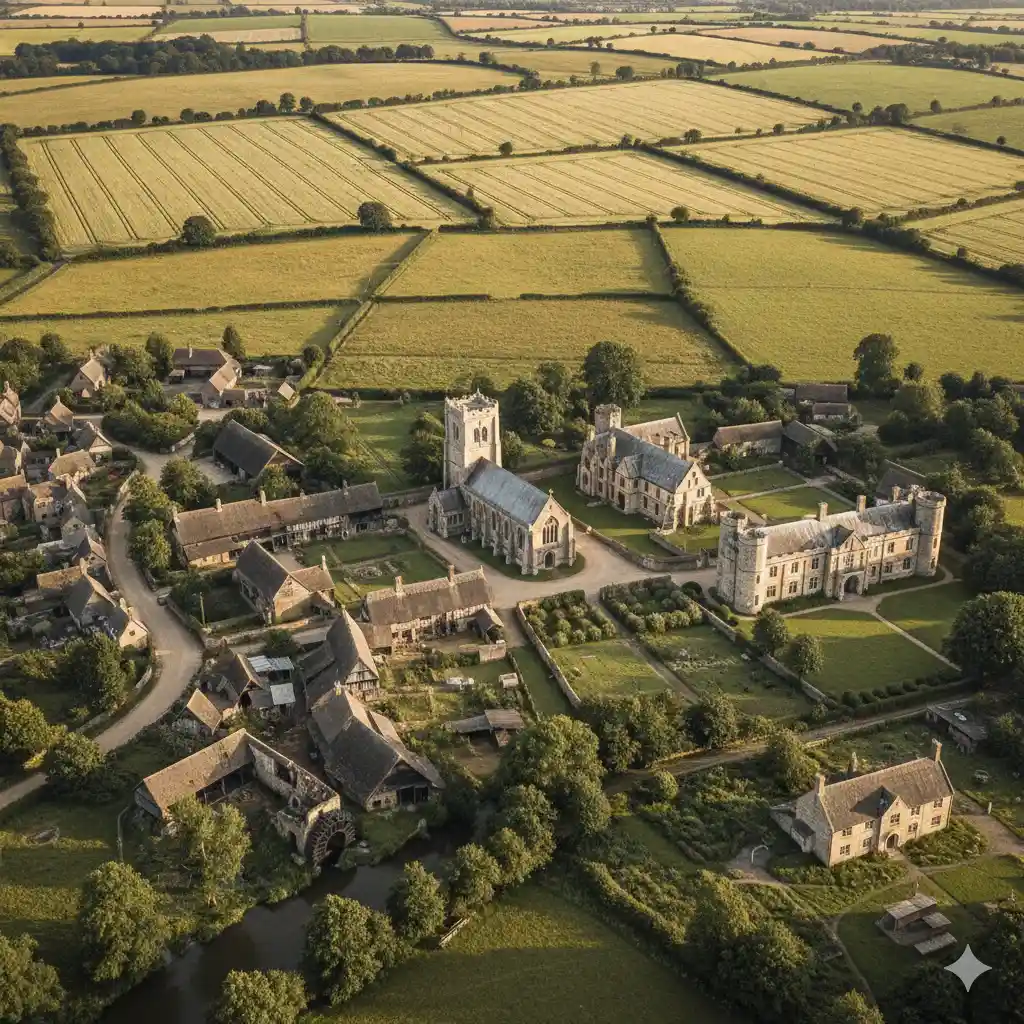
As described in the village’s own historical account, medieval Grantchester was laid out in three large open fields and three smaller ones, divided into long strips that increasingly came under the ownership of Cambridge colleges. Corpus Christi College became patron of the parish church of St Andrew and St Mary in 1352, while King’s College later acquired the lordship of the manor, and both institutions have continued to shape village development ever since. Over the centuries the village adapted to changes in farming, transport and education, from the loss of Grantchester Mill in a 1928 fire to the eventual closure of the village school in 1982, leaving a landscape where older farm buildings, cottages and college‑owned properties speak to a long rural history.
How does Grantchester balance village life with proximity to Cambridge?
One of the defining realities of living in Grantchester is the combination of an intimate village environment with immediate access to a globally known university city. The village sits roughly two miles from Cambridge, close enough that many residents regularly commute by bicycle or on foot along the riverside path, yet far enough that the settlement retains its own identity and slower pace.
Historically, this closeness has tied the village to the fortunes of the university. As university rules softened in the late nineteenth century and fellows were increasingly allowed to marry, some chose to live in nearby Grantchester, deepening academic links and adding to the number of college‑owned houses in the parish. At the northern end of the historic parish, expansion of Cambridge led to dense housing in Newnham Croft, sometimes known as “New Grantchester”, which was eventually incorporated into the borough of Cambridge in 1911. Today, Grantchester residents may work and socialise in the city, but they come home to streets that still feel distinctly like a village, with limited street lighting, mostly low‑rise buildings and immediate views out to fields and meadows.
What cultural and literary associations shape perceptions of the village?
Grantchester’s reputation is not only built on scenery but also on cultural and literary associations that colour how outsiders imagine countryside life here. The poet Rupert Brooke lodged at the Old Vicarage in the early twentieth century and famously linked the village to a nostalgic vision of English rural life in his poem often referred to as “The Old Vicarage, Grantchester”. That association has endured, and many visitors still come looking for traces of Brooke’s world along the river and in the village lanes.
Later, Grantchester acquired a different kind of fame through music and television. The village is referenced in Pink Floyd’s song “Grantchester Meadows”, which evokes the tranquillity of the riverside landscape, and it serves as the location for the ITV crime‑drama series “Grantchester”, set in the 1950s around a local vicar and detective. The village has also been home to high‑profile residents, including novelist and former politician Jeffrey Archer, and has at times been noted for having an unusually high concentration of Nobel Prize winners living within its boundaries. All of this media and cultural attention feeds into an image of Grantchester as quintessentially English countryside, which can both attract new residents and shape their expectations before they arrive.
What is everyday community life like in Grantchester?
Behind the postcard image, Grantchester functions as a small but active rural community with its own facilities and rhythms of daily life. The village hall and the adjacent Reading Room provide venues for local events, classes and meetings, with spaces that include a stage, kitchen and projection screen for community use. These buildings, managed through the Parish Council and local volunteers, help anchor social life, from clubs and performances to outreach activities, and represent the kind of shared space often central to countryside communities.
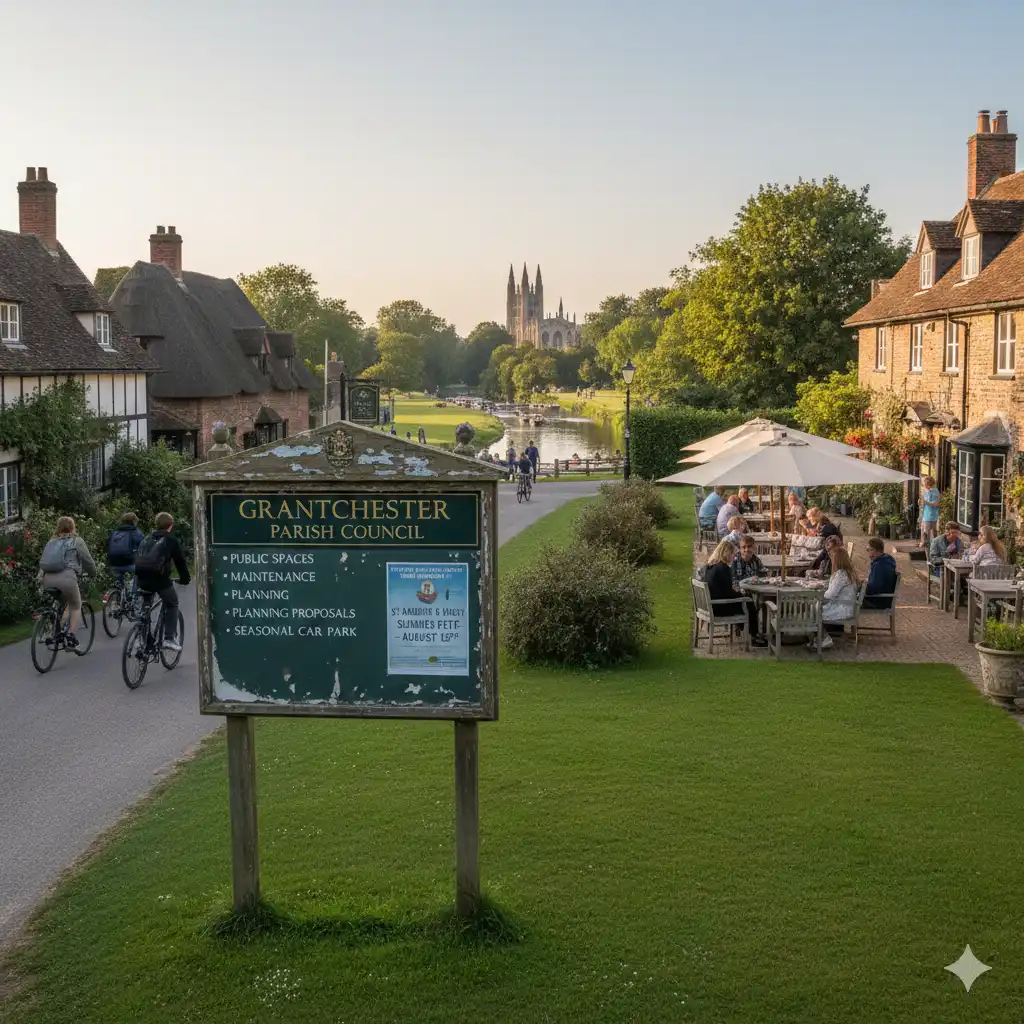
Grantchester’s Parish Council serves as the first tier of local government, dealing with issues such as maintenance of public spaces, responses to planning proposals, and the organisation of amenities including a seasonal car park for visitors. Residents also rely on nearby Cambridge and surrounding villages for some services, including secondary education and larger retail options, reflecting a pattern common across rural South Cambridgeshire where villages interlock with the city for work and amenities. Seasonal events, religious services at St Andrew and St Mary, and informal gatherings at pubs, tea gardens and along the river all contribute to a sense of place that blends long‑term residents, university staff and students, and newer arrivals drawn by the village’s profile.
How does the landscape shape daily experience?
Countryside living in Grantchester is intimately tied to its landscape, especially the River Cam and the meadows that line its banks. Grantchester Meadows, a broad floodplain of grass and willows between the village and the city, offers residents everyday access to riverside walks, birdlife and changing seasons, from misty winter mornings to crowded summer afternoons. The meadows are still used for grazing, and seeing sheep in the fields is a routine part of the view from the paths and from some village properties.
For walkers and cyclists, the route between Cambridge and Grantchester has become a well‑established escape, with some residents using it as part of their regular commute and others enjoying it as a way to head into the city without relying on a car. Punting up the Cam from Cambridge to Grantchester is also a long‑standing tradition, and on warm days residents share the river with visitors in hired boats as they drift between overhanging willows and low meadows. The flip side of this access is that in wet winters parts of the meadows can flood, and paths may become muddy or impassable in places, reminding villagers that this is still working river landscape rather than a manicured park.
What housing and population patterns define the village?
Statistical data show that Grantchester is a small community by modern standards, with a population of just over 530 people recorded in the 2021 census. Figures collated from the UK Office for National Statistics indicate that the population has remained relatively stable over the last two decades, declining slightly from 552 residents in 2001 to 536 in 2021, suggesting a village that has avoided both rapid expansion and steep decline.
The age profile reveals a mix of working‑age adults, older residents and children, with a significant proportion of the population aged 65 and over, reflecting the appeal of village life to retirees and longer‑term homeowners. At the same time, younger adults and families linked to Cambridge’s academic and professional sectors also form part of the community, reinforcing the connection between the village and the city’s knowledge economy. Many houses are traditional cottages or converted farm buildings, alongside some more modern properties, and college ownership of certain buildings adds another layer of complexity to the housing landscape.
How do transport and connectivity affect countryside living?
Transport is one of the key factors that shapes what countryside life in Grantchester actually feels like on a daily basis. The short distance to Cambridge means that cycling and walking are practical options for many journeys, and the riverside path is a well‑used commuting and leisure route. For those who drive, the village connects to the wider road network via routes through Trumpington and other nearby settlements, and residents often combine rural living with regular trips to city workplaces or regional transport hubs.
However, the narrow historic roads and limited parking within the village itself can create pinch points, especially at busy times when visitors arrive at pubs, tea gardens and the meadows. The Parish Council operates a seasonal field car park near the mill pond on sunny days between Easter and late September, with donations supporting village projects, in an effort to manage visitor vehicles and reduce pressure on residential streets. Local and county‑level discussions over cycle routes, traffic management and parking restrictions highlight an ongoing balancing act between keeping the village accessible and protecting its rural character.
What role do local businesses and attractions play in village life?
Grantchester’s countryside identity is closely tied to its small cluster of businesses and attractions, which serve both residents and visitors. The Orchard Tea Garden, with its deckchairs among fruit trees, is one of the most famous, drawing people for afternoon tea in a setting associated with students, writers and academics for over a century. Several pubs and the village green provide social hubs where residents meet, especially in summer when outdoor seating looks out over fields or quiet lanes.
These businesses help sustain local employment and services but also bring in significant numbers of day‑trippers, particularly at weekends and during the peak tourist season. Real‑estate and relocation guides often describe Grantchester as a “riverside retreat” or a place to experience countryside living while remaining close to city opportunities, emphasising the appeal of village pubs, independent food and picturesque walks. For locals, this means that day‑to‑day life can be calm and neighbourly in quieter months, then markedly busier when the weather and tourism combine, an ebb and flow that is characteristic of many attractive rural settlements near cities.
How does Grantchester fit into the wider picture of rural Cambridgeshire?
Grantchester is just one part of a wider pattern of rural and fringe settlements around Cambridge, where the landscape is predominantly agricultural and the majority of land remains undeveloped. Regional assessments for Cambridgeshire note that around 79% of land use is agricultural, with many communities like Grantchester classified as rural town and fringe or smaller village, hamlet and isolated dwellings. This context matters because it shapes planning policy, conservation priorities and infrastructure investment that affect residents’ daily experience.
As pressures from housing demand, transport growth and environmental change continue, villages close to Cambridge often find themselves at the centre of debates over where new development should go and how best to protect countryside character while meeting modern needs. Grantchester’s combination of high cultural profile, historic fabric and sensitive river landscape makes those questions especially acute, and local decisions on paths, parking, conservation and heritage all feed into the practical realities of living there year‑round.
What is the lived reality of countryside life in Grantchester?
Taken together, Grantchester offers a version of countryside living that is both idyllic and complex. On one hand, residents enjoy immediate access to meadows, wildlife and riverside walks, a compact community with active local institutions, and a sense of historical continuity that stretches from prehistoric settlements through medieval open fields to modern academic life. On the other, the village must negotiate the impacts of tourism, seasonal visitor traffic, housing pressures and environmental concerns tied to its popularity and proximity to Cambridge.
For people considering moving to Grantchester, or simply curious about what life is really like, the reality lies somewhere between the tranquillity of early‑morning paths along Grantchester Meadows and the bustle of summer afternoons when punts, cyclists and walkers converge on the same rural landscape. It is this blend of calm and activity, of deep history and ongoing change, that defines the everyday experience of countryside living in Grantchester, Cambridge.