
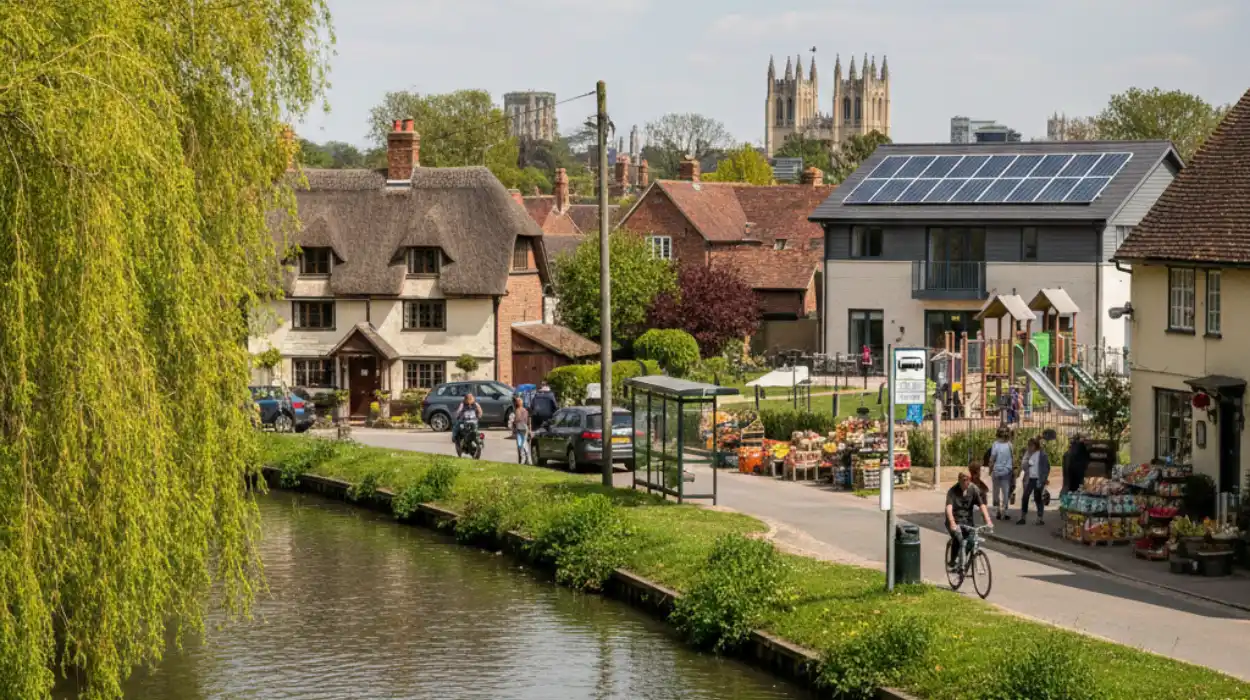
Grantchester, the idyllic village just two miles southwest of Cambridge city centre, captivates with its thatched cottages, blooming gardens, and the serene River Cam winding through lush water meadows. Immortalised in poetry by Rupert Brooke and frequented by Virginia Woolf’s Bloomsbury set, it exudes timeless charm. Yet for prospective residents weighing the realities of modern life, the question persists: does Grantchester’s picturesque allure translate into practical living, or does its romantic image mask logistical challenges like high costs, limited amenities, and commuter pressures?
- The Allure of Grantchester: A Village Steeped in History and Natural Beauty
- Housing in Grantchester: Premium Prices for Period Properties
- Daily Amenities and Shopping: Village Charm Meets City Reliance
- Transport Links: Cycling Paradise with Car Dependency
- Community, Culture, and Lifestyle: Tight-Knit with Intellectual Flair
- Cost of Living Breakdown: High Entry, Stable Ongoing Expenses
- Schools, Healthcare, and Family Practicality
- Work and Commute Dynamics: Ideal for Hybrid Professionals
- Environmental Factors: Clean Air, Flood Risks
- Is Grantchester Practical Long-Term?
The Allure of Grantchester: A Village Steeped in History and Natural Beauty
Nestled along the River Cam, Grantchester has long symbolised an escape from urban hustle. Its history traces back to Roman times, with archaeological finds including a villa near the present-day church, but it truly flourished in the medieval period as a hub for Cambridge scholars seeking respite. The 14th-century parish church of Saint Mary and Saint Andrew stands as a focal point, its tower overlooking orchards and meadows that have inspired writers for centuries. Rupert Brooke, the Edwardian poet, famously declared in 1910,
“Stands the Church clock at ten to three? And is there honey still for tea?” from his poem “The Old Vicarage, Grantchester,”
cementing the village’s literary legacy.
Today, Grantchester retains this bucolic essence. Thatched-roof homes line the narrow lanes, while the orchards once apple-laden now host bluebell woods and wildflower displays in spring. The River Cam invites punting, a quintessential Cambridge pastime, where visitors glide past weeping willows and grazing cattle. The Green Man pub, dating to the 17th century, serves as a social anchor, offering real ales and garden seating that draws locals and day-trippers alike. This natural beauty isn’t mere postcard perfection; it fosters a strong community spirit, evident in annual events like the Grantchester Village Fete, featuring dog shows, tug-of-war, and homemade scones. For families or retirees, the tranquility provides a genuine antidote to city stress, with clean air and low light pollution ideal for stargazing or evening walks.
Yet this idyll comes with context. Grantchester’s proximity to Cambridge University home to 24,000 students and world-class research elevates property values, blending village charm with academic prestige. Residents often include university fellows, tech professionals from the Cambridge Science Park, and affluent commuters. The village’s conservation status preserves its character, limiting new builds and maintaining green spaces, which enhances appeal but constrains supply. According to Cambridgeshire County Council data, Grantchester’s population hovers around 550, fostering tight-knit neighbourliness rare in larger towns. This historical and environmental richness makes Grantchester more than picturesque it’s a living tapestry of England’s pastoral heritage.
Housing in Grantchester: Premium Prices for Period Properties
Housing defines Grantchester’s practicality, dominated by period cottages and Victorian homes that command premium prices. Average property prices exceed £800,000 for a three-bedroom cottage, per Rightmove and Zoopla 2026 listings, far surpassing Cambridge city’s £550,000 median. A thatched Grade II-listed home might fetch £1.2 million, reflecting demand from high-earning professionals. Rentals are scarcer and costlier: a two-bedroom period cottage leases for £2,200-£2,800 monthly, compared to £1,800 city-wide.
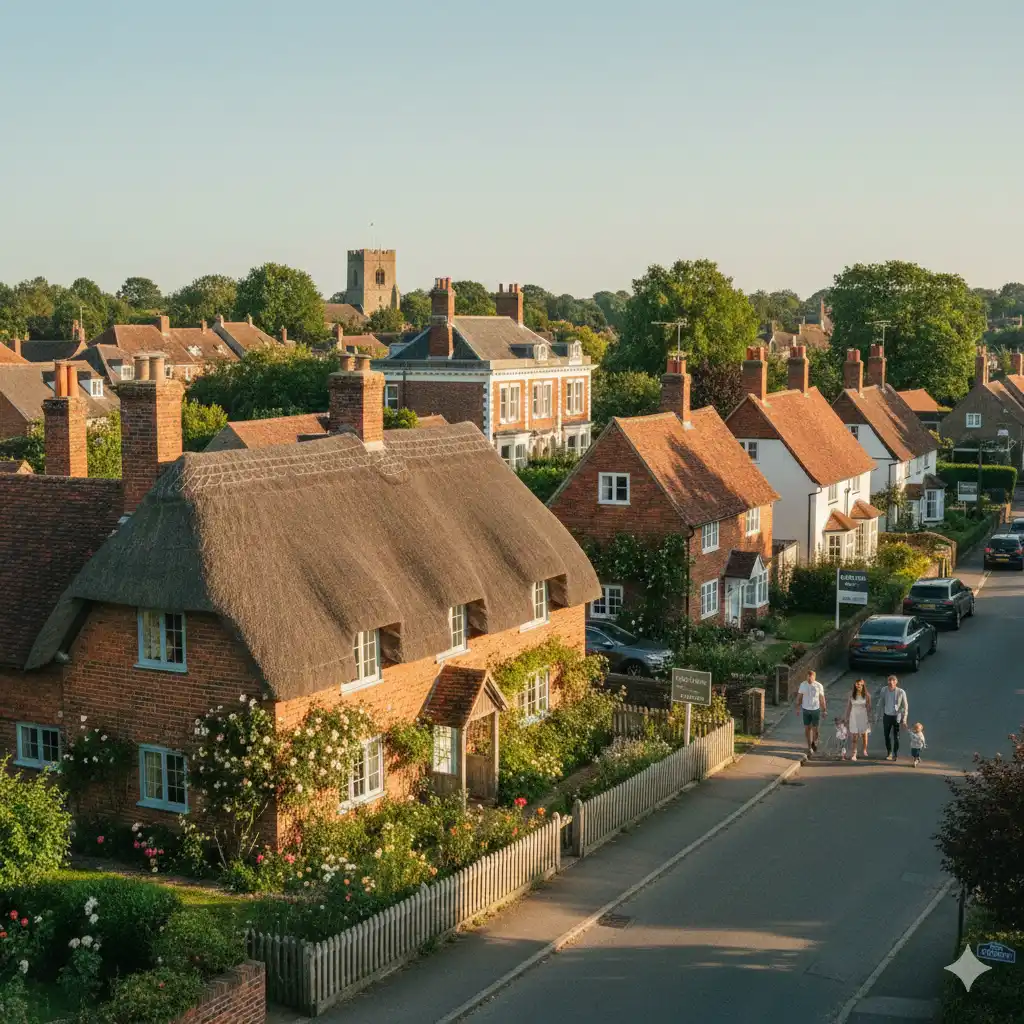
This scarcity stems from strict planning laws under South Cambridgeshire District Council, which prioritise preservation. New developments, like eco-homes at Grantchester Meadows, are rare and hotly contested. For first-time buyers, shared ownership schemes via Accent Group offer entry points, but availability is limited. Implications are clear: Grantchester suits dual-income households or downsizers, not young families on modest salaries. The South Cambridge SHMA (Strategic Housing Market Assessment) 2025 highlights a 25% affordability gap locally, exacerbated by university-linked demand.
Practical upsides include low maintenance for character properties, often with gardens backing onto meadows. Energy efficiency varies many older homes lack insulation, pushing bills to £250 monthly in winter but retrofits qualify for grants via the Cambridgeshire Fens Biosphere scheme. For renters, short-term lets via Airbnb thrive due to tourism, but long-term tenancies provide stability. Overall, housing underscores Grantchester’s dual nature: visually stunning yet financially selective, rewarding those who can afford its prestige.
Daily Amenities and Shopping: Village Charm Meets City Reliance
Grantchester’s high street whispers self-sufficiency, with the post office-cum-village shop stocking essentials, artisan bread from the Grantchester Bakehouse, and local honey. The Orchard Tea Garden, famed from Brooke’s era, serves cream teas amid apple trees, while the Red Lion pub offers gastropub fare using Cambridgeshire produce. These spots sustain casual living, but larger shops Waitrose, Sainsbury’s require a cycle or bus to Newnham or central Cambridge.
No supermarkets, pharmacies, or banks exist locally, making car ownership practical for weekly shops. Cambridge’s Park & Ride service, five minutes away, links seamlessly, but peak-hour buses fill quickly. Delivery services like Ocado thrive, mitigating isolation. For healthcare, the Gretton Court surgery in Trumpington serves 12,000 patients, with GP appointments bookable online wait times average 7-10 days, per NHS data.
Schools pose a brighter practicality. Grantchester Primary, rated “Good” by Ofsted 2024, enrols 200 pupils in a nurturing environment with forest school sessions in adjacent woods. Secondary options include Trumpington Village College (Outstanding Ofsted), reachable by bike. University ties mean top state schools like Cambridge’s Coleridge, but competition is fierce.
This setup suits remote workers or flexible schedules, leveraging Cambridge’s ecosystem Silicon Fen employs 20,000 in tech/biotech, many commuting from Grantchester. Yet for shift workers or families needing daily errands, the two-mile gap feels pronounced, blending village romance with commuter reality.
Transport Links: Cycling Paradise with Car Dependency
Grantchester epitomises Cambridge’s cycling culture, with traffic-free paths along the Cam to the city centre 15 minutes for fit riders. National Cycle Route 51 bisects the village, safe for families. Coton Lane connects to M11 Junction 11, easing London access.
Buses are reliable: Stagecoach Citi 1 runs every 15 minutes to Drummer Street, £2 single fare via Cambridgeshire fare zone. Park & Ride from Trumpington offers £3.30 day passes. Trains at Shelford station, two miles away, reach London King’s Cross in 50 minutes.
Car dependency arises for non-cyclists or bad weather; narrow lanes deter casual drivers, and parking is resident-permit only. EV charging points at the Red Lion support green commutes. Google Maps data shows 25-minute drives to Cambridge station, factoring traffic.
For daily practicality, Grantchester excels for eco-commuters but demands adaptation no tube or extensive rail means personal vehicles or e-bikes fill gaps. Its position near A10/A1301 aids airport runs to Stansted.

Community, Culture, and Lifestyle: Tight-Knit with Intellectual Flair
Grantchester pulses with community: Parish Council newsletters detail fetes, book clubs, and wildlife talks via the Grantchester Wildlife Group. The Grantchester Players stage summer productions, while cricket on the green draws cheers. History buffs explore Rupert Brooke’s vicarage, now a museum.
Diversity blends locals, academics, and internationals 25% non-UK born, per 2021 Census. Cafes host philosophy debates, echoing Bloomsbury. Events like the Christmas Tree Festival in church unite villagers.
Lifestyle balances solitude and sociability: meadows for picnics, NT’s Sheldon Meadows for birdwatching. Downsides include tourist influxes punting crowds summer weekends. Crime rates are low (0.8 incidents/1,000 residents, Cambridgeshire Constabulary 2025), fostering safety.
This fabric makes Grantchester practical for culture-seekers valuing depth over bustle, integrating seamlessly with Cambridge’s festivals like Folk or Film.
Cost of Living Breakdown: High Entry, Stable Ongoing Expenses
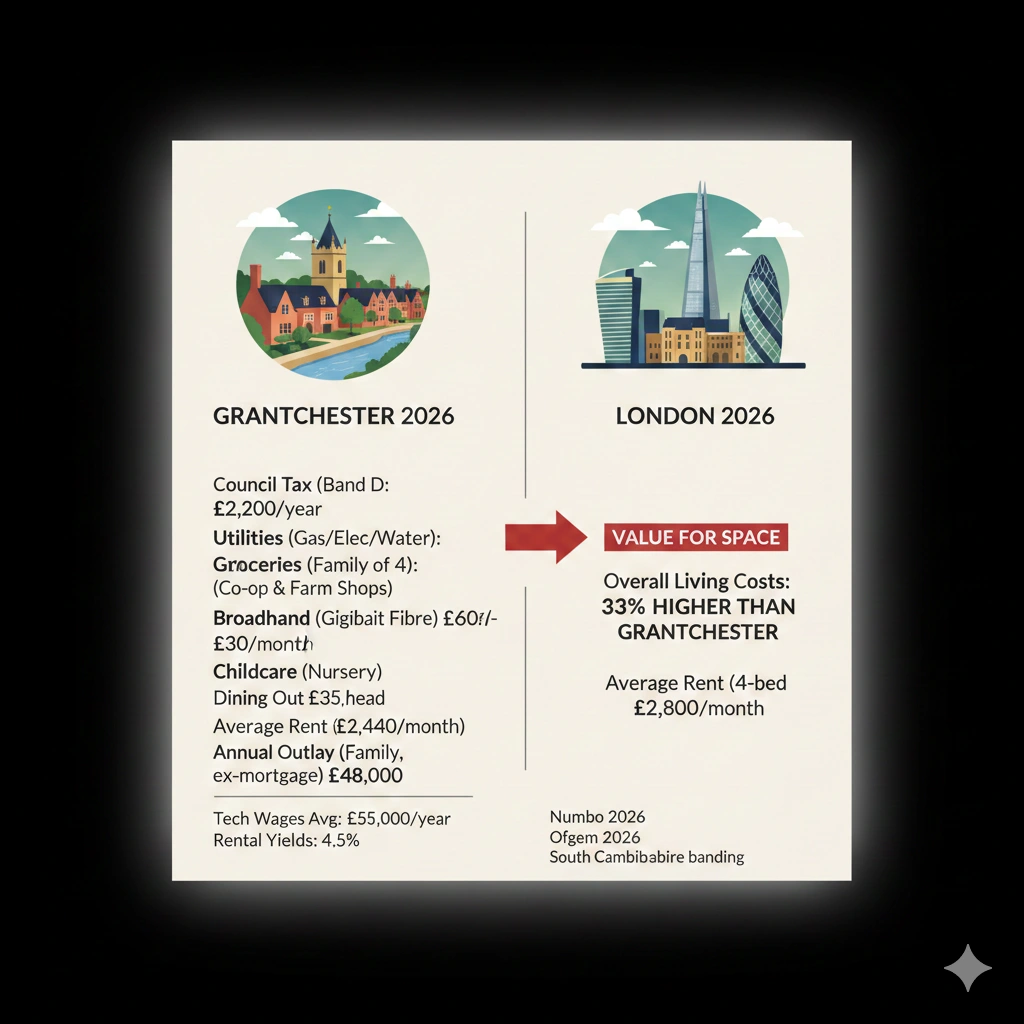
Grantchester’s living costs mirror Cambridge’s premium: council tax Band D at £2,200/year (South Cambridgeshire banding). Utilities average £180/month for gas-electricity-water, per Ofgem 2026. Groceries for four: £450 at Co-op Newnham, supplemented by farm shops.
Broadband excels Hyperoptic gigabit fibre at £30/month. Childcare at Little Granta nursery: £60/day. Dining out: £35/head at The Green Man.
Compared to London (33% higher), Grantchester offers value via space £2440 average rent vs £2,800. Annual outlay for family: £48,000 excluding mortgage, per Numbeo 2026. Wages in tech average £55,000, balancing scales.
Inflation-adjusted, stability prevails: low voids, strong rental yields (4.5%).
Schools, Healthcare, and Family Practicality
Grantchester Primary’s 96% phonics pass rate shines, feeding into selective grammars like Hills Road Sixth Form (top A-level results nationally). Healthcare via GP federations ensures continuity.
Family life thrives: playgrounds, scouts, and meadows for unstructured play. Practicality peaks for primary years but wanes for teens needing city nightlife.
Work and Commute Dynamics: Ideal for Hybrid Professionals
Silicon Fen’s 5,000 firms employ locals; AstraZeneca’s site nears. Hybrid post-pandemic suits Grantchester Zoom from home, cycle in quarterly.
Unemployment at 2.8% (ONS 2026) underscores opportunity.
Environmental Factors: Clean Air, Flood Risks
Air quality tops UK charts (DEFRA); biodiversity rich otters, kingfishers. Flooding occasional post-rain, mitigated by EA defences.
Is Grantchester Practical Long-Term?
Grantchester marries picturesqueness with practicality for those prioritising nature, community, and Cambridge access over urban convenience. High costs demand £70k+ household income, but rewards safety, heritage, connectivity abound. Families, professionals thrive; singles may crave vibrancy.
Ultimately, it’s practical if your lifestyle aligns: cycleable, cultured, costly.