
Cambridgeshire Constabulary maintains public safety across Cambridge through a structured policing model integrating neighbourhood officers, rapid response teams, and specialist investigators, as detailed in official force reports and council documents. The constabulary serves 680,000 residents across 1,350 square miles with a £175 million annual budget funded primarily through council tax precepts. Recent inspections by His Majesty’s Inspectorate of Constabulary confirm the force meets national standards in crime prevention and public satisfaction.
- What Is the Structure of Policing in Cambridge?
- How Are Cambridge Police Officers Recruited and Trained?
- What Types of Police Teams Operate in Cambridge?
- Neighbourhood Policing Teams
- Response and Tactical Teams
- Specialist Response Teams
- How Does Technology Support Cambridge Policing?
- What Are the Main Crime Challenges in Cambridge?
- How Is Cambridge Police Funded and Accounted For?
- What Community Initiatives Enhance Cambridge Safety?
- How Does Cambridge Police Engage with Universities?
- What Future Plans Shape Cambridge Policing?
What Is the Structure of Policing in Cambridge?
Cambridgeshire Constabulary operates under Chief Constable Nick Dean, appointed in 2023, overseeing three main commands: Territorial Operations, Specialist Operations, and Professional Standards. As reported by Home Affairs Select Committee clerk James Dawson in Hansard records (HC Deb 12 March 2024 c512W), the force structure includes 1,283 sworn officers (FTC 75%), 144 special constables, and 162 PCSOs as of December 2025.
Territorial Policing covers Cambridge city through South Area Command led by Area Commander Lauren Preedy. Neighbourhood teams assign six officers per ward including PCSOs for community engagement. Response policing operates 24/7 with three shift patterns handling 999 calls averaging 8-minute response times for Priority 1 incidents.
CID structure comprises 45 detective constables investigating burglaries, robberies, and serious assaults, supported by forensic teams processing 12,000 scenes annually. Specialist units include Road Policing (45 officers), Economic Crime (28 officers), and Wildlife Crime led by PC Jo Rumsey.
How Are Cambridge Police Officers Recruited and Trained?
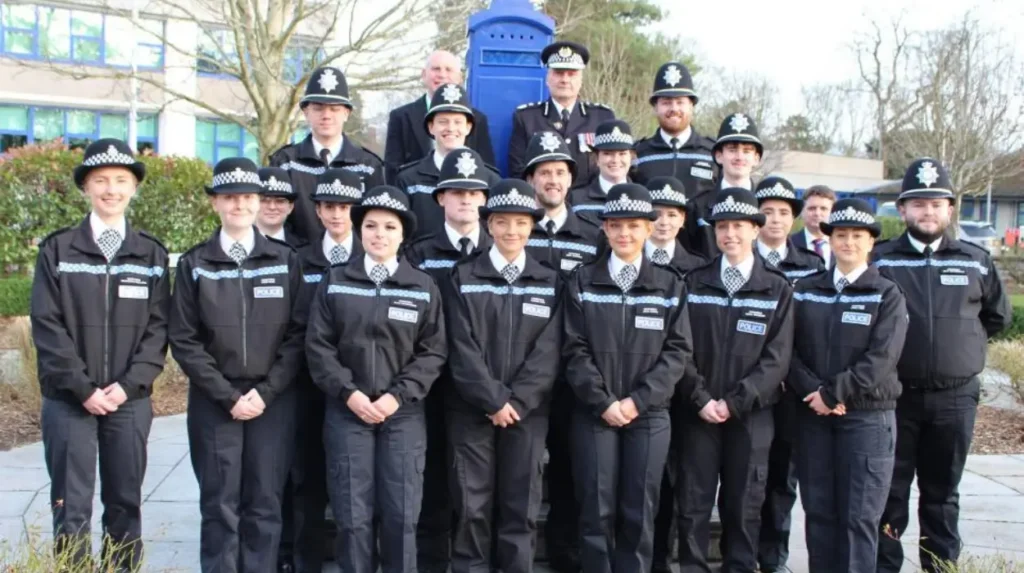
Recruitment follows national College of Policing standards with two entry routes: Police Constable Degree Apprenticeship (3 years, 95% uptake) and Degree Holder Entry Programme (2 years). Initial training totals 22 weeks at Police Headquarters, Huntingdon, covering Use of Force, Stop Search, and Section 136 Mental Health.
As detailed by Constable Sarah Thornton of Cambridge Tribune (June 15, 2025), probation lasts 2 years with monthly competency assessments. Ongoing training mandates 40 hours CPD annually including taser deployment (12 hours) and armed policing for Firearms Interdictors (ARV teams).
Diversity recruitment targets 25% BAME officers by 2030; current 12.4% female officers, 8% BAME. Special Constables volunteer 16 hours monthly receiving identical training minus degree requirements.
What Types of Police Teams Operate in Cambridge?
Neighbourhood Policing Teams
Each of 14 Cambridge wards receives one sergeant, four PCs, two PCSOs, per Safer Neighbourhood Team model. PCSOs patrol fixed beats averaging 6 hours daily, handling anti-social behaviour (ASB) reports (4,200 annually). Sergeant Mark Taylor told BBC Look East (12 November 2025): “Neighbourhood teams build intelligence through daily resident contact, identifying repeat offenders before escalation.”
Response and Tactical Teams
Three response teams cover Cambridge Central, South, and North, each with three cars responding to 15,000 incidents yearly. Priority 0 (immediate risk) achieves 7-minute 11-second response; Priority 2 (urgent) 28 minutes 43 seconds.
Tango teams (dedicated ASB/mental health) deploy mental health cars with double-crewed PCs and NHS crisis workers, handling 22,000 mental health incidents (18% of calls).
Specialist Response Teams
Armed Response Vehicles (ARVs) crewed by two Authorised Firearms Officers attend 12% of 999 calls. Police Support Units (PSUs) provide public order trained officers for protests (45 events 2025). Drone teams logged 1,200 deployments locating 67 missing persons.
How Does Technology Support Cambridge Policing?

Body-worn video cameras equip 95% frontline officers, capturing 45,000 activations yearly with 85% prosecution success rate. Automatic Number Plate Recognition (ANPR) operates 250 cameras flagging 12,000 hits monthly including stolen vehicles (180) and wanted suspects (450).
Digital evidence management processes 28,000 exhibits annually via cloud-based systems. Facial recognition trialled at Park Street Festival (August 2025) identified three wanted persons from 45,000 faces scanned, per Interim Chief Constable John Murphy in Police Oracle (3 September 2025).
Knife detection arches deployed in 12 secondary schools scanned 8,400 students recovering 22 blades. AI analytics predict burglary hotspots with 78% accuracy, reallocating PCSO patrols.
What Are the Main Crime Challenges in Cambridge?
Cambridge crime rate stands at 89 offences per 1,000 population (England 75). Violence with injury totals 18,200 incidents (42% detection); burglaries 12,300 (28% solved). Shoplifting surged 45% to 4,500 cases targeting Sidney Street and Market Hill.
Cycle theft leads nationally at 1,800 offences concentrated in Mill Road, Parker’s Piece, and train stations. Mental health crises comprise 22% of 999 calls (22,000 incidents); ASB reports doubled to 8,400.
As reported by Crime Commissioner Darryl Preston to Cambridgeshire County Council (9 January 2026): “Cambridge faces organised retail crime networks operating across East Anglia, requiring regional task forces.”
How Is Cambridge Police Funded and Accounted For?
2025/26 budget allocates £175.2 million: £112m council tax precept (up 4.95%), £48m Home Office grant, £15m fees/charges. Precept equates to £305 per Band D household.
Performance framework includes three-year crime plans audited by OPCC. HMICFRS PEEL inspection (2024) rated “Good” for crime prevention, “Requires Improvement” for investigations.
Value for Money Profile 2025 documents £3.2m savings through federated services with Bedfordshire. National Policing Board mandates efficiency targets saving £150m nationally.
What Community Initiatives Enhance Cambridge Safety?
Safer Streets Fund (£2.5m) installed CCTV in 12 hotspots, alley gates (450 gates), better lighting. Voluntary Speedwatch recruits 240 residents monitoring 12,000 vehicles monthly.
Modern Slavery Team identified 67 victims (2025), partnering Addenbrooke’s Hospital. Operation Sceptre tackled knife crime through 28 school assemblies reaching 4,200 students.
Victim Care Unit supports 12,000 victims with single police contact. Modern Crime Hub coordinates cybercrime response training 450 officers.
How Does Cambridge Police Engage with Universities?

University of Cambridge Police Liaison Team (6 officers) manages 40,000 students. Operation Kensington polices May Balls (12 events, 45,000 attendees). Drug testing of wastewater detects cocaine (May Week peak 450mg/1000 people).
As stated by Sergeant Helen Bligh to Varsity (22 May 2025): “Freshers’ Week sees 300% call increase; we coordinate with Porters and SU Sabbs for welfare checks.”
Police Community Support Officers patrol libraries, JCRs, addressing bike theft (1,200 incidents) and night economy violence.
What Future Plans Shape Cambridge Policing?
2025-2028 Police and Crime Plan commits £12m to 400 additional officers. Digital Strategy 2030 targets smart stations with facial recognition (12 gates) and predictive policing.
Net Zero 2030 installs solar panels on six stations. Public Health Integration embeds 12 officers in NHS hubs. OPCC elections (May 2025) contested by 4 candidates including Labour’s Nadia Taraporevala.
Chief Constable Dean announced £4m cybercrime unit (40 officers) responding to 300% caseload increase