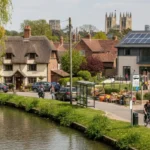


Grantchester, a small village on the River Cam just two miles south of Cambridge, is far better known than its size suggests. It is a place where literary nostalgia, river‑side tourism and television drama meet the routines of school runs, village meetings and quiet cul‑de‑sacs.
- Grantchester in Context: A Riverside Neighbour to Cambridge
- Historical Layers: From Medieval Parish to Cultural Landmark
- Literary and Cultural Fame: How Tourism Found Grantchester
- The Tourist Experience: Meadows, Punts and Tea Gardens
- Everyday Grantchester: Community, Housing and Quiet Rhythms
- Points of Tension: When Tourism Meets Local Life
- Conservation and Stewardship: Protecting Meadows and Heritage
- Experiencing Grantchester Responsibly: A Sustainable Approach
For visitors, Grantchester offers meadows, tea gardens and a storybook church framed by willows along the Cam. For residents, it is a historic parish, an evolving community and a living landscape shaped by centuries of farming, university links and gradual change. This contrast between tourism and local life is what makes Grantchester such a compelling subject for anyone interested in Cambridge city and its hinterland.
Grantchester in Context: A Riverside Neighbour to Cambridge
Grantchester sits on the west bank of the River Cam (historically the River Granta) just before it enters Cambridge from the south‑west. The village lies roughly three kilometres from the city centre, making it one of Cambridge’s closest rural escapes and a natural extension of many visitors’ itineraries.
The parish has deep historical roots. Artefacts from prehistoric times, traces of Roman occupation and Saxon remains all point to continuous settlement long before Grantchester was recorded as “Grantesete” in the Domesday Book of 1086. Medieval Grantchester was organised into large open fields divided into strips, many of which eventually passed into the ownership of Cambridge colleges, tying the village’s fortunes to the university for centuries.
Today, those ties remain visible. King’s College owns the famous Grantchester Meadows, while both King’s and Corpus Christi College have long exercised influence over parish land and the church. As Cambridge has grown into a global university city and technology hub, Grantchester has absorbed increasing levels of commuting, day‑tripping and media attention, while still retaining the scale and feel of a traditional Cambridgeshire village.
Historical Layers: From Medieval Parish to Cultural Landmark
The history of Grantchester helps explain why tourism has become so central to its identity. The parish church of St Andrew and St Mary contains stonework dating from the twelfth century, with the chancel rebuilt in the mid‑fourteenth century and the tower added in the late fourteenth or early fifteenth century. Later additions, such as the sixteenth‑century porch and Victorian restoration of the nave in the 1870s, mirror broader patterns of English church architecture and village life.
During the Middle Ages, the village landscape revolved around open‑field agriculture oats, beans and barley rotated across great fields and grazed by livestock. The arrival of college landowners from Cambridge brought new forms of management, rents and building styles, but the essential rhythm of rural life remained: farming, church, local crafts and trade.
In the nineteenth and twentieth centuries, the village navigated social and economic change. A National School built in 1830 for the children of the “labouring poor” was enlarged in 1867, responding to population growth and the influx of workers mining local coprolite deposits (phosphate‑rich nodules used as fertiliser). Twentieth‑century milestones included the destruction of Grantchester Mill by fire in 1928, the erection of the Village Hall that same year, and the eventual closure of village farms such as Merton Farm and Lacie’s Farm as agricultural structures shifted.
This gradual evolution has left Grantchester with a layered identity: at once a medieval parish, a Victorian village and a modern commuter settlement. Tourism, which today centres on its riverside paths, literary associations and café culture, has grown on top of this historical foundation rather than replacing it entirely.
Literary and Cultural Fame: How Tourism Found Grantchester
One of the strongest pulls for visitors is Grantchester’s place in English cultural history. The Old Vicarage, next to The Orchard Tea Garden, is famously associated with the poet Rupert Brooke, who lodged nearby and immortalised the house and village in his 1912 poem “The Old Vicarage, Grantchester.”
In the poem, written while Brooke was in Berlin, Grantchester appears as an idealised English refuge of “peace and holy quiet,” with meadows, chestnut trees and a “slumbrous stream” that symbolise a lost rural innocence. The work is playful and satirical as well as nostalgic, but its enduring popularity has cemented Grantchester in the literary imagination as a place of beauty and contemplation.
The Orchard Tea Garden, originally a simple spot where Cambridge students took tea under fruit trees, became a well‑known gathering place for early twentieth‑century intellectuals and has since evolved into a destination in its own right. The Old Vicarage itself, now a private house, still draws quiet curiosity; its connection to Brooke remains part of the village’s narrative even as it functions as an ordinary (if high‑profile) residence.
Grantchester’s cultural profile widened again in the 1960s when Pink Floyd recorded the song “Grantchester Meadows,” an atmospheric evocation of the river landscape that further entrenched the meadows as a symbol of pastoral calm. More recently, the ITV drama “Grantchester,” set in the 1950s and filmed largely in and around the village, has brought new waves of fans seeking familiar streets, the church and riverside scenes they recognise from television.
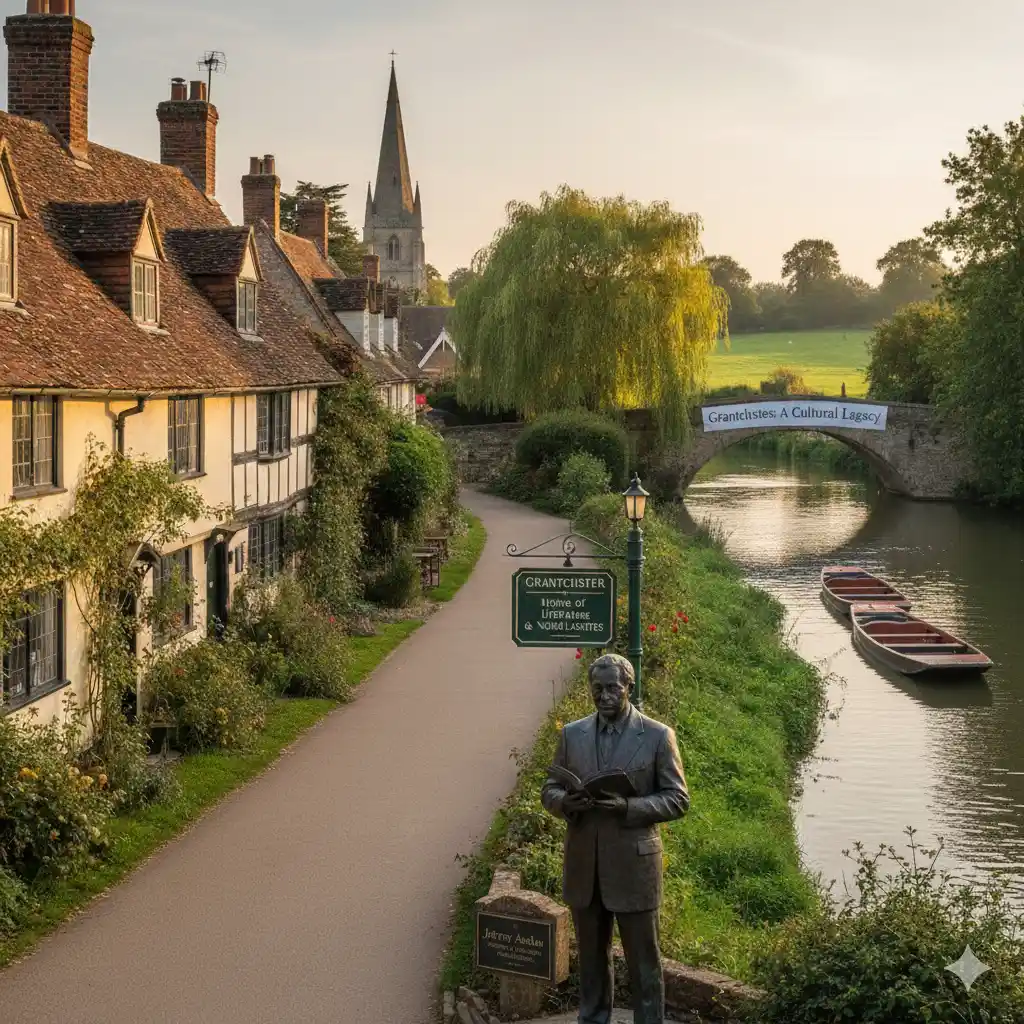
Alongside these, the village has been home to notable residents such as novelist and politician Jeffrey Archer and, at times, a remarkably high concentration of Nobel Prize winners connected with Cambridge. Together, literature, music, television and high‑profile residents have turned Grantchester into a cultural brand, which both fuels tourism and reshapes how locals experience their own village.
The Tourist Experience: Meadows, Punts and Tea Gardens
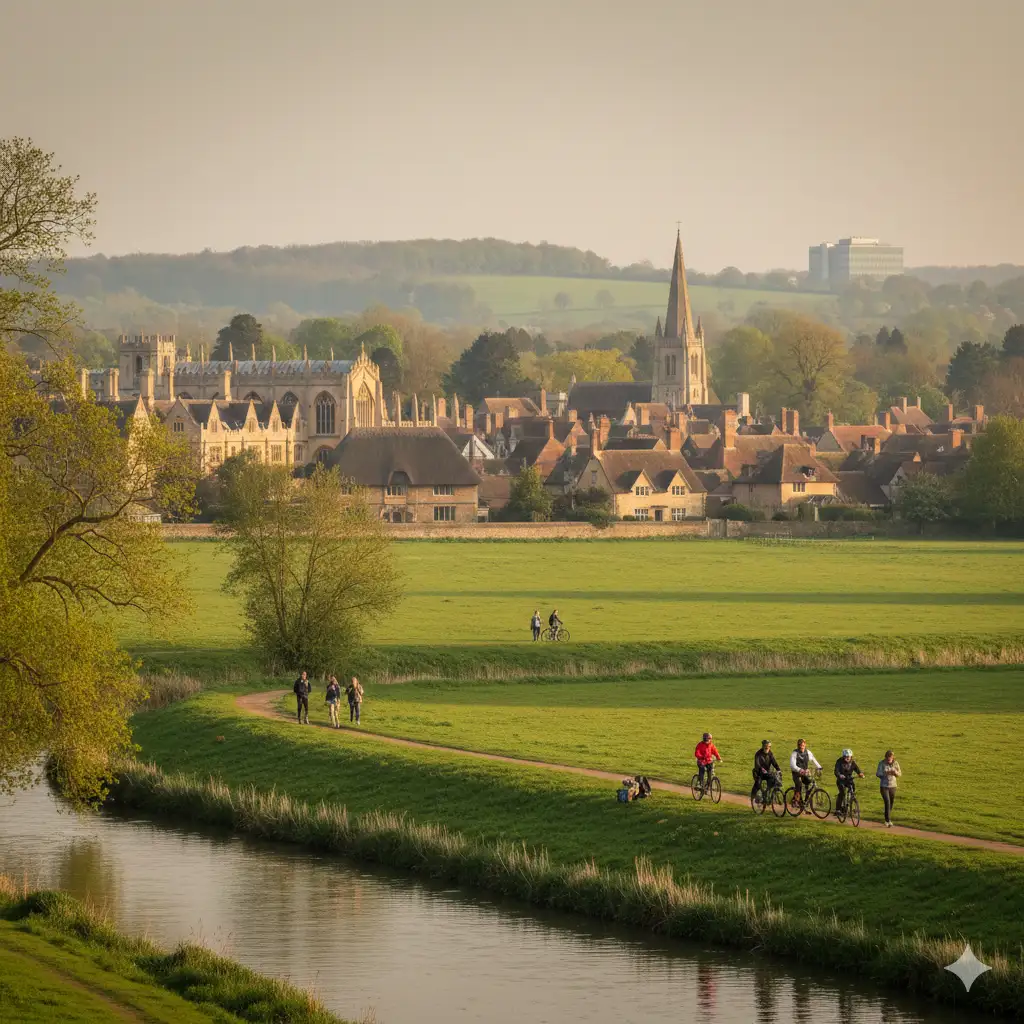
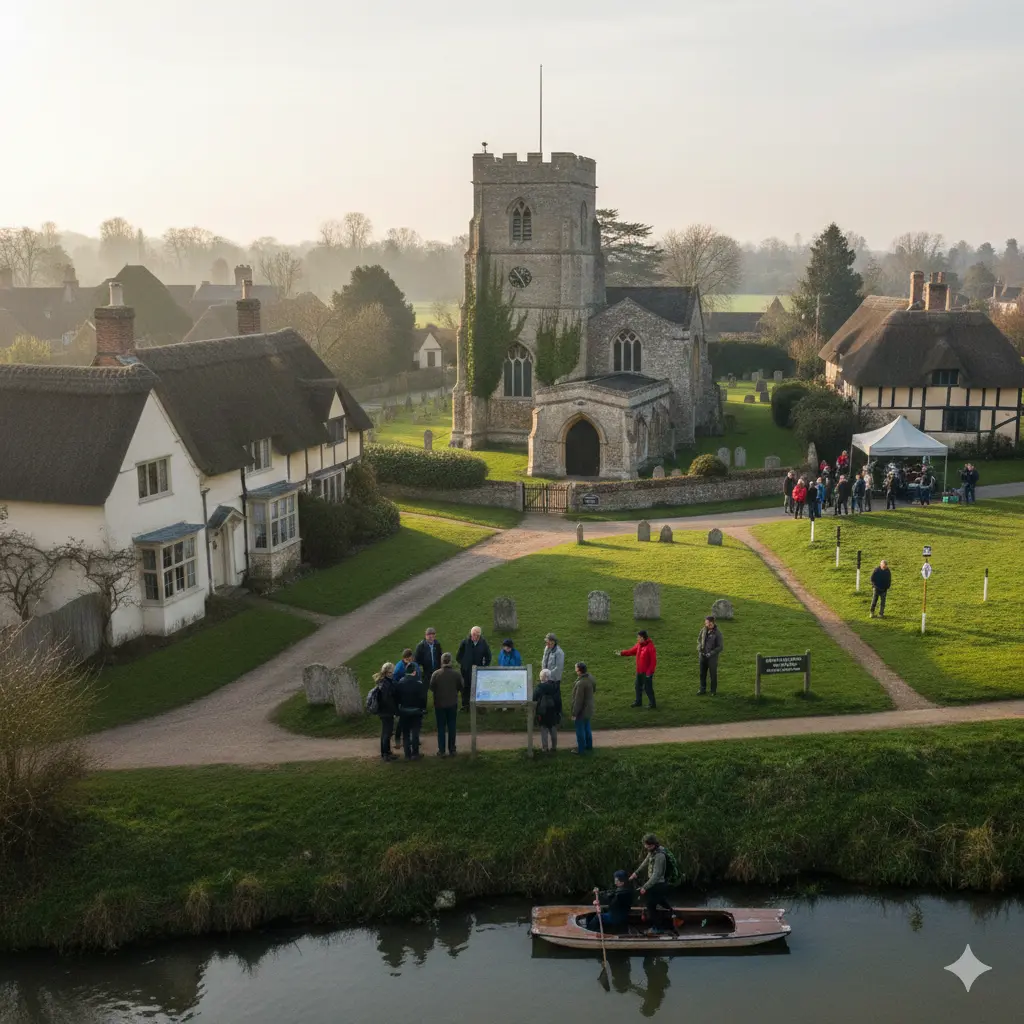
For day‑trippers from Cambridge, the classic approach to Grantchester is on foot or by punt along the River Cam. The walk across Grantchester Meadows grazed by cattle and stretching between the city’s edge and the village is one of the most famous short rambles in the area. Cared for by conservation organisations and protected from development by legal covenants, the meadows are cherished both as a recreational space and as an ecological asset.
The village itself offers a cluster of experiences that reinforce its storybook appeal. The Orchard Tea Garden provides outdoor seating among trees, with an atmosphere that connects directly to the early twentieth‑century “tea under the apple trees” tradition that helped define Grantchester’s charm. Village pubs, many of which pre‑date the television series but have gained renewed visibility through it, serve as social hubs for both residents and visitors.
Thanks to the ITV series, guided tours and informal walks now often highlight filming locations, from the church of St Andrew and St Mary to streets and meadows that double as 1950s Cambridgeshire. The village’s preserved architecture, relatively modest modern infill and carefully managed landscape mean very little “set dressing” is needed to evoke the period, which in turn heightens its tourist appeal.
On peak summer weekends, this concentration of attractions can bring substantial numbers of people through a very small settlement. For tourists, the experience is generally one of leisurely walking, river views, tea, and a sense of stepping into a literary and televisual past. For residents, this same pattern of popularity is more complex.
Everyday Grantchester: Community, Housing and Quiet Rhythms
Behind the visible layer of tourism, Grantchester remains a lived‑in community with its own rhythms, concerns and routines. The village contains a mix of historic cottages, converted farm buildings and more modern houses, reflecting the shift from purely agricultural employment to a population that includes commuters, academics and professionals connected to Cambridge.
Local institutions such as the church, Village Hall and former school buildings continue to structure communal life. The Village Hall, built in 1928, hosts events and meetings and stands as a symbol of local organisation in the face of change, from the loss of the mill to the decline of village‑based agriculture. The closure of Grantchester School in the early 1980s altered daily patterns, with older children travelling to larger schools such as Sawston Village College, underscoring the village’s shift toward reliance on nearby centres.
For residents, the meadows and river are not just scenic backdrops but part of their everyday environment a place for dog‑walking, running and seasonal rituals as much as for holiday snapshots. At the same time, the influx of visitors has implications for parking, traffic, house prices and the availability of local services, raising questions common to many small communities near major cities.
Grantchester’s reputation as a desirable address bolstered by its cultural cachet and proximity to Cambridge also contributes to higher property values, attracting affluent buyers and making it harder for younger or lower‑income households to remain in or move into the village. The result is a delicate social mix in which long‑established families, new arrivals and part‑time residents share the same lanes and riverbanks but may experience the village differently.
Points of Tension: When Tourism Meets Local Life
The interplay between tourism and local life in Grantchester often manifests at practical, everyday points. Busy weekends can strain narrow roads and limited parking, particularly as visitors arrive by car rather than on foot or by bicycle from Cambridge. Increased footfall along river paths and through the meadows contributes to wear on paths, litter concerns and the need for robust conservation management.
The pastoral image promoted by literature, music and television can also create expectations that sit uneasily with the realities of a twenty‑first‑century village. Visitors may imagine Grantchester as timeless and untouched, whereas residents live with planning decisions, school closures, rising costs and the same digital connectivity that shapes life elsewhere. This gap between the “ideal Grantchester” and the lived one can sometimes lead to frustration, especially when tourist behaviour shows little awareness of the village’s residential character.
Commercial pressure is another flashpoint. Popular venues such as tea gardens and pubs understandably tailor their offer to meet visitor demand, but their success can influence the balance of amenities available to locals, from pricing to opening hours. Meanwhile, the profile raised by the ITV drama and other media depictions can drive demand for short‑term accommodation, potentially affecting the long‑term rental market.
At the same time, many residents recognise the benefits tourism brings: business revenue, employment opportunities and a heightened incentive to maintain village amenities and landscapes. The challenge is less about tourism’s existence than about its scale, timing and management.
Conservation and Stewardship: Protecting Meadows and Heritage
Grantchester’s ability to support both tourism and local life rests heavily on careful stewardship of its environment and historic fabric. The Grantchester Meadows, owned by King’s College and managed in partnership with local conservation organisations, represent a model of how treasured landscapes can be protected in a peri‑urban context. Legal covenants secured decades ago to prevent development have ensured that the meadows remain open, grazed and largely unspoilt despite rising pressures.
Conservation groups and local authorities have worked to balance visitor access with ecological health, managing grazing regimes, footpath routes and signage to minimise damage and preserve biodiversity. This stewardship aligns with national and regional policies that recognise the importance of green belts and accessible countryside around cities like Cambridge, where urban expansion can otherwise erode nearby rural character.
Heritage protection extends into the village itself. The church of St Andrew and St Mary is listed at Grade II*, reflecting both its medieval origins and later architectural features. Historic houses, including the Old Vicarage, form part of a conservation area where alterations are scrutinised for their impact on character and setting. Such designations can sometimes complicate everyday renovation projects for homeowners, but they also safeguard the qualities that attract both residents and visitors.
Local involvement is crucial. Parish councils, residents’ groups and landowners all contribute to decisions about footpath maintenance, event licensing and responses to planning applications that might affect views, traffic or flood risk. In this sense, the balance between tourism and local life in Grantchester is negotiated continually, not fixed.
Experiencing Grantchester Responsibly: A Sustainable Approach
For people arriving from Cambridge, it is increasingly important to approach Grantchester not just as a photogenic backdrop but as a living community. Choosing to walk or cycle via the riverside paths rather than driving reduces congestion and parking pressure while offering a more immersive experience of the landscape. Staying on marked paths, respecting grazing livestock and taking litter home all help preserve the meadows for both wildlife and future visitors.
In the village, supporting independent businesses at quieter times of day or year can spread the economic benefits more evenly and ease pressure on peak weekends. Engaging with the local story by visiting the church, reading about the history at village displays or exploring the background of Rupert Brooke’s poem deepens understanding beyond the familiar images on screen or page.
For residents and local organisations, tools such as information boards, community‑led events and digital communication can help shape visitor behaviour and expectations, reinforcing the idea that Grantchester is more than just a set or a poem. The ultimate goal is not to discourage tourism but to cultivate a kind of visit that supports, rather than undermines, the qualities that make the village distinctive.
Grantchester’s story is one of layers: prehistoric settlement, medieval farming, Victorian schooling, literary fame, musical association, television drama and ongoing conservation work. Tourism has grown from these layers, turning the village into a recognised name far beyond Cambridgeshire, yet it remains anchored by its church, hall, meadows and everyday routines.
The contrast between tourism and local life is not a simple clash but a dynamic relationship. Visitors bring income, attention and a sense of shared appreciation for landscape and heritage; residents bring stewardship, continuity and the lived reality that keeps Grantchester from becoming a mere museum piece.
For Cambridge‑based travellers and global tourists alike, the most rewarding way to experience Grantchester is to look beyond its postcard image: to notice the working fields, the community notices, the conservation efforts and the quiet lanes that exist alongside the famous meadows and tea gardens. In doing so, they can play a part in sustaining a village that is at once a treasured destination and a place that people simply call home.