Cambridge hosts over 35 independent coffee shops and four historic municipal markets that serve the city’s 145,700 residents. Local venues such as Bould Brothers Coffee, Hot Numbers Coffee, and the daily Cambridge Market Square anchor the city’s specialty retail and hospitality economy.
- What Defines the Independent Coffee Scene in Cambridge?
- Which Central Cambridge Coffee Shops Serve Specialty Roasts?
- How Do Neighborhood Cafes in Mill Road and Chesterton Differ from City Centre Venues?
- What Is the History and Structure of Cambridge Market Square?
- Where Can Residents Find Farmers Markets and Specialty Food Markets in Cambridge?
- How Do Local Residents Navigate Opening Hours, Peak Times, and Sustainability Policies?
- What Is the Economic and Community Impact of Independent Food Retailers in Cambridge?
- What is the best coffee shop in Cambridge to work from on a laptop?
- Which days is Cambridge Market open and what does it sell?
- Where do locals go for independent coffee away from tourists in Cambridge?
- Do Cambridge Market stalls take card or cash only?
- Which Cambridge coffee shops roast their own beans locally?
Cambridge operates as a major academic and technology center in Cambridgeshire, England, situated 55 miles north of London along the River Cam. The city’s retail landscape balances centuries-old collegiate architecture with modern independent food and beverage enterprises.
Local residents rely on neighborhood roasteries and open-air market stalls for daily provisions, artisanal bread, specialty coffee, and seasonal produce. Unlike high-street chains, these independent businesses source directly from regional farms in East Anglia and international specialty coffee estates.
The municipal government, Cambridge City Council, regulates market trading pitches and street cafe licensing across the historic core and residential wards.
What Defines the Independent Coffee Scene in Cambridge?
Cambridge’s independent coffee sector comprises specialty roasteries, micro-espresso bars, and neighborhood cafes that prioritize direct-trade beans and precision brewing. Established between 2011 and 2024, these venues serve students, university faculty, and technology workers across central and suburban districts.
Specialty coffee in Cambridge refers to Arabica coffee beans graded at 80 points or above on the 100-point Specialty Coffee Association scale. Local roasters import green beans from origins including Ethiopia, Colombia, and Brazil, roasting them in small batches within Cambridgeshire.
This localized production model ensures peak freshness, typically delivering roasted beans to espresso hoppers within 7 to 14 days of roasting. Furthermore, independent cafes in the city emphasize water filtration, calibrating mineral content to match Cambridge’s naturally hard, chalk-filtered groundwater.
The commercial evolution of Cambridge’s coffee culture accelerated after 2011 with the founding of Hot Numbers Coffee on Gwydir Street. Prior to 2011, traditional tea rooms and national chains dominated the central retail core around Petty Cury and Sidney Street.
Today, independent operators occupy historic timber-framed buildings, converted Victorian warehouses, and compact kiosks near railway and bus interchanges. According to local business directory data from 2025, independent cafes account for 42 percent of all sit-down coffee venues within the CB1, CB2, and CB3 postcode districts.
Three distinct categories of independent coffee establishments operate across the city: dedicated specialty roasteries, compact takeaway espresso bars, and hybrid bakery-cafes. Dedicated specialty roasteries include Hot Numbers Coffee on Trumpington Street and Stir Bakery and Coffee on Chesterton Road.
Compact takeaway espresso bars include Bould Brothers Coffee on Round Church Street and Kerb Kollective on Regent Street. Hybrid bakery-cafes include Fitzbillies on Trumpington Street and Norfolk Street Bakery near Petersfield.
Which Central Cambridge Coffee Shops Serve Specialty Roasts?
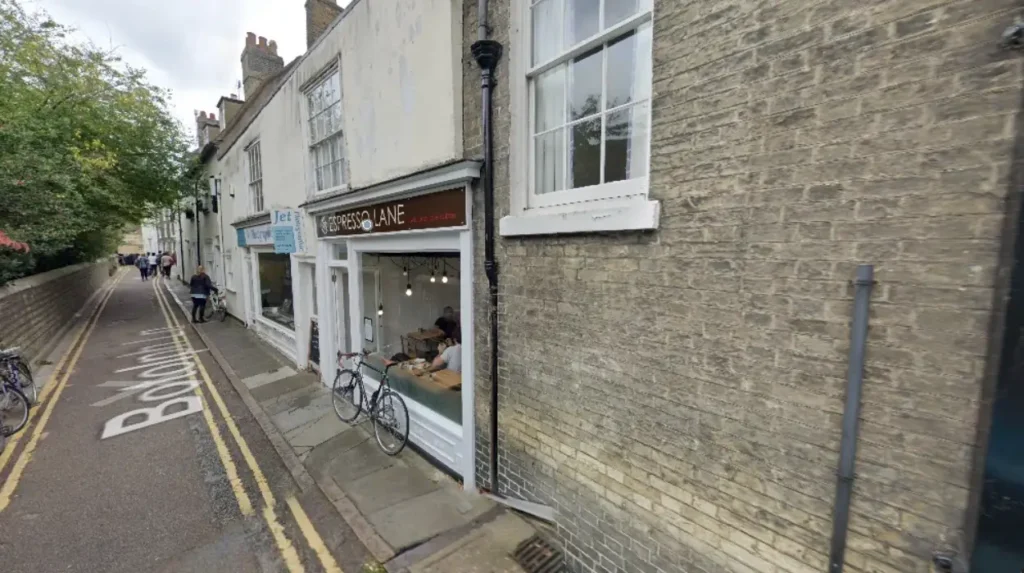
Central Cambridge features five primary specialty coffee shops within a 10-minute walk of King’s Parade: Bould Brothers Coffee, Hot Numbers Coffee, Relevant Record Cafe, Indigo Coffee House, and Espresso Library. Each venue serves single-origin espresso and filter brews daily.
Bould Brothers Coffee operates two central locations on Round Church Street and Regent Street, founded by brothers Max and Alex Bould in 2016. The Round Church Street shop occupies a narrow ground-floor unit opposite the 12th-century Church of the Holy Sepulchre.
Baristas pull espresso shots using custom-roasted blends from Square Mile Coffee Roasters and seasonal guest roasters. The venue maintains a minimalist standing-bar layout designed for rapid takeaway service and focused tasting without laptop seating.
Hot Numbers Coffee operates three sites across the city, including its central flagship on Trumpington Street near the Fitzwilliam Museum. Founded by Simon Fraser, the company roasts all its coffee at The Roastery in Shepreth, located 8 miles southwest of Cambridge.
The Trumpington Street cafe offers a full brunch menu alongside V60 pour-over filter coffees, batch brews, and espresso drinks. Live jazz performances take place weekly at the original Gwydir Street location, which opened in a former printworks in 2011.
Espresso Library sits on East Road opposite Parker’s Piece, combining specialty coffee service with cycling culture and nutritional dining. Opened in 2015, the venue features high ceilings, communal oak tables, and wall-mounted road bicycles.
The bar team serves specialty espresso sourced from Workshop Coffee alongside cold-pressed juices and plant-based meals. Relevant Record Cafe on Mill Road pairs an independent vinyl record shop upstairs with a ground-floor specialty coffee bar and kitchen.
How Do Neighborhood Cafes in Mill Road and Chesterton Differ from City Centre Venues?
Neighborhood cafes in Petersfield, Romsey, and Chesterton offer larger floor plans, dedicated laptop-friendly seating, and integrated artisan bakeries. Located 1 to 2 miles outside the historic core, these venues cater primarily to long-term residents rather than short-stay tourists.
Mill Road runs southeast from Parker’s Piece through the residential wards of Petersfield and Romsey, spanning 1.1 miles across the railway bridge. This thoroughfare contains the highest concentration of independent food businesses in Cambridge, regulated under specific local conservation area guidelines.
Cafes along Mill Road experience lower commercial rent per square foot than properties near Market Square, allowing operators to maintain spacious dining rooms. Consequently, residents use these spaces for remote work, community meetings, and weekend family breakfasts.
Stir Bakery and Coffee on Chesterton Road anchors the independent cafe scene north of the River Cam in the CB4 postcode area. Established in 2015, Stir operates an on-site sourdough bakery producing 1,500 loaves weekly alongside a full-service specialty coffee bar.
The cafe offers a sheltered rear courtyard garden and indoor seating for 65 guests. Just south of the river in Petersfield, Norfolk Street Bakery operates a Portuguese-inspired artisan bakery and cafe known for freshly baked pastel de nata custard tarts and dark-roast espresso.
Other prominent residential neighborhood venues include Urban Larder on Mill Road, Thrive on Norfolk Street, and Modigliani on Mill Road. Urban Larder serves locally roasted coffee alongside gourmet toasted sandwiches made with regional Cambridgeshire cheeses.
Thrive operates as a fully vegan cafe and community hub on Norfolk Street, offering specialty coffee and plant-based pastries. These suburban venues foster repeat daily patronage, with regular customers accounting for over 75 percent of weekday morning transactions.
What Is the History and Structure of Cambridge Market Square?
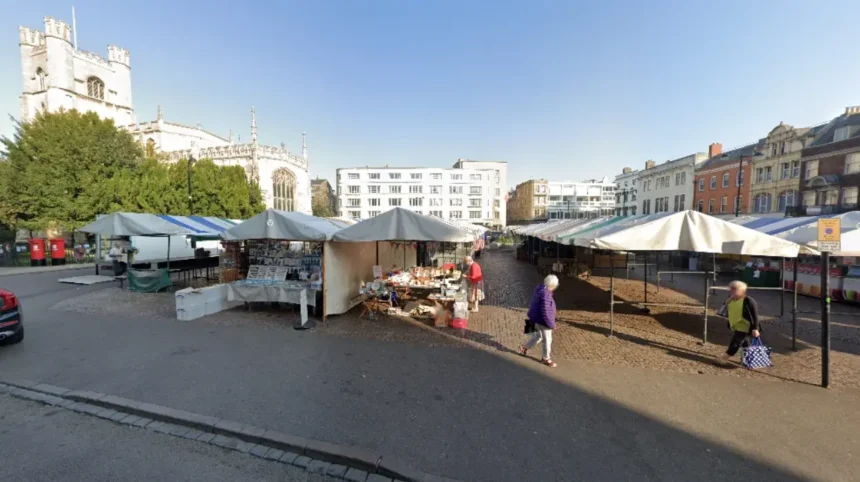
Cambridge Market Square has operated continuously as an open-air trading hub since the Saxon era, receiving its formal royal charter in the 12th century. Today, Cambridge City Council manages 98 daily trading pitches across the cobbled square seven days a week.
Located in the center of Cambridge between St Mary’s Church and the Guildhall, Market Square measures approximately 3,200 square meters. Historical records from the Domesday Book of 1086 confirm established market trading in the town during the 11th century.
King Henry I granted Cambridge a monopoly on river trade in 1120, solidifying the central market’s economic dominance in East Anglia. The iconic striped canvas roofs covering the wooden stalls remain a protected visual feature of the Central Conservation Area.
Cambridge City Council administers the market under the Food Act 1984 and local street trading bylaws. The General Market operates Monday through Saturday from 10:00 AM to 4:00 PM, hosting traders selling fresh fruit, vegetables, flowers, books, vinyl records, and street food.
On Sundays, the square transitions into the Arts, Crafts and Local Produce Market, featuring regional artisans, ceramicists, and small-batch food producers. All food traders must hold a minimum Food Hygiene Rating of 4 or 5 issued by the Environmental Health department.
Four distinct product categories dominate the daily trading stalls at Cambridge Market Square: fresh agricultural produce, hot street food, secondhand books, and handmade crafts. Fresh agricultural produce stalls include Hill’s Fruit and Veg, sourcing seasonal crops from Fenland farms in northern Cambridgeshire.
Hot street food stalls include African food vendors, Venezuelan arepa kitchens, and wood-fired pizza carts. Secondhand bookstalls sell rare academic texts, out-of-print Penguin paperbacks, and vintage maps of the Fens.
Where Can Residents Find Farmers Markets and Specialty Food Markets in Cambridge?
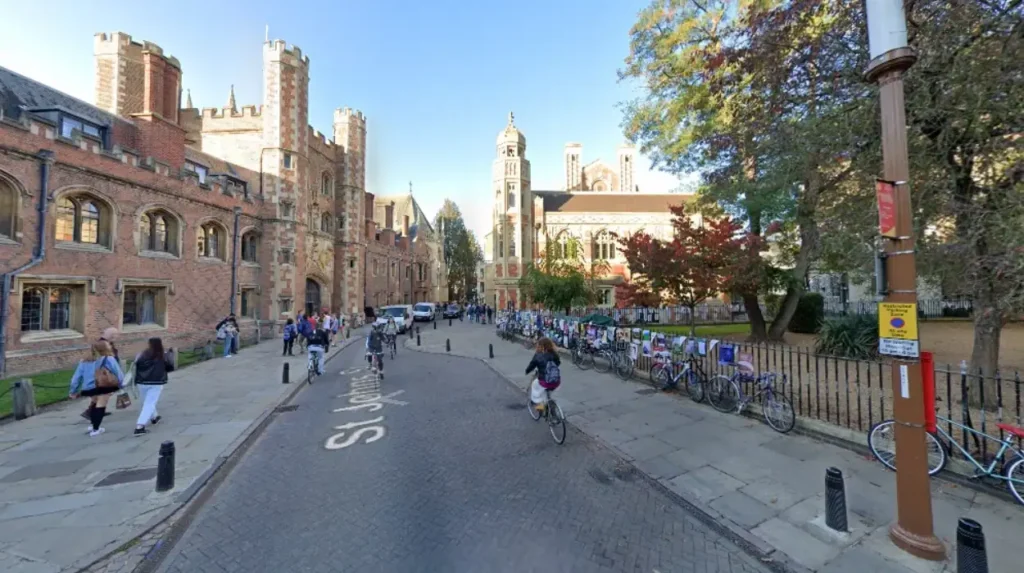
Residents access four specialized weekly and monthly food markets outside the central square: All Saints Garden Art and Craft Market, Cambridge Organic Food Company’s barn market, Chesterton Market, and Trumpington Street’s seasonal produce stalls.
All Saints Garden Art and Craft Market operates every Saturday from 10:00 AM to 5:00 PM opposite Trinity College on Trinity Street. Established over 35 years ago, this fenced garden market hosts 25 independent makers, photographers, jewelers, and small-batch food producers.
Unlike the general municipal market, All Saints Garden requires every trader to design and manufacture their own goods locally within East Anglia. The venue provides direct artist-to-resident sales without third-party retail markups.
Further north in the CB4 district, the Cambridge Farmers Market operates on Saturday mornings at the Cambridge Regional College campus in King’s Hedges. This producer-only market enforces a strict 30-mile radius rule, ensuring all meats, cheeses, honey, and baked goods originate in Cambridgeshire or bordering counties.
Regular stalls include Fenland free-range poultry farms, artisanal goat cheese dairies from Suffolk, and heritage apple orchards from Ely. Farmers markets protect regional agricultural biodiversity by giving smallholders direct access to urban consumers.
Pop-up night markets and seasonal food festivals supplement the permanent weekly schedule throughout the calendar year. The Cambridge Foodies Market takes place monthly at the Junction on Clifton Way, bringing together 15 independent street food trucks and local craft breweries.
Participating breweries include Calverley’s Brewery from Hooper Street and Milton Brewery from Waterbeach. These events operate from 5:00 PM to 10:00 PM on Friday evenings, drawing up to 1,200 local residents per session.
How Do Local Residents Navigate Opening Hours, Peak Times, and Sustainability Policies?
Most independent Cambridge coffee shops open at 7:30 AM on weekdays and 8:30 AM on weekends, closing between 4:00 PM and 5:00 PM. Market stalls operate from 10:00 AM to 4:00 PM, with peak congestion occurring between 12:30 PM and 2:00 PM.
Timing visits correctly prevents long queues at popular central venues, particularly during University of Cambridge term times. The academic year runs across three 8-week terms: Michaelmas from October to December, Lent from January to March, and Easter from April to June.
During these 24 weeks, student footfall increases central cafe occupancy by 40 percent compared to university vacation months in July, August, and September. Residents visiting central spots like Bould Brothers Coffee before 9:00 AM or after 3:00 PM encounter minimal wait times.
Sustainability initiatives shape daily operations across Cambridge’s independent hospitality and market sectors. Under the Cambridge Sustainable Food Partnership, over 60 independent cafes and market stalls participate in the Cambridge Sustainable Food Gold Award framework.
Participating coffee shops offer a 25p to 50p discount for customers bringing reusable cups, reducing single-use paper cup waste by an estimated 350,000 units annually. Market traders actively eliminate single-use plastics, utilizing biodegradable kraft paper bags, compostable starch containers, and deposit-return glass milk bottles.
Payment infrastructure across both coffee shops and open-air market stalls operates on a predominantly cashless basis. Following the rapid adoption of contactless technology between 2020 and 2023, 98 percent of Cambridge market traders accept contactless debit cards, Apple Pay, and Google Pay.
However, carrying £10 to £20 in physical cash remains practical for small purchases under £2 at traditional fruit and vegetable stalls. Bicycle parking is available at designated Sheffield stands along St Andrew’s Street, Guildhall Street, and Mill Road, though cyclists must dismount inside pedestrianized zones between 10:00 AM and 4:00 PM.
What Is the Economic and Community Impact of Independent Food Retailers in Cambridge?
Independent coffee shops and markets retain up to 63 pence of every pound spent within the local Cambridgeshire economy, compared to 14 pence for national chains. These businesses employ over 1,400 local workers and sustain regional East Anglian agricultural supply chains.
Local economic multiplier research conducted by the New Economics Foundation demonstrates that independent retailers recirculate wealth locally through regional suppliers, local accountants, and community wages.
When a resident purchases a £3.60 flat white at an independent Cambridge roastery, the revenue funds local roasting staff, Cambridgeshire dairy farms such as Fen Farm Dairy, and local sourdough bakeries. By contrast, national corporate coffee chains extract profit margins to centralized headquarters outside the region.
Independent cafes and markets also function as essential third places that counter social isolation in a rapidly growing city. Cambridge’s population grew by 17.6 percent between the 2011 and 2021 UK Censuses, driven by expansion at the Cambridge Biomedical Campus and Silicon Fen technology parks. Neighborhood venues on Mill Road, Chesterton Road, and Histon Road integrate newly relocated residents into established local communities. Bulletin boards inside cafes like Stir and Urban Larder advertise local concerts, language exchanges, and mutual aid groups.
Looking ahead to 2027 and beyond, Cambridge City Council’s Market Square Project outlines a multi-million-pound regeneration plan for the central market. The redevelopment proposal includes upgraded underground electrical hookups, improved drainage, demountable weather-resistant canopies, and expanded evening dining spaces.
While high commercial business rates and rising green coffee commodity prices present ongoing financial pressures, strong resident loyalty ensures the long-term resilience of Cambridge’s independent food and coffee ecosystem.
What is the best coffee shop in Cambridge to work from on a laptop?
Espresso Library on East Road and Stir Bakery on Chesterton Road offer the best setups for laptop work, providing spacious communal tables, reliable Wi-Fi, and accessible power outlets. Central espresso bars like Bould Brothers Coffee on Round Church Street have no seating and strictly cater to takeaway customers.
Which days is Cambridge Market open and what does it sell?
Cambridge Market Square is open seven days a week from 10:00 AM to 4:00 PM. From Monday to Saturday, the General Market sells fresh fruit, vegetables, flowers, street food, books, and clothing, while Sunday features the Arts, Crafts and Local Produce Market.
Where do locals go for independent coffee away from tourists in Cambridge?
Local residents head to Mill Road in Petersfield and Chesterton Road north of the river to avoid city center crowds. Popular neighborhood spots include Urban Larder, Relevant Record Cafe, Norfolk Street Bakery, and Stir Bakery, all located a 15-to-20-minute walk from King’s Parade.
Do Cambridge Market stalls take card or cash only?
Nearly all stalls at Cambridge Market Square and All Saints Garden Market accept contactless card payments, Apple Pay, and Google Pay. Carrying a small amount of cash is only necessary for minor purchases under £2 at traditional produce stalls.
Which Cambridge coffee shops roast their own beans locally?
Hot Numbers Coffee roasts all its specialty beans locally at its dedicated roastery in Shepreth, just 8 miles outside Cambridge. Kerb Kollective on Regent Street and several independent stalls at the Saturday Farmers Market also supply locally roasted small-batch beans.