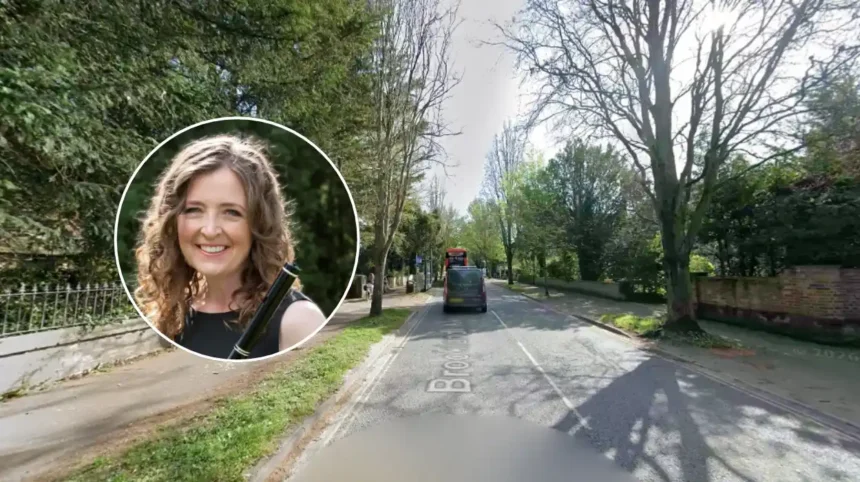
Key Points
- Folk musician Allison Lupton released Step Up Molly, a new song and video based on the story of the Hespeler Mill Girls.
- The track is the title song on Lupton’s 11-track album from October 2026, which includes performances by Matthew Byrne, Billy Sutton, Emilia Bartellas, and The Andrew Collins Trio.
- Lupton wrote the lyrics about the roughly 5,000 young women from rural Newfoundland recruited in the 1940s to work at Dominion Woollens and Worsteds Ltd. in Hespeler, Ontario.
- Local heritage archives, a CBC News interactive feature, and a non-fiction book by journalist Heather Barrett have previously covered the workers’ history.
- To promote the album, Lupton went on tour and performed in her hometown at Central Presbyterian Church in Cambridge on November 7, 2026.
Hespeler (Cambridge Tribune) November 12, 2026 – Folk musician Allison Lupton has released a new song and video titled Step Up Molly, drawing inspiration from the thousands of young women from rural Newfoundland who travelled to Hespeler during the 1940s to work in the local textile industry.
As reported by CambridgeToday, the well-known chapter of Hespeler history has transitioned from archival websites and non-fiction literature into folk music.
The composition serves as the title track for Lupton’s latest album, Step Up Molly, which officially debuted on October 19, 2026.
What is Allison Lupton’s new song Step Up Molly about?
The lyrics of Step Up Molly chronicle how roughly 5,000 young women from rural Newfoundland were recruited in the 1940s to support Canada’s wartime and post-war manufacturing efforts. These women relocated to southwestern Ontario to take up positions at the Dominion Woollens and Worsteds Ltd. textile plant in Hespeler, which is now part of the City of Cambridge.
To bring the transatlantic and cross-provincial narrative to life musically, Lupton collaborated with several prominent folk and traditional artists. The recording features contributions from Newfoundland musicians Matthew Byrne, Billy Sutton, and Emilia Bartellas alongside The Andrew Collins Trio.
As reported by CambridgeToday Staff in an earlier tour announcement, Lupton—an acclaimed singer-songwriter, flutist, and multiple Canadian Folk Music Award Traditional Singer of the Year nominee—promoted the 11-song record with a regional launch tour. The tour included a local performance at Central Presbyterian Church in Cambridge on November 7, 2026.
How was the Hespeler Mill Girls story previously documented?
Before inspiring Lupton’s musical tribute, the legacy of the Mill Girls was preserved through community heritage initiatives, investigative journalism, and published books.
As reported by Heather Barrett of CBC News, the history gained widespread attention when archival photographs and family recollections surfaced detailing how young single women left fishing outports for industrial jobs in Ontario. Barrett later expanded her research into a non-fiction book titled The Mill Girls: The Newfoundland Women who Transformed Canada’s Industrial Heartland.
Reflecting on the significance of the migration in her coverage for CBC News, playwright Bernadine Stapleton stated:
“It was more than just a demographic shift. It was cultural, it was financial, it was feminist.”
As reported by CambridgeToday Staff ahead of a local author event, the realities of the factory floor were demanding for the young recruits. Summarising the working conditions documented in the historical accounts, CambridgeToday Staff noted:
“These were industrial woollen mill jobs with 10-hour shifts, community living quarters and no safety net of family or home, but somehow the mill girls made it work and their legacy lives on today.”
Background of the Hespeler Mill Girls
During the 1940s, Dominion Woollens and Worsteds Ltd. operated a massive 15-acre textile facility in Hespeler, employing around 1,200 workers at its peak.
Facing severe labour shortages driven by wartime uniform production and the subsequent post-war manufacturing boom, company recruiters looked beyond Ontario to central and western Newfoundland, which was still a British dominion prior to joining Confederation in 1949.
Recruiters held promotional seminars in rural Newfoundland communities, offering single women aged 17 and older paid passage by boat and train to Hespeler, along with wages of 49 cents an hour—provided they committed to a one-year contract.
While the wages were roughly 40 to 50 per cent lower than those paid to male mill workers at the time, the opportunity offered unprecedented financial independence to women from remote outports. Many of these recruits settled permanently in the Waterloo Region, establishing a lasting Newfoundland heritage across Cambridge.
Prediction: How this development can affect local audiences and heritage preservation
The release of Step Up Molly as both a recorded song and visual music video is expected to broaden public engagement with Hespeler’s industrial past among folk music listeners and younger generations in Cambridge and Newfoundland.
By pairing Ontario songwriting with prominent Newfoundland musicians, the project bridges the two regions culturally and encourages descendants of the original mill workers to share family archives.
Local heritage organisations, such as the Hespeler Heritage Centre, and regional arts venues may also see increased interest in historical programming and live folk performances centred on Canadian labour history.