

Key Points
- More than 90 per cent of children’s Halloween costumes purchased online fail basic UK safety standards, an investigation by the Chartered Trading Standards Institute found.
- Tests showed 91 per cent of sampled outfits lacked required safety markings, omitted flammability warnings, or posed choking and strangulation risks.
- UK law classifies children’s fancy dress as toys, requiring garments to meet strict flammability and product safety rules.
- Investigators bought the non-compliant items from third-party sellers on Amazon, eBay, AliExpress, OnBuy, and TikTok Shop.
- Trading Standards officers and fire officials told parents to look for valid UKCA or CE marks and keep children away from open flames.
LONDON (Cambridge Tribune) October 16, 2026 – Consumer protection authorities and fire rescue services across the United Kingdom have issued an urgent warning to parents after safety tests revealed that over 90 per cent of children’s Halloween costumes purchased online fail to meet basic UK product safety laws.
- Key Points
- Why Are Children’s Fancy Dress Costumes Failing Legal Standards?
- How Serious Are the Physical Risks posed by These Non-Compliant Outfits?
- What Guidance Has Been Released for Parents and Buyers?
- What Is the Background of This Particular Development?
- What Is the Prediction for Consumers and Retailers?
Why Are Children’s Fancy Dress Costumes Failing Legal Standards?
As reported by Joshua Searle of UK Today, test purchases conducted by the Chartered Trading Standards Institute (CTSI) uncovered widespread non-compliance across popular online marketplaces. The investigation examined fancy dress items purchased via third-party sellers on major digital retail platforms. Officials discovered that 91 per cent of the costumes sampled breached statutory UK safety regulations.
The primary legal breaches included missing UKCA (UK Conformity Assessed) or CE safety markings, absent or inadequate mandatory flammability warnings, and lack of manufacturer traceability details. Furthermore, several products featured severe physical design flaws such as excessively long neck cords, unsecured ribbons, sharp brooch pins, and neck accessories lacking breakaway safety release mechanisms.
“Beyond missing essential safety markings such as a CE and UKCA mark, and a lack of traceability information, there are also concerns that some of the costumes may not comply with British safety standards,” noted official findings released by the Chartered Trading Standards Institute.
How Serious Are the Physical Risks posed by These Non-Compliant Outfits?
Children’s fancy dress costumes are legally categorized as toys under UK law, subjecting them to strict flammability criteria to reduce burn risks. Trading Standards officers highlighted that flowing fabrics, synthetic nettings, and long waist ribbons pose significant entrapment and fire hazard risks during active play.
During product testing on specific items sourced from online marketplaces including Amazon, eBay, AliExpress, OnBuy, and TikTok Shop, investigators identified specific safety hazards:
- A child’s zombie cheerleader outfit and a ghost bride dress lacked mandatory safety labels and contained potential choking hazards.
- A vampire cloak designed for young children featured neck cords capable of presenting a strangulation risk.
- A Cleopatra costume set exhibited a strong chemical odour and featured long arm drapings susceptible to catching fire if brought near open flames.
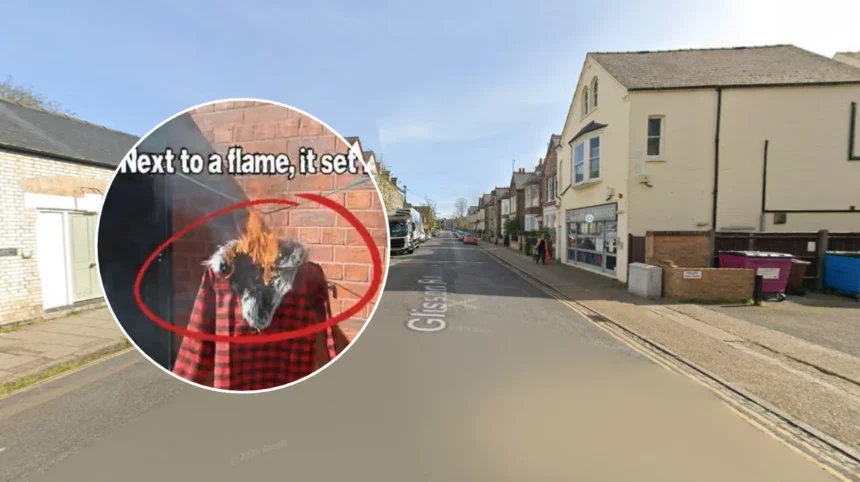
“Fancy dress costumes are a real area of concern, if people don’t follow basic safety advice. If your children have dressed up, keep them away from open flames and heat sources,” stated Station Commander Rob Hill, Fire Investigation Officer at London Fire Brigade.
“If a costume catches fire, it can cause significant burns that might put your children’s health at serious risk. It’s important to ensure that the costume meets British or European safety standards,” Hill added.
What Guidance Has Been Released for Parents and Buyers?
The Chartered Trading Standards Institute and fire services recommend that parents carefully inspect garments prior to purchase. Legitimate costumes sold in the UK must display either a UKCA or CE mark on packaging alongside the full name and UK address of the manufacturer or importer.
Consumers are urged to buy directly from reputable retailers or verified UK-based sellers. CTSI also highlighted that homemade fancy dress outfits do not automatically guarantee safety, as materials like felt, cotton, synthetic mesh, and craft ribbons remain highly flammable. Fire officers recommend replacing real candles inside carved pumpkins with battery-operated lights or glow sticks to eliminate open flame risks.
What Is the Background of This Particular Development?
The safety of children’s fancy dress costumes has been a prominent public health and consumer safety topic in the United Kingdom for over a decade.
Public awareness increased substantially following a high-profile incident in 2014, when the daughter of television presenter Claudia Winkleman suffered severe burns after her supermarket-bought Halloween costume caught fire from a lit pumpkin candle.
Following that incident, industry bodies and the British Retail Consortium (BRC) introduced a voluntary Code of Practice on flammability, establishing stricter test standards than minimum statutory toy requirements.
Despite these improvements among high-street retailers and major brand chains, the rapid expansion of third-party e-commerce platforms and international cross-border sellers has created ongoing enforcement challenges for consumer protection authorities.
What Is the Prediction for Consumers and Retailers?
This latest development is likely to accelerate legislative pressure on major online marketplaces to accept direct legal accountability for third-party seller listings in the UK.
For parents and consumers, increased enforcement will result in a wider removal of unverified, budget-priced fancy dress options from online listings ahead of the holiday season. Consumers should expect to see prominent safety advisories on major e-commerce storefronts, along with stricter vetting processes for third-party importers.
In the short term, families seeking compliant costumes may experience higher price points from recognized retailers, while online shoppers will need to exercise greater scrutiny to verify UKCA and CE credentials.