
Key Points
- Cambridgeshire County Council approved nearly £1 million for local road safety projects across the county.
- The package funds 79 Local Highway Improvement (LHI) schemes and seven new 20mph speed limit zones.
- Parish councils, town councils, and community groups can receive up to £25,000 for complex LHI projects and up to £15,000 for non-complex schemes.
- Under the programme, residents and local groups submit proposals for specific safety measures, including traffic calming, pedestrian crossings, footpaths, and signage.
- Councillor Alex Beckett, Chair of the Highways and Transport Committee, said the funding supports community-led proposals and promotes active travel options.
Cambridgeshire (Cambridge Tribune) October 10, 2026 – Almost £1 million is being spent on improving the state of Cambridgeshire’s roads after county councillors formally agreed to fund a wide-ranging package of community-driven highway and speed-reduction projects.
The local authority confirmed approval for 79 Local Highway Improvement (LHI) schemes together with seven newly designated 20mph projects following detailed feedback and applications submitted by parish councils, town councils, and local community groups.
As reported by Greatest Hits Radio News, Councillor Alex Beckett, Chair of Cambridgeshire County Council’s Highways and Transport Committee, stated that “It’s brilliant to see continued high levels of locally-led applications to both our 20mph and LHI schemes from across the county.”
Councillor Alex Beckett further added: “Confirming nearly £1m of funding for these schemes highlights our commitment to empowering local communities to take a leading role in making their streets safer, encouraging healthier, more active travel where they live”.
What Measures Are Included in the Approved Road Safety Funding?
As reported by Cambridgeshire County Council, the approved investment specifically targets locally identified road hazards and community travel needs through two primary mechanisms: the Local Highway Improvement (LHI) framework and dedicated 20mph zone installations.
Under the LHI framework, funding is split across both complex and non-complex highway schemes. Complex projects receive up to £25,000 in council funding and encompass physical traffic-calming interventions such as zebra crossings, speed cushions, road humps, central pedestrian islands, footpaths, modal filters, and heavy commercial vehicle weight restrictions.
Non-complex projects receive up to £15,000 for smaller scale improvements, including speed indication devices, Mobile Vehicle Activated Signs (MVAS), street lighting, buffer zones, cycle parking, and Community Speed Watch equipment.
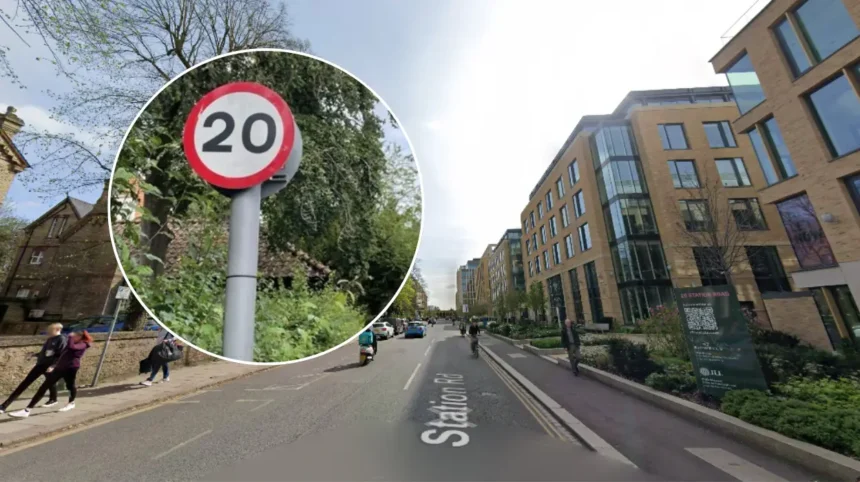
In addition to the 79 LHI developments, seven standalone 20mph speed limit projects were approved following local consultations aimed at lowering vehicle speeds in residential hubs and near school zones.
How Are Local Highway Improvement Schemes Financed and Delivered?
As reported by Cambridgeshire County Council official scheme guidelines, the LHI programme operates as a partnership funding model between the county authority and applicant communities. Town and parish councils or registered community groups submit proposals to solve specific safety issues on public highways, committing to contribute at least 10% of the total project costs from local funds.
Once schemes are evaluated by highway engineering specialists and approved by the Highways and Transport Committee, the county council manages detailed design, legal Traffic Regulation Orders (TROs), independent road safety audits, and physical construction alongside approved highways contractors.
Background of the Development
The Local Highway Improvement (LHI) programme and dedicated 20mph schemes have formed a central pillar of Cambridgeshire County Council’s local transport strategy over recent years. The initiative was introduced to decentralise decisions regarding minor highway modifications, giving rural parish councils and urban town groups a direct channel to address localized speeding, poor pedestrian visibility, and hazardous junction layouts without waiting for major infrastructure overhauls.
Historically, county-wide road safety initiatives were managed predominantly through centralized collision-data models, prioritizing interventions at sites with recorded casualty histories. However, community feedback highlighted that preventative measures were frequently needed in locations where residents felt unsafe walking or cycling due to excessive speeds, even before serious accidents occurred.
The council subsequently integrated LHI and 20mph funding streams to align with its broader Vision Zero Partnership goal—a multi-agency strategy alongside emergency services aimed at eliminating road fatalities and serious injuries across Cambridgeshire and Peterborough.
Future Prediction: How Will This Development Affect Local Residents and Road Users?
The allocation of nearly £1 million across 86 targeted projects will directly impact daily commuters, pedestrians, cyclists, and residents across urban and rural Cambridgeshire.
For residents in villages and suburban neighborhoods receiving new 20mph zones and physical traffic calming, lower vehicle speeds are expected to reduce neighborhood noise, decrease near-miss incidents, and create safer environments for children walking to school.
Pedestrians and active travel commuters will benefit from enhanced infrastructure such as new zebra crossings, footpaths, and cycle facilities, encouraging a shift away from short car journeys toward walking and cycling.
For motorists, the introduction of visual speed reminders (MVAS) and engineered speed cushions across 79 locations will necessitate greater speed compliance and driver awareness in residential zones.
Over the long term, these localized interventions are anticipated to lower localized collision rates, reduce emergency response demands, and provide a repeatable framework for other Cambridgeshire communities seeking tailored road safety enhancements in future funding cycles.