

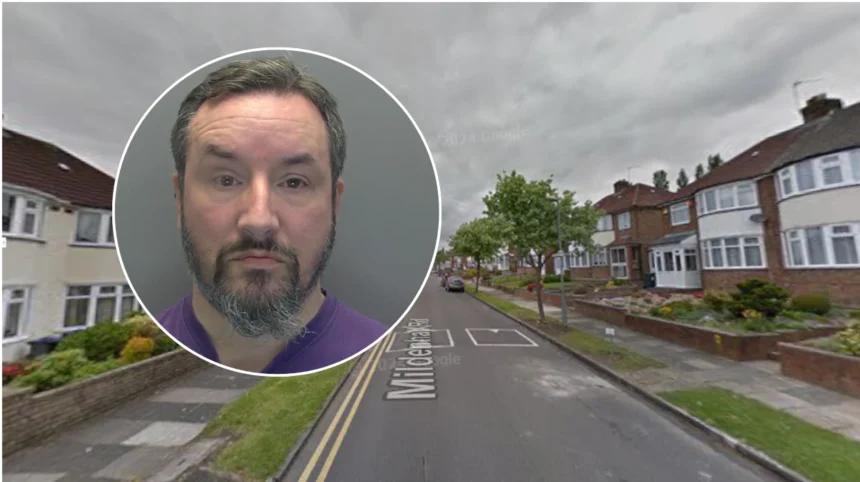
Key Points
- Bradford Crown Court sentenced 37-year-old company director Nicholas Gray to two years and three months in prison.
- Gray was caught after communicating explicitly online with an undercover West Yorkshire Police officer posing as a 12-year-old schoolgirl.
- Court records show Gray engaged in explicit sexual conversations with the decoy profile across three weeks.
- Gray sent the account an explicit image and wrote, “I could be at your school in 35 minutes.”
- Judge McKone noted Gray carried out the conduct under the full belief he was speaking to a young child.
Bradford (Cambridge Tribune) September 30, 2026 — As reported by Sophie Corcoran and John Davies of YorkshireLive, company director Nicholas Gray, 37, of Bradford, has been jailed after targeting an online profile he believed belonged to a young child, which was in fact managed by an undercover police officer.
As reported by YorkshireLive, Gray appeared at Bradford Crown Court, where he was sentenced to two years and three months in prison after pleading guilty to online grooming offences. The prosecution detailed how Gray carried out sexually explicit exchanges over a three-week span with a decoy account configured to represent a 12-year-old schoolgirl.
As documented in the court proceedings covered by YorkshireLive, Gray expressed a willingness to meet the fictitious minor, sending messages stating, “I could be at your school in 35 minutes”. He subsequently transmitted an indecent image of himself to the decoy profile, prompting law enforcement to intervene and make an arrest.
As stated during the hearing by defence advocate Mr Gibbs on behalf of the defendant, the offending took place over two years prior to the sentencing hearing, and counsel submitted to the court that there remained a prospect of rehabilitation in Gray’s case.
As reported by YorkshireLive, presiding Judge McKone rejected non-custodial options when delivering the verdict, noting that for approximately three weeks, Gray actively engaged in explicit sexual conversations with an individual he fully believed and intended to be a 12-year-old child. Judge McKone concluded that the seriousness of the grooming conduct warranted an immediate custodial sentence of 27 months.
What Is the Background to Undercover Law Enforcement Stings targeting Online Predators?
The deployment of covert digital accounts by police forces across the United Kingdom represents a core strategy in combating online child sexual exploitation and abuse (OCSEA). Law enforcement units, including specialized online child protection teams within West Yorkshire Police, regularly monitor digital spaces and social platforms to detect individuals attempting to contact and groom minors.
Historically, undercover decoy operations were developed to complement law enforcement responses to civilian “paedophile hunter” groups. While private vigilante groups often conduct public operations, police-led decoy operations ensure strict adherence to legal standards of evidence, safeguarding principles, and chain of custody. Undercover police decoys operate under rigorous regulatory guidelines to ensure evidence gathered withstands scrutiny under UK law, leading directly to criminal prosecutions and formal convictions in crown courts.
What Are the Future Implications and Predictions for Society, Tech Users, and Law Enforcement?
This judicial outcome underlines growing regulatory and law enforcement scrutiny surrounding online communications platforms.
For parents, educators, and guardians, the outcome reinforces the necessity of active internet safety education and vigilance regarding young people’s online activity. It highlights the persistence of digital threats while demonstrating that law enforcement covertly operates across digital channels to intercept potential offenders.
For technology platforms and social media companies, cases involving covert enforcement emphasize the imperative to implement stronger age-verification protocols, robust algorithmic flags for predatory behaviour, and prompt compliance with police investigations. Continued pressure from legislation, such as the UK Online Safety Act, will likely push digital service providers toward tighter access controls to mitigate grooming risks.
For potential offenders, the conviction sends a unambiguous deterrent message: online profiles are not guaranteed to be anonymous, and digital interactions targeting perceived minors carry a high risk of law enforcement sting operations resulting in immediate custodial sentences and entry onto the Sex Offenders Register.