

Key Points
- Over 800 Metropolitan Police officers carried out early-morning raids across four counties against suspected members of an organised crime group.
- Officers raided a home in Cambridgeshire as part of the coordinated operation.
- The raids follow a months-long investigation run alongside Her Majesty’s Revenue and Customs and the Financial Conduct Authority.
- Police searches continue at several addresses, and officers will remain in the affected areas over the next few days.
- Officials from the Metropolitan Police, HMRC, and the FCA said the joint operation aimed to stop criminal networks abusing the financial system.
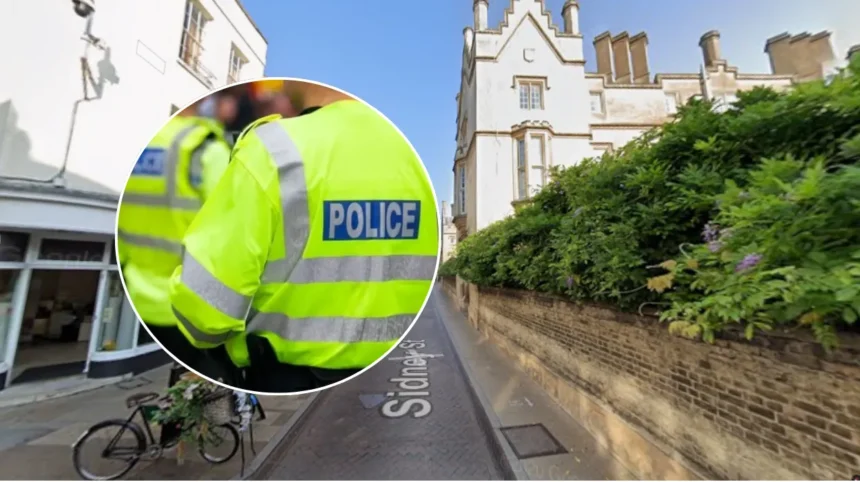
CAMBRIDGESHIRE (Cambridge Tribune) September 29, 2026 — A residential property in Cambridgeshire was raided in the early hours of Tuesday morning as part of a massive, multi-agency law enforcement operation targeting organised crime.
As reported by baseline reporting staff at Cambridgeshire Live, more than 800 Metropolitan Police officers carried out coordinated raids across four counties in the early hours of 29 September 2026. The raids followed a complex, months-long investigation into high-level criminal networks. Officers raided an address in Cambridgeshire as part of the dynamic enforcement phase, which involved specialist units alongside officers from partner agencies.
Which authorities were involved in the multi-county operation?
The enforcement action was spearheaded by the Metropolitan Police with direct operational support from Her Majesty’s Revenue and Customs (HMRC) and the Financial Conduct Authority (FCA).
Addressing the scale and importance of the investigation, a spokesperson for the Metropolitan Police outlined the depth of work required to target serious networks:
“Lines can often be drawn from the top, all the way to those involved in the criminality that blights communities, including serious violence and exploitation,” the Metropolitan Police spokesperson stated. “Investigating these groups is among the most complex work the Met undertakes. It requires a significant investment of time and money and the expertise not just of specialist police officers but of colleagues from partner organisations like HMRC and the FCA.”
The Metropolitan Police confirmed that officers remain on site at several locations. As noted by reporting staff at Cambridgeshire Live, searches are continuing at a number of properties and members of the public should expect an ongoing police presence in the affected areas over the coming days.
“We hope these arrests show how determined we are to ensure organised crime groups cannot operate freely in London. We will work tirelessly to identify them, to gather evidence and to take action,” the Metropolitan Police spokesperson added.
What statements were issued by partner financial agencies?
Both financial regulators and tax enforcement bodies underscored the necessity of cross-agency operations when confronting complex financial and organised crime.
As reported by Cambridgeshire Live, a spokesperson for the Financial Conduct Authority (FCA) stated:
“Tackling financial crime requires the type of partnership shown by today’s joint action and the many months of close cooperation leading to it. We’ll continue to work with the police and others to identify and disrupt organised crime groups who abuse our financial system to launder dirty money.”
Similarly, a spokesperson for Her Majesty’s Revenue and Customs (HMRC) highlighted that the execution of coordinated warrants demonstrates the “importance of close collaboration” between tax authorities and law enforcement partners when tackling illicit financial flows and serious criminality.
Background of the particular development
Multi-county enforcement sweeps involving hundreds of officers reflect an ongoing shift in British law enforcement strategies toward disrupting organised crime groups (OCGs) at the structural level. Rather than focusing solely on localized street-level offending, joint operations between regional police forces, the Metropolitan Police, HMRC, and the FCA aim to cut off criminal supply chains and dismantle money laundering channels.
Cambridgeshire and surrounding Home Counties have increasingly featured in cross-border police operations due to transport links connecting regional hubs with the capital. Operations of this magnitude typically follow extensive surveillance, financial forensics, and intelligence-gathering phases lasting several months, intended to secure evidence against senior figures within criminal hierarchies.
Prediction: How this development can affect local communities and financial sectors
This major law enforcement action is likely to have immediate and long-term impacts across several key groups:
- Local Residents and Communities: In the short term, residents in Cambridgeshire and surrounding counties will observe an increased uniformed police presence and continued search activity at target properties. Over the longer term, law enforcement disruptions of this scale aim to reduce associated community harms, such as local exploitation, financial fraud, and linked violent criminality.
- Organised Criminal Networks: The multi-agency disruption sends a clear deterrent signal that operating outside primary metropolitan jurisdictions does not provide immunity from capital-based police units. The involvement of financial regulators increases the likelihood of asset freezing orders and proceeds-of-crime confiscation actions.
- Financial Institutions and Regulators: The visible involvement of the FCA and HMRC signals tighter scrutiny on money laundering vulnerabilities. Banking institutions and professional services may face heightened regulatory expectations regarding anti-money laundering (AML) compliance, suspicious activity reporting, and customer due diligence checks.