

Key Points
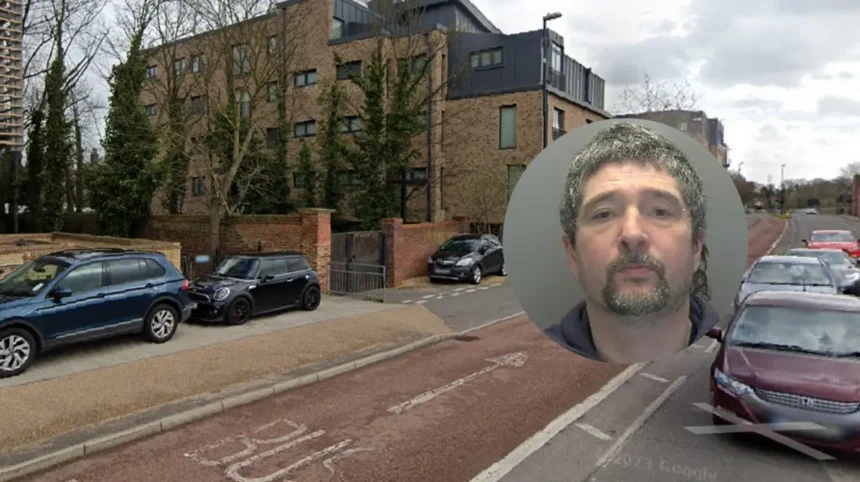
- Tony Devlin, aged 43 and who has no fixed abode, has been restricted from drinking in the streets and entering shops in Huntingdon as a consequence of anti-social behaviour.
- This restriction has been imposed by Cambridgeshire Police in light of the ongoing disorder at the heart of the town.
- Violation of this restriction could lead to arrest and possible criminal proceedings against Tony.
- This is in line with other anti-social behaviour measures being undertaken in Cambridgeshire.
Cambridge (Cambridge Tribune) August 06, 2026 – A Huntingdon man has been banned from street drinking and entering shops following persistent anti-social behaviour, Cambridgeshire Police confirmed today. Tony Devlin, 43, of no fixed address, is now subject to restrictions that prohibit him from consuming alcohol in public spaces and accessing retail premises in the town, following a pattern of incidents that prompted action from local authorities and law enforcement.
- Key Points
- What is the Huntingdon street drinking and shop ban?
- Why was Tony Devlin banned from shops and street drinking?
- How will the ban be enforced in Huntingdon?
- What broader anti-social behaviour measures exist in Cambridgeshire?
- Background of the development
- Prediction: How could this affect residents and businesses in Huntingdon?
What is the Huntingdon street drinking and shop ban?
The restrictions imposed on Devlin form part of a broader toolkit available to police and councils under the Anti-social Behaviour, Crime and Policing Act 2014, which allows for targeted civil orders to prevent specific behaviours linked to disorder. As reported by Cambridgeshire Police in an official news release published on August 06, 2026, the order prohibits Devlin from drinking alcohol in public areas and entering shops within Huntingdon, measures designed to address repeated complaints from residents and businesses.
According to the force’s statement, the order was sought after Devlin was linked to ongoing anti-social conduct in the town centre, including street drinking and behaviour that caused alarm or distress to members of the public. Police said that failure to comply with the terms of the order constitutes a criminal offence, which can lead to arrest and prosecution.
Why was Tony Devlin banned from shops and street drinking?
Cambridgeshire Police said the order was necessary due to persistent anti-social behaviour attributed to Devlin, though the force did not provide a detailed breakdown of individual incidents in its public announcement. The wording used by the police aligns with the legal threshold for civil behavioural orders, which require evidence that the subject’s actions have caused, or are likely to cause, harassment, alarm or distress to others.
In recent months, Huntingdon has seen a series of enforcement actions targeting anti-social behaviour, including property closure orders and public space restrictions. The Huntingdon Town Centre Public Spaces Protection Order (PSPO), managed by Huntingdonshire District Council, already prohibits alcohol consumption in defined areas of the town centre and requires individuals to stop behaviour that is harassing, alarming or distressing to others.
How will the ban be enforced in Huntingdon?
Enforcement of the order falls to Cambridgeshire Constabulary officers and Police Community Support Officers (PCSOs), who have powers to intervene if Devlin is found breaching the terms. Under the PSPO framework, authorised officers can require individuals to surrender open containers of alcohol and to disperse from locations where they are causing distress to others.
If Devlin is found in breach of the behavioural order, he could face arrest and subsequent court proceedings, as breaches of civil orders tied to anti-social behaviour are treated as criminal offences. The police have not specified the duration of Devlin’s order in their public statement, but similar orders in Cambridgeshire have typically run for fixed periods, often between six months and two years, depending on the severity and persistence of the behaviour.
What broader anti-social behaviour measures exist in Cambridgeshire?
The action against Devlin sits within a wider pattern of anti-social behaviour enforcement across Cambridgeshire in 2026. In May 2026, the government introduced a new Respect Order under the Crime and Policing Act 2026, a civil behavioural order enabling courts to ban adult offenders from specified activities linked to their anti-social conduct. While it is not confirmed whether Devlin’s order is formally a Respect Order, the language and structure mirror the new powers designed to target persistent offenders.
Locally, Cambridgeshire Police have secured multiple property closure orders in 2026, including addresses in Huntingdon, St Neots, Ramsey and Peterborough, where repeated reports of drug use, violence and disorder were recorded. In one case, a Huntingdon home was closed for three months after concerns over violence, drug misuse and anti-social behaviour, with police stating the aim was to prevent individuals from committing further offences at the address.
Huntingdonshire District Council has also pursued civil injunctions and PSPOs to manage disorder in town centres. The Huntingdon Town Centre PSPO covers the area within the Huntingdon Ring Road and prohibits public alcohol consumption, urination or defecation in public places, and behaviour that is harassing, alarming or distressing to others. A separate civil injunction order granted in November 2024 covers St Neots town centre and prohibits similar conduct for a two-year period.
Background of the development
The order against Tony Devlin follows a long-standing use of civil orders to manage anti-social behaviour in England and Wales. Anti-Social Behaviour Orders (ASBOs), introduced in the late 1990s, were replaced in 2014 by a suite of powers under the Anti-social Behaviour, Crime and Policing Act 2014, including PSPOs, civil injunctions and Criminal Behaviour Orders (CBOs). These tools allow councils and police to target specific behaviours and locations without requiring a criminal conviction, though breach of the orders is a criminal matter.
In Cambridgeshire, these powers have been used increasingly in 2025 and 2026 amid rising reports of street drinking, drug-related disorder and town centre nuisance. High-profile cases include orders against individuals in Cambridge city centre who were banned from begging and from entering defined areas after repeated incidents. The introduction of the Respect Order in 2026 further expanded the ability of courts to impose tailored restrictions on adult offenders, focusing on activities directly linked to their anti-social conduct.
Prediction: How could this affect residents and businesses in Huntingdon?
If enforced consistently, the ban on Tony Devlin could reduce visible street drinking and related nuisance in Huntingdon town centre, potentially improving the experience for shoppers, residents and visitors. Local businesses, particularly those in the retail and hospitality sectors, have previously reported that persistent anti-social behaviour can deter customers and increase staff stress, so targeted restrictions may help restore confidence in the town centre environment.
However, the impact will depend on the resources available for enforcement and whether similar measures are applied to other persistent offenders. Cambridgeshire Police and Huntingdonshire District Council have signalled a continued focus on anti-social behaviour in 2026, with multiple closure orders and PSPOs already in place. If this case is part of a coordinated, visible enforcement strategy, it could contribute to a broader reduction in disorder. Conversely, if enforcement is sporadic, the effect may be limited to temporary displacement of the behaviour rather than a sustained improvement.