
Key Points
- Jason Arday resigned from the University of Cambridge and Jesus College immediately, effective from 5 August 2026.
- This resignation came after Cambridge University announced a formal investigation into Arday’s academic qualifications and honorary appointments, due to new information coming to light.
- There are several allegations made against Arday – including plagiarism in his PhD thesis and published articles, as well as media reports mentioning that there were over 100 instances of plagiarism detected.
- Another issue arose when Arday’s biography was investigated further, regarding his charity fundraising amounts and athletics achievements.
- Zack Polanski, Green Party Leader, defended Arday, arguing that sometimes people of colour may have “higher standards applied to them”, asking for a fair investigation instead of a trial by media.
- In his resignation letter, Arday stated that he could not find any other way to close the chapter, but at the same time, insisted that it does not mean that he accepts the allegations made against him.
- The University of Cambridge and Jesus College both will deal with misconduct allegations according to their respective policies, while the degree-awarding institution (Liverpool John Moores) has already reviewed plagiarism allegations before.
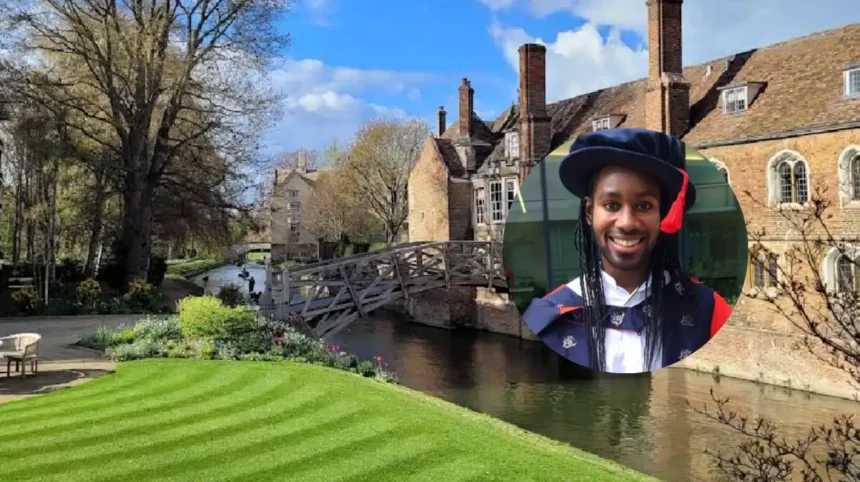
Cambridge (Cambridge Tribune) August 06, 2026 – The University of Cambridge has confirmed that Professor Jason Arday, its youngest Black professor appointed in 2023, has resigned with immediate effect amid a widening plagiarism and credibility row, as Green Party leader Zack Polanski argued that people of colour can be held to higher standards in public life.
- Key Points
- What triggered the investigation and resignation?
- Arday’s resignation statement and what he denied
- Zack Polanski’s defence and the “higher standards” claim
- University and college responses to the allegations
- Wider context: plagiarism rules and prior inquiries
- Background to the development
- Prediction: how this could affect audiences
What triggered the investigation and resignation?
The university said it launched an investigation “following new information” about Arday’s “academic qualifications and honorary appointments”, alongside ongoing complaints about academic misconduct handled under its research policy. Jesus College, where Arday held a fellowship, said it was also starting its own process in relation to the allegations.
The move came after sustained media reporting alleging that Arday had plagiarised parts of his PhD thesis and several journal articles. As reported by multiple outlets, archival records and plagiarism-detection tools reportedly identified more than 100 passages in his doctoral work that matched or closely resembled another academic’s dissertation. Some reports further alleged that text appearing in quotation marks was presented as personally interviewed material when it had been copied from other sources.
In parallel, questions were raised about biographical claims, including assertions about charity fundraising totals and extreme athletic feats, such as running hundreds of miles in a short period. The Telegraph, which first broke the plagiarism story in July, carried out its own analysis and said it found well over a hundred passages that were identical or a close match.
Arday’s resignation statement and what he denied
In an open resignation letter published on the Good Law Project website, Arday said he had “concluded that the only way to bring this chapter to an end is to step away”. He wrote that the decision was taken for the wellbeing of himself and his family, and that “the relentless accusations, speculation and public commentary have taken a profound toll on me and on those I love”.
He stressed that his resignation should not be interpreted as a loss of faith in scholarship or Cambridge’s values, and “nor should it be mistaken for an acceptance of the narratives that have surrounded me”. Arday added that it was “simply the decision of someone who has reached the limits of what any person should reasonably be expected to endure”.
Previously, Arday had told the Guardian that there had been “multiple thorough investigations across several institutions” and that an academic misconduct panel had concluded there was “no plagiarism or academic misconduct”. Cambridge had earlier said it had passed complaints to Liverpool John Moores University, where Arday completed his PhD, which had reviewed the work and found he had not plagiarised it.
Zack Polanski’s defence and the “higher standards” claim
Zack Polanski, leader of the Green Party, publicly defended Arday after the resignation was announced. As reported by LBC and carried by The Independent, Polanski said: “I think the whole affair sounds pretty sad… ultimately, I think these things should be about fair process and transparency rather than trial by media”.
He explained that he had signed a letter criticising “sustained and malicious attacks” on Arday’s integrity because it called for a fair university investigation and warned against judgment by social media. Polanski added:
“(The university) had already done, I think, two investigations and found there was no problem here or that the allegations were unfounded, and so (the letter) was about essentially saying that people of colour, particularly in society, can sometimes be held by higher standards”.
The Telegraph reported that Polanski suggested Arday had been held to higher standards because he is Black, quoting him as saying:
“People of colour … can sometimes be held by higher standards”. Polanski also said he supported what Cambridge was doing and that “where there are questions to be asked, and of course people should be investigated”.
University and college responses to the allegations
Cambridge said it takes allegations of academic misconduct “incredibly seriously” and that it is standard practice for investigations to be carried out by the institution where the research was undertaken, as that body has access to the information needed for a “full and fair investigation”. It confirmed that “there remains a number of ongoing complaints regarding academic misconduct, which are being handled in line with our misconduct in research policy”.
Jesus College separately said it was launching its own process in relation to the allegation, consistent with collegiate procedures for fellows. The university’s initial public response in July had described the claims against Arday as part of a “vile campaign to undermine his credibility”, before announcing the new investigation after further reporting emerged.
Wider context: plagiarism rules and prior inquiries
Under Cambridge’s ordinances, plagiarism is defined as “submitting as one’s own work, irrespective of intent to deceive, that which derives in part or in its entirety from the work of others without due acknowledgement”, and is described as both poor scholarship and a breach of academic integrity. The current case has drawn attention to how institutions balance due process, reputational risk, and the protection of academic standards when allegations involve high-profile figures.
Liverpool John Moores University previously reviewed the allegations concerning Arday’s thesis and, according to Cambridge’s statements, found no plagiarism. Arday has cited these earlier reviews in his public comments, while recent media reports have pointed to new material and broader questions about his published work and biographical claims.
Background to the development
The dispute began in September 2025 when Times Higher Education alleged that Arday had plagiarised parts of his PhD thesis and several journal articles. Cambridge initially responded by saying complaints had been referred to the degree-awarding institution, which had reportedly cleared him. Over the following months, additional reporting questioned biographical details, including charity fundraising figures and personal achievements.
In July 2026, The Telegraph published an analysis alleging extensive textual overlap between Arday’s doctoral work and another student’s dissertation, prompting renewed scrutiny. By early August 2026, the university announced a fresh investigation into “academic qualifications and honorary appointments” after “new information” came to light, and Arday resigned hours later. Polanski’s intervention came on 6 August 2026, as he defended Arday and called for a transparent, process-led approach rather than media-driven judgment.
Prediction: how this could affect audiences
For UK university communities, the case is likely to sharpen debates about how plagiarism complaints are investigated and communicated, especially when they involve senior or high-profile academics. For students and early-career researchers, the episode may reinforce expectations that all work will be scrutinised against integrity standards, while also highlighting the emotional and professional costs of protracted public disputes. For Black and minority-ethnic academics, Polanski’s comments could fuel discussion about whether scrutiny is applied consistently and whether race influences public narratives around misconduct. For the wider public, the focus may shift toward how universities balance fair process, reputational management, and the need to maintain confidence in academic credentials when allegations surface in the media.