
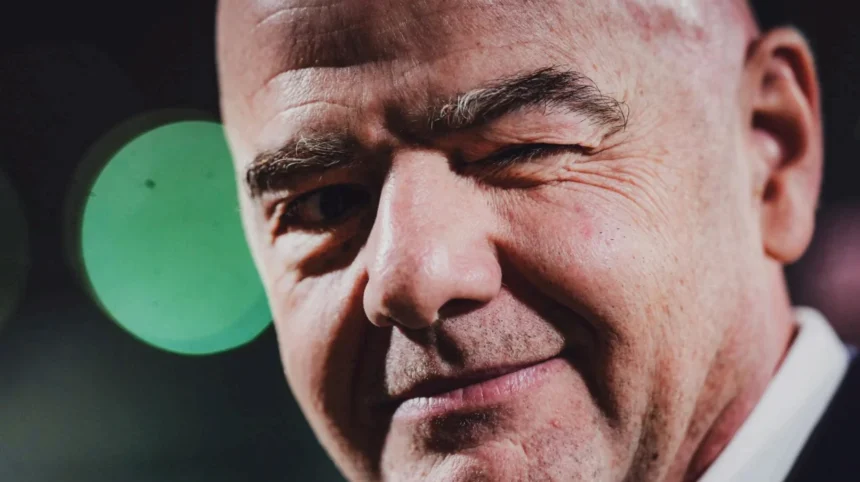
The FIFA president is under immense pressure from multiple fronts after UEFA declared that it had “lost confidence” in his leadership, while members of the FIFA Council are pushing for an extraordinary general meeting that could develop into a full-scale challenge to his position.
The crisis has been driven by two major controversies: the handling of the Folarin Balogun disciplinary case, which involved reported contact with Trump, and Infantino’s abandoned plan to sell a stake in a new World Cup commercial company.
Trump connection fuels FIFA concerns
The Balogun saga has become one of the most damaging issues of Infantino’s presidency.
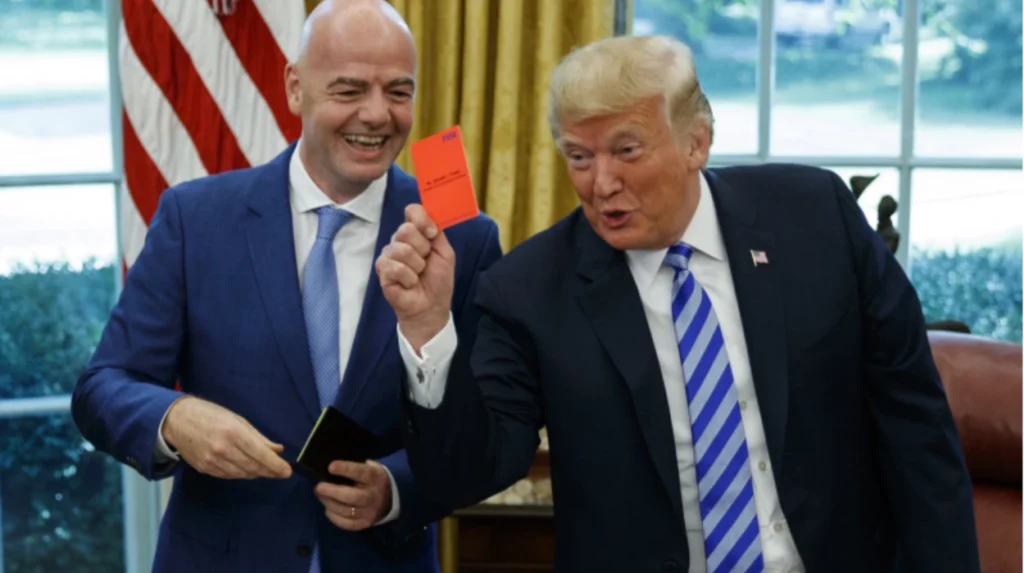
According to The Guardian, FIFA Council members had already begun moves to call an extraordinary general meeting before Infantino’s World Cup investment proposal collapsed, with rebels demanding an independent review into the decision to lift Folarin Balogun’s suspension.
The decision reportedly followed multiple phone calls involving Donald Trump, raising concerns among officials that political influence may have affected a sporting matter.
The Guardian also reported that the Norwegian Football Association filed an official complaint with the International Olympic Committee over the Balogun affair, alleging that FIFA had breached political neutrality rules by bowing to pressure from Trump.
FIFA has insisted the decision was made independently by its ethics committee and followed due process, although a full written explanation of the ruling has not yet been published.
UEFA launches unprecedented challenge
Infantino’s position weakened further after UEFA and its 55 national associations launched an unprecedented challenge to FIFA’s leadership over the World Cup investment plan.
In a statement issued on 30 July 2026, UEFA said it
“unanimously and unequivocally reject[s] FIFA’s proposal to transfer ownership interests in the World Cup and other FIFA competitions to private investors.”
UEFA warned that the World Cup should not become a financial asset controlled by outside interests, stating:
“The World Cup cannot be treated as an investment product… The World Cup is not for sale.”
UEFA accused FIFA of failing in its responsibility as the guardian of world football, saying the proposal represented
“a profound failure of leadership” and “an abdication of FIFA’s duty as the custodian of world football.”
A direct warning was also issued:
“No UEFA national teams will participate in any FIFA competition for so long as these proposals remain alive,”
UEFA said, unless the proposal was completely abandoned and guarantees were given that FIFA competitions would never again be opened to private ownership.
World Cup proposal collapses
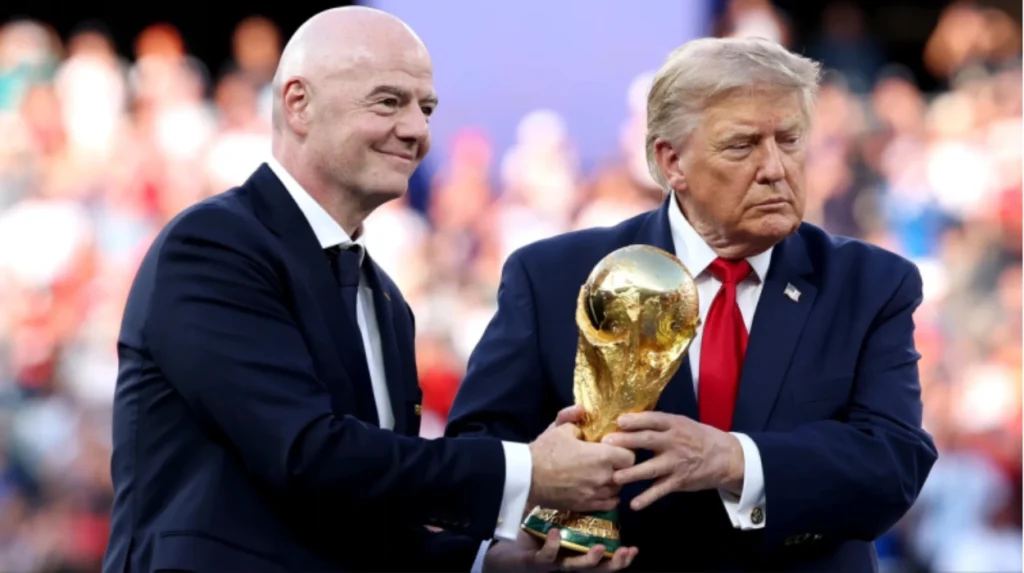
The pressure forced Infantino into a dramatic reversal, with FIFA abandoning plans to sell a 20% stake in the proposed FIFA Forward Enterprise (FFE), a new commercial company linked to World Cup and FIFA competition revenues, after widespread opposition from UEFA and other confederations.
UEFA said instead that FIFA should use its existing financial reserves to support the game, arguing that football did not need to “sell off the family silver” to fund development.
Council rebellion gathers momentum
The collapse of the proposal has encouraged opposition inside FIFA itself.
Under FIFA rules, 19 of the 37 council members would be required to trigger an extraordinary general meeting, where Infantino could be forced to answer questions over governance, transparency and political neutrality.
The growing rebellion represents the most serious internal challenge Infantino has faced since becoming FIFA president in 2016.
After years of expanding his influence and securing widespread support across FIFA’s member associations, Infantino now finds himself facing opposition from the very institutions that once helped strengthen his position.
But not anymore.
Even Icarus flew too close to the sun.