

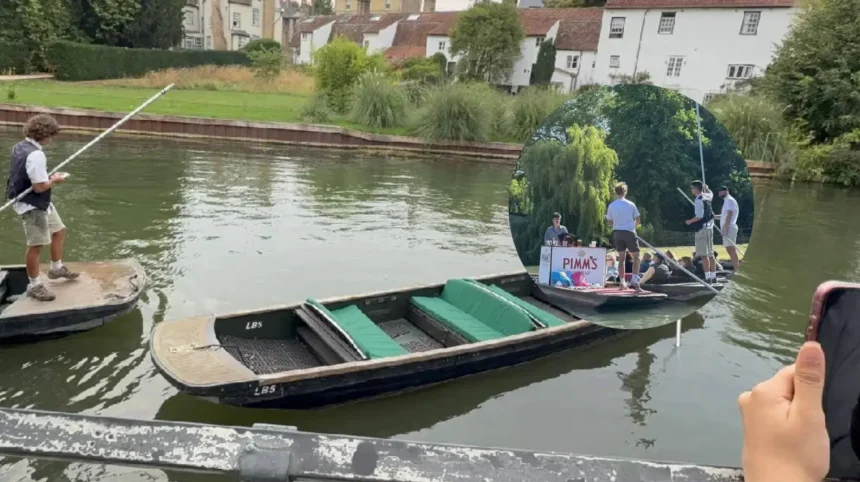
Key Points
- Two American men tried Pimm’s for the first time while punting on the River Cam in Cambridge
- Their blunt one-word verdict on the drink resonated widely on social media
- Pimm’s is a gin-based liqueur invented in 1840 by James Pimm in London
- The drink is synonymous with British summer, Wimbledon, and Cambridge punting culture
- Pimm’s is typically served with lemonade, cucumber, mint, and seasonal fruit
- The incident highlights the cultural exchange between US tourists and UK traditions
Cambridge (Cambridge Tribune) August 01, 2026 – Two American tourists experienced Pimm’s for the first time during a punting excursion on the River Cam in Cambridge, issuing a succinct one-word verdict that has since captured attention across social media platforms. The men, whose identities have not been disclosed, were filmed sampling the iconic British summer cocktail while navigating the historic waterway that flows past several prestigious university colleges.
- Key Points
- Why Is Pimm’s So Popular in British Summer Culture?
- How Do American Tourists Typically React to Pimm’s?
- Common American Misconceptions About Pimm’s
- What Is the Pimms Punt Bar on River Cam?
- Floating Bar Operations in Cambridge
- Safety and Tourism Regulations on the River Cam
- Background of Pimm’s Development in British Culture
- Predictions for Pimm’s Appeal Among American Tourists
As reported by MSN’s food and drink correspondent, the Americans’ reaction was described as “blunt” and resonated with online audiences, though the exact wording of their verdict has not been independently verified by multiple news outlets. The incident occurred during a period of high tourist activity in Cambridge, where punting remains one of the most popular attractions for international visitors.
The encounter underscores the enduring appeal of Pimm’s as a cultural touchstone for British summertime leisure, particularly among first-time visitors to the UK. The drink, which has been a staple at Wimbledon since 1971, continues to attract curiosity from American tourists unfamiliar with its gin-based composition and traditional garnishes of cucumber, mint, and citrus fruit.
Why Is Pimm’s So Popular in British Summer Culture?
Pimm’s traces its origins to the early 1840s when James Pimm, a farmer’s son from Kent, established an oyster bar near the Bank of London. As documented by Wikipedia and multiple cocktail historians, Pimm created a gin-based tonic infused with a secret blend of herbs, liqueurs, and fruit extracts, originally served in a small tankard known as a “No. 1 Cup”. The drink was marketed as a digestive aid to accompany the oyster bar’s seafood offerings.
By the 1850s, Pimm’s had gained sufficient popularity to enter mass production, with commercial bottling beginning in 1859. The liqueur’s association with British summer events grew throughout the late 19th and early 20th centuries, becoming a fixture at garden parties, university celebrations, and prestigious events such as the Chelsea Flower Show and Henley Royal Regatta.
Pimm’s at Wimbledon and Beyond
The drink’s modern cultural prominence was cemented in 1971 when the first dedicated Pimm’s bar opened at the Wimbledon tennis championships. Today, more than 300,000 glasses of Pimm’s are served to spectators annually at the tournament, alongside strawberries and cream as part of the quintessential Wimbledon experience.
According to BBC Good Food, Pimm’s has become “deeply ingrained in British culture” since the early 19th century, with the phrase “it’s Pimm’s o’clock” entering national vernacular as a semi-ironic reference to afternoon summer drinking. The drink is particularly popular in southern England and among British university communities, where it features prominently at garden parties and end-of-term celebrations.
How Do American Tourists Typically React to Pimm’s?
American visitors to Cambridge frequently encounter Pimm’s during punting tours, with the River Cam serving as one of the drink’s most iconic consumption settings. As noted by travel content creators and tourism reports, punting with Pimm’s has become a quintessential Cambridge experience for international tourists, particularly those from the United States.
The floating Pimm’s punt bar, operated by The Pimms Punt, serves drinks directly to tourists on the River Cam near the historic colleges, according to Instagram and local tourism promotions. This mobile service has become a recognised feature of Cambridge summer tourism, with the business describing itself as “Cambridge’s iconic Floating Bar”.
Common American Misconceptions About Pimm’s
Reports from Wimbledon staff indicate that American tourists often mistake Pimm’s for beer due to its casual presentation and lower alcohol perception. Alex Illingworth, a student vendor at Wimbledon, told reporters in 2017 that foreign visitors frequently need explanation that Pimm’s is “a sweet, fruity drink” rather than a beer. Once clarified, most Americans express willingness to try the cocktail, with Pimm’s consistently ranking as the most popular beverage at the tournament.
The drink’s distinctive taste profile—combining gin, herbal botanicals, caramelised orange, and warm spices—often surprises first-time American tasters accustomed to different cocktail conventions. Traditional Pimm’s Cup preparation involves mixing Pimm’s No. 1 with British-style lemonade, ice, and garnishes of cucumber, lemon, mint, and seasonal fruit.
What Is the Pimms Punt Bar on River Cam?
Floating Bar Operations in Cambridge
The Pimms Punt operates as a mobile bar service on the River Cam, positioning itself near the historic college backs to serve tourists during punting excursions. According to the company’s Instagram presence, the business has accumulated over 1,800 followers and regularly promotes its services as “a taste of summer on the River Cam”.
Local reports indicate that the floating Pimm’s punt has faced regulatory scrutiny in recent years. In 2021, Cambridge City Council considered potential closure of the floating bar due to licensing and operational concerns, though the service has continued to operate during summer months.
Safety and Tourism Regulations on the River Cam
The River Cam has experienced ongoing regulatory debates regarding punting operations, with Cambridge City Council implementing safety rules for boating activities since 2015. In 2016, the council sought powers to ban unlicensed punting touts, raising civil liberties concerns among operators. By 2018, court orders were issued against Traditional Cambridge Tours for operating without proper licensing on council land.
More recently, structural concerns have emerged regarding the River Cam’s locks. In May 2024, a structural engineer’s survey deemed both Jesus Green Lock and Bait’s Bite Lock “unsafe”, leading to their closure and trapping boats between them. Temporary stabilisation work costing £1.6 million was scheduled to begin at Bait’s Bite Lock on 25 August 2026, with full replacement of both locks estimated at £25 million.
Background of Pimm’s Development in British Culture
Pimm’s evolution from a Victorian oyster bar tonic to a national summer institution reflects broader changes in British social drinking culture. James Pimm’s original formulation in the 1840s capitalised on the Victorian era’s fascination with proprietary medicinal tonics, positioning his gin-based blend as both a digestive aid and a sophisticated alternative to straight gin.
The drink’s transition from oyster bar specialty to bottled liqueur in 1859 marked its entry into mainstream consumer markets, with Pimm initially selling bottles for “three shillings” across London. Commercial distribution expanded in 1865, accompanied by variations including Pimm’s No. 2 (Scotch-based), No. 3 (brandy-based), No. 4 (rum-based), No. 5 (rye whiskey-based), and No. 6 (vodka-based), though only the vodka-based No. 6 remains in production alongside the original No. 1.
Pimm’s association with elite social events during the Edwardian and interwar periods established its reputation as a drink of upper-class garden parties and university celebrations. This positioning was reinforced by its adoption at Wimbledon in 1971, where it became officially recognised alongside champagne as one of the tournament’s two official drinks.
Predictions for Pimm’s Appeal Among American Tourists
The viral nature of American tourists’ Pimm’s reactions suggests continued growth in cross-cultural curiosity about British summer traditions. As social media platforms amplify first-time tasting experiences, Pimm’s is likely to maintain its status as a must-try novelty for American visitors to Cambridge and Wimbledon.
For American tourists, Pimm’s represents an accessible entry point into British drinking culture, offering a lower-alcohol alternative to traditional gin cocktails while maintaining distinctive herbal complexity. The drink’s visual appeal colourful garnishes served in tall glasses aligns with contemporary social media aesthetics, encouraging further documentation and sharing of first-time experiences.
However, structural challenges facing the River Cam, including lock closures and embankment instability, may impact the availability of traditional punting experiences where Pimm’s is most commonly consumed by tourists. Should punting operations face restrictions, alternative venues such as riverside pubs and college gardens may see increased demand for Pimm’s service to American visitors.
The drink’s enduring association with Wimbledon ensures continued international exposure, with tennis tourism providing a reliable annual platform for introducing Pimm’s to new generations of American visitors. As climate patterns shift and British summers become less predictable, Pimm’s cultural significance as a symbol of optimistic summer leisure may strengthen its appeal among tourists seeking authentic British experiences.