

Key Points
- Cambridgeshire authorities have approved a new Fen Roads Trial to test methods for repairing roads built on peat and other soil-affected ground.
- The trial is backed by the Cambridgeshire & Peterborough Combined Authority and proposes a funding envelope of about £1.5 million.
- Trial sites under consideration include Prickwillow Road at Isleham and Holme Road and Herne Road in Ramsey St Mary’s.
- Techniques to be tested include excavation and lightweight recycled fill, deep soil stabilisation to depths of up to five metres, and ex-situ recycling to create a more flexible road structure.
- The trial aims to compare different approaches on the same stretch of road so their relative performance can be assessed.
- Supporters say the project could reduce long-term repair costs, improve road safety and provide evidence for future funding bids to central government.
- The trial is being pursued alongside other investment in Fenland roads, including additional reconstruction projects and separate funding rounds addressing peat-related subsidence.
Cambridge (Cambridge Tribune) July 10, 2026 – Peterborough transport officials have agreed to a focused trial aimed at tackling longstanding problems with roads that run over fenland soils, in a project commonly referred to as the Fen Roads Trial, which has been backed by the Cambridgeshire & Peterborough Combined Authority and the county’s highways partners. The trial, supported by a funding package of roughly £1.5 million, will compare several innovative maintenance and reconstruction methods on selected stretches of road that are especially vulnerable to subsidence and deformation caused by peat and other unstable soils.
- Key Points
- What roads will be used as test sites for the Fen Roads Trial?
- Which repair methods are proposed for testing?
- Who supports the trial?
- How will the trial be run?
- What funding and related work exist?
- Why do Fenland roads fail?
- What could communities gain?
- How might the results be used?
- Who has reported this development?
- Background of the development
- Prediction
What roads will be used as test sites for the Fen Roads Trial?
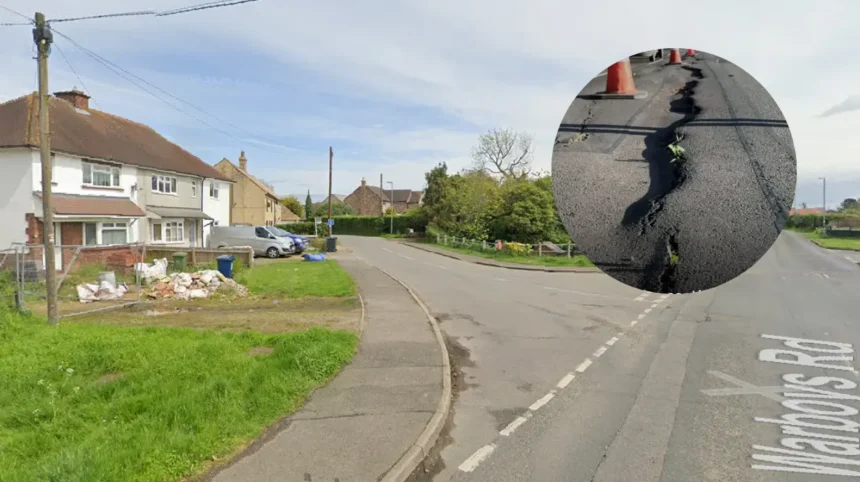
Potential trial sites include the B1104 Prickwillow Road at Isleham and two routes at Ramsey St Mary’s: the B660 Holme Road and the B1040 Herne Road. Those routes were identified because their underlying peat and soil conditions cause the surface layers to shift and crack, making them representative trial locations for techniques intended to strengthen the foundation layers of Fenland roads.
Which repair methods are proposed for testing?
Officials outline a mix of structural and recycling approaches to be examined during the trial, including excavation and replacement using lightweight recycled fill, deep soil stabilisation down to about five metres, and ex-situ recycling that rebuilds the road using materials from the existing carriageway to create a more flexible surface. Excavation and lightweight fill aims to reduce vertical load on peat by substituting dense material with lighter recycled aggregates, deep soil stabilisation focuses on improving strength and cohesion in underlying peat layers, and ex-situ recycling treats the road as a resource by reprocessing existing materials into a renewed, more adaptive pavement structure.
Who supports the trial?
The Combined Authority has publicly supported the initiative, with the mayor, Dr Nik Johnson, describing the unique challenges of maintaining Fenland roads as worsening with climate change and saying the trial seeks long-term solutions to cut repair costs and improve safety. Local highways officers and councillors have also argued that traditional surface repairs do not always address deeper foundation problems on peat soils and that a comparative trial could identify methods suitable for wider use across fen-affected regions.
How will the trial be run?
The trial will place different repair methods on comparable sections of the same road corridor to allow direct performance comparisons over time. An accompanying Economic Impact Assessment will be completed alongside the technical trial, helping to quantify potential cost savings, maintenance frequency changes and wider benefits such as reduced disruption and improved safety if specific methods prove effective.
What funding and related work exist?
The Fen Roads Trial complements already announced investments and targeted reconstruction work addressing peat-related subsidence across Cambridgeshire, including separate programmes totalling millions of pounds to repair the worst-affected stretches such as Forty Foot Bank, Coates Road and Long Drove. Local authorities have previously secured external funding and allocated additional capital to tackle urgent defects while seeking options that will be more durable under the region’s challenging ground conditions.
Why do Fenland roads fail?
Engineers say roads across the Fenland are often built over peat and other compressible soils that change volume with moisture and temperature, causing repeated movement of the carriageway and undermining surface layers; this leads to cracking, rutting and frequent need for patch repairs. The trial’s methods either reduce the weight imposed on this peat, strengthen lower layers by stabilisation, or create a flexible pavement that can better tolerate small movements.
What could communities gain?
Project proponents highlight possible benefits including longer intervals between repairs, smoother journeys for motorists, fewer traffic management disruptions during maintenance, and better value for public money through reduced lifecycle costs. If the trial identifies effective, scalable solutions, the techniques could be applied across Cambridgeshire and in other counties with similar soil issues, which would broaden the potential public benefit.
How might the results be used?
The Cambridgeshire County Council, Peterborough City Council and the Combined Authority will receive the trial’s findings and may use them to shape future maintenance programmes and to support bids to central government for further funding to treat fenland roads at scale. The evidence base produced by the trial, including performance comparisons, cost assessments and economic impact work, is intended to inform policy and procurement decisions for highways teams in the region.
Who has reported this development?
Peterborough Today covered the approval of the trial, noting the expectation that a successful scheme would deliver a smoother ride for motorists and be of benefit to the county’s highway network. The Cambridgeshire & Peterborough Combined Authority’s own briefing provides technical detail and the proposed list of trial techniques and sites. Industry coverage and local media have expanded on the engineering rationale and placed the trial in the context of earlier, separate repair programmes and calls for more government funding for peat-affected roads.
Background of the development
The Fen Roads Trial follows years of local concern over the frequency and cost of repairs on roads constructed over peat and other weak soils, compounded by extreme weather events and the evolving maintenance burden faced by councils. Previous programmes have allocated millions to urgent reconstruction on high-priority sites, but authorities have concluded that conventional surface repairs often fail to address subsurface causes of deterioration, prompting the search for durable, evidence-based alternatives and a trial to compare different engineering solutions.
Prediction
If one or more trialled methods demonstrate significantly better performance and favourable cost profiles, councils could shift capital investment toward techniques that extend pavement life and lower long-term maintenance budgets, reducing the frequency of disruptive works and lowering cumulative expense for taxpayers and road users. For motorists, a successful programme would likely mean fewer closures, smoother surfaces and reduced vehicle wear from poor road conditions; for local contractors and the construction sector, a validated set of methods could create demand for specialised materials and skills, thereby reshaping local procurement and training needs.