

‘It has the feel of a final, and it will be the final game of this World Cup for one.’
Those were the words of BBC commentator Guy Mowbray in the moments before the referee’s whistle, as England and Mexico stood ready to begin their World Cup last-16 meeting at the Estadio Azteca.
It was a line that captured the weight of the occasion. This was not merely a place in the quarter-finals at stake. It was a collision between two footballing nations in one of the sport’s most intimidating arenas, a stadium where history has never felt far away.
For Mexico, the Azteca had long been more than a football ground. It was a fortress. They had only lost two of their previous 89 competitive matches there and had never been beaten on home soil at a World Cup.
For England, meanwhile, the stadium remains forever entwined with Diego Maradona’s unforgettable afternoon in 1986 — first with the Hand of God, then the Goal of the Century — making it a place where one of English football’s deepest scars was inflicted.
There are nights in football that feel larger than the match itself.
I wrote about that feeling only days ago when reflecting on Cape Verde’s meeting with Lionel Messi’s Argentina — an occasion where the significance of the contest stretched far beyond 120 minutes, as a herculean effort transformed an underdog’s dream into moments of footballing immortality.
I did not expect to find myself returning to that thought in the early hours of Monday morning.
Yet, as the thunderstorms finally drifted away from Mexico City and the kick-off arrived an hour later than scheduled, it became impossible to escape the sense that this would become another one of those nights.
The altitude, the history, the deafening noise and the emotion pouring from every corner of the Azteca combined to create the feeling that England’s World Cup might well end here.
Mexico fed off every second of it.
Supporters had lined the roads leading to the stadium hours before the kick-off. Their national anthem was sung through tears and thunderous applause, while the weather delay only heightened the anticipation.
This was, for many inside the ground, the biggest match in their country’s modern footballing history.
Thomas Tuchel understood exactly what awaited his side. Mexico had arrived at their home World Cup unbeaten, having won all four of their matches without conceding a single goal, and their supporters expected another night of celebration with a clean scoreboard to go along with it.
England had to survive long enough for the game to become a contest of quality rather than momentum.
They brought both to the table.
For the opening exchanges, Mexico played with the urgency of a nation desperate to keep its dream alive.
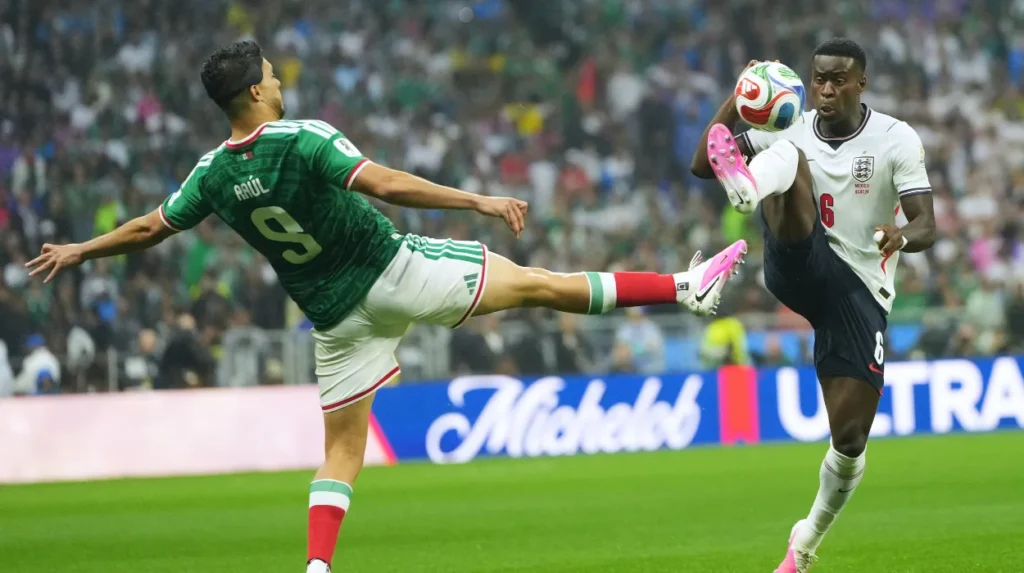
Their passing combinations were slick, their movement constantly tested England’s defensive shape, and every tackle or interception was greeted by a thunderous roar from the stands.
Jordan Pickford’s early saves from Raúl Jiménez proved crucial, allowing England to survive the initial onslaught before slowly imposing themselves on the contest.
Then came the moment that changed everything.
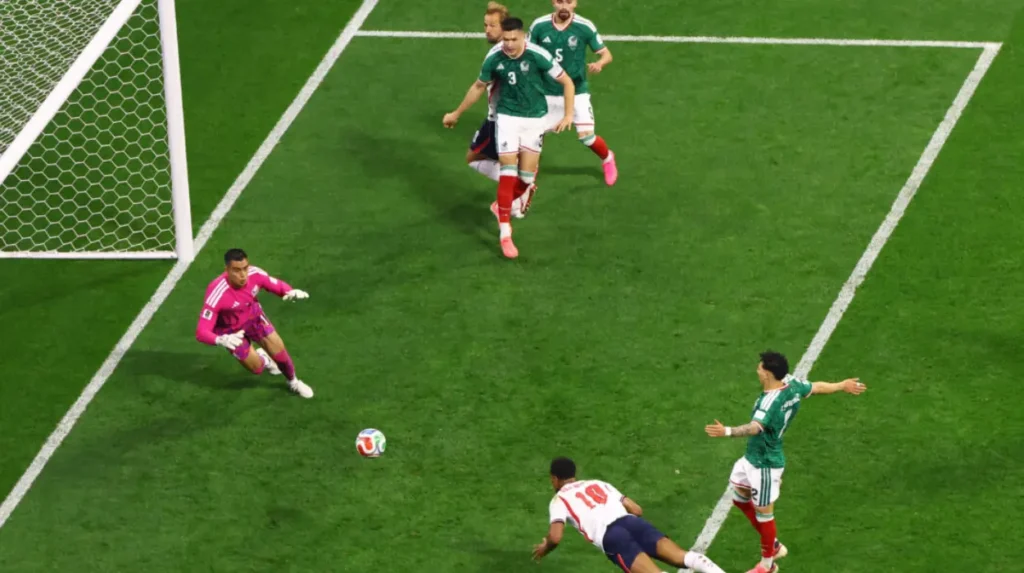
In the 36th minute, England’s breakthrough came from composure. Pickford’s quick distribution found Declan Rice, whose powerful run through midfield opened the space for Bukayo Saka.
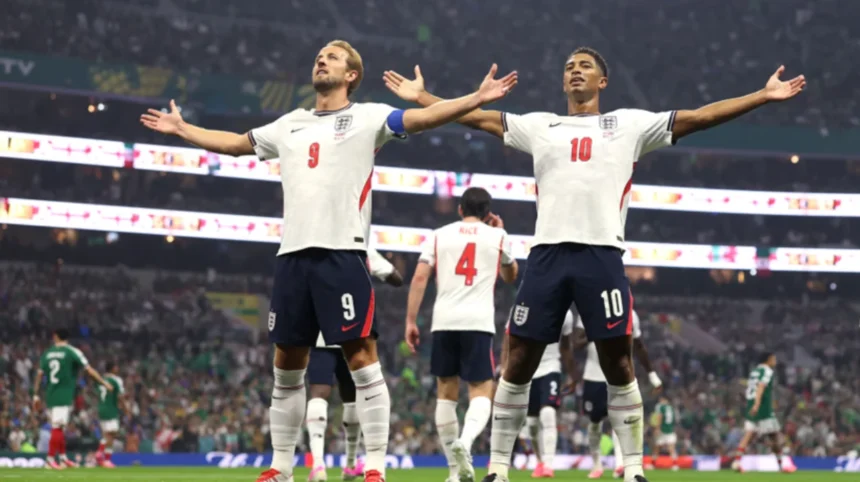
The winger’s delivery was precise, and Jude Bellingham attacked the cross with the timing and conviction of a player who seems increasingly destined for these occasions.
It was the first goal Mexico had conceded at the tournament. For perhaps the first time all evening, the Azteca fell quiet. ‘Stunned into near silence for a moment, this place’, observed BBC commentator Guy Mowbray as England celebrated.
Ninety seconds later, Bellingham was celebrating again. Elliot Anderson won possession high up the pitch, Harry Kane picked out his run, and England’s number 10 arrived with perfect timing to finish beyond Raúl Rangel.
‘It’s two!’ came Mowbray’s cry, as England threatened to produce the unthinkable.
Mexico responded in the 42nd minute with an excellent ball into the box. Julian Quiñones punished hesitant defending from a set piece, striking powerfully beyond Pickford to bring the hosts back into the contest, prompting a ferocious roar from the stands.
Moments later, England were indebted to Bellingham again, his extraordinary recovery challenge preventing César Montes from converting what appeared to be a certain equaliser.
The midfielder’s contribution was already becoming symbolic of the night itself. England would need another moment of brilliance to make sure they kept ahead.
And sometimes, things don’t go to plan.
Jarell Quansah’s dismissal following a VAR review transformed the match.
As play paused and the tension inside the Azteca became almost unbearable, referee Alireza Faghani emerged from the pitchside monitor before announcing over the stadium:
‘Number 26, serious foul play. Red card.’
England still led, but with more than half an hour remaining, the match became less about controlling possession and more about survival.
Tuchel’s response was decisive. John Stones replaced Bukayo Saka as England moved towards a more defensive structure, before Dan Burn and Djed Spence were introduced later to complete a back five.
England had to find a way to survive if they were going to win in regular time.
And then, in the chaos, came another twist.
Anthony Gordon’s pace created the opening England desperately needed. He reached the ball before Raúl Rangel and was brought down inside the area, giving Harry Kane the opportunity to restore the two-goal advantage.
With the noise inside the Azteca reaching another level, England’s captain showed the composure that has defined his international career and converted from twelve yards. Kane went from hero to culprit when he caught Brian Gutiérrez inside his own penalty area, allowing Raúl Jiménez to reduce the deficit once again.
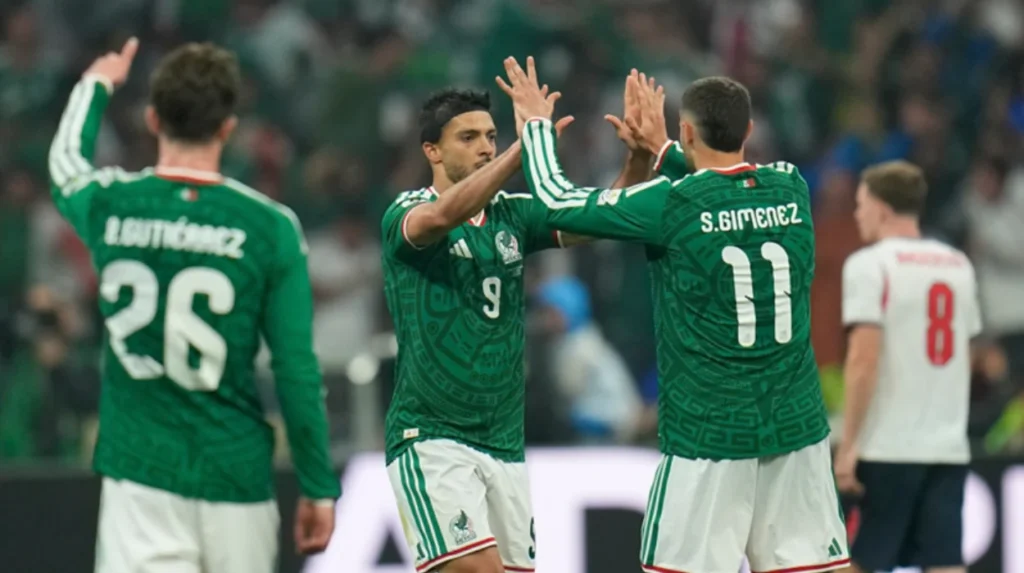
At 3–2, with Mexico throwing everything forward and eleven minutes of added time still to play, England faced the ultimate test of endurance.
Mexico sent cross after cross into the penalty area, setting up corners left and right. England defended every last one as if their campaign for success depended on it.
Pickford commanded the box, Burn dominated aerial battles and Stones produced the calm interventions of a player who understood that his experience could become the difference between elimination and survival.
When the final whistle finally arrived, England’s players dropped to the turf through equal parts exhaustion and disbelief.
They had overcome the storms, the altitude, the history, the hostility of the Azteca and more than thirty minutes with ten men.
Forty years after Maradona ensured England would forever remember this stadium for all the wrong reasons, another generation had finally rewritten the story.
England had not simply reached the World Cup quarter-finals.
They had conquered the Azteca.