

Key Points
- Damaged overhead wires have blocked lines in and out of Cambridge, causing major disruption for rail passengers.
- No trains are running between Letchworth Garden City in Hertfordshire and Cambridge, or onwards to King’s Lynn.
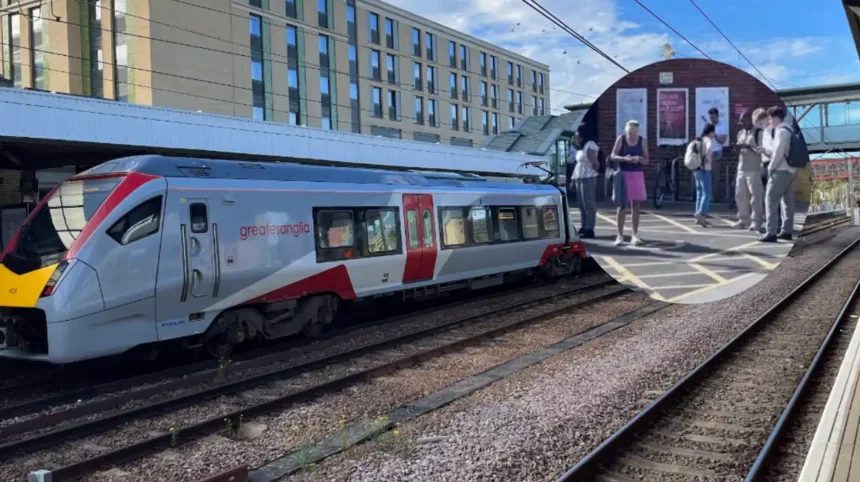
- Train operators affected include Greater Anglia, Great Northern and Thameslink, with CrossCountry services from Peterborough through Cambridge also delayed.
- Passengers may face cancellations, revised services or delays of up to 40 minutes.
- Network Rail indicated that major disruption is expected until about 12:00 BST on 3 July 2026.
- Travelers have been advised to delay journeys to or from Cambridge or check before travelling.
- The incident has impacted services that normally connect Cambridge with London, King’s Lynn, Peterborough and Stansted Airport.
- This is not the first time overhead wire damage has caused disruption on the Cambridge route; similar incidents occurred in 2021 and again in 2026 in the Hitchin/Royston area.
- Engineers from Network Rail are working to repair the damaged wires and restore full service.
- British Transport Police and station staff are supporting passengers, though there is no indication at this stage that the damage was caused by a trespasser or external interference.
Cambridge (Cambridge Tribune) – July 03, 2026 – Rail passengers in and out of Cambridge woke to a day of severe disruption after damaged overhead wires blocked key lines, forcing cancellations, revised services and delays of up to 40 minutes across multiple operators.
- Key Points
- How are passengers and operators reacting to the disruption?
- Which rail services and routes are affected by the wire damage?
- How does this incident fit with previous overhead wire problems on the Cambridge route?
- What background explains the development of overhead wire damage on the Cambridge line?
- Historical context of overhead electrification on the Cambridge route
- Operational and infrastructure pressures
- What can passengers and the rail industry expect next, and how might this affect travellers?
- Immediate outlook for rail users
- Longer-term implications for commuters, students and regional travellers
As reported by BBC News, “Rail passengers have faced major disruption in and out of Cambridge after damaged overhead wires led to lines being blocked.” Network Rail confirmed that no trains were running between Letchworth Garden City in Hertfordshire and Cambridge, or onwards to King’s Lynn, and warned that services to and from the city could be cancelled, revised or delayed by up to 40 minutes.
The damage to the overhead electrification system has left several lines effectively blocked, meaning trains cannot safely pass through the affected section. Network Rail said major disruption was expected until about 12:00 BST, with engineers working to repair the wires and restore normal operations. Multiple operators have been affected, including Greater Anglia, Great Northern and Thameslink, while CrossCountry passengers travelling from Peterborough through Cambridge were also warned to expect delays.
How are passengers and operators reacting to the disruption?
As reported by BBC News, passengers have been advised to delay their journeys if they are travelling to or from Cambridge, or to check before they travel. The advice reflects the scale of the disruption and the uncertainty around exact recovery times for individual services.
Train operators have issued service updates and apologies where appropriate. Greater Anglia, Great Northern and Thameslink are all dealing with cancelled or revised trains, while CrossCountry has warned of delays on its Peterborough–Cambridge corridor. In previous similar incidents, operators such as Greater Anglia and Thameslink have publicly apologised for delays and inconvenience to passengers, and have offered shuttle services or alternative routing where possible.
Passengers stranded on trains or at stations have faced longer-than-usual wait times, particularly on routes that normally provide direct links to London, King’s Lynn and Stansted Airport. The disruption has also affected commuters, students and leisure travellers who rely on the Cambridge line for daily journeys, interviews, university attendance and airport connections.
Which rail services and routes are affected by the wire damage?
The blocked lines mean that no trains are running between Letchworth Garden City and Cambridge, and no services are running onwards to King’s Lynn. This effectively cuts off a key north–south corridor that links London with Cambridge, Peterborough and the wider East of England.
Services affected include:
- Greater Anglia: normally operating between Cambridge, London Liverpool Street, Stansted Airport and Cambridge North.
- Great Northern: running between Cambridge, Peterborough, King’s Lynn and London Kings Cross.
- Thameslink: connecting Cambridge and London Kings Cross, with some services extending to Brighton and other southern destinations.
- CrossCountry: services from Peterborough through Cambridge to other regional and national destinations.
The disruption also impacts indirect routes that use the Cambridge line as part of a longer journey, meaning passengers travelling from places such as Luton, Hertfordshire and the south Midlands may face additional delays or need to consider alternative travel plans.
How does this incident fit with previous overhead wire problems on the Cambridge route?
This is not the first time that overhead wire damage has caused significant disruption on the Cambridge line. In October 2021, an overhead power cable came down at Cambridge station, leaving passengers stranded on trains and leading to widespread cancellations and delays for most of the day. As reported by BBC News at that time, “Rail passengers have had their journeys disrupted for much of the day after an overhead power cable was damaged at Cambridge.”
In 2026, there have already been earlier incidents involving overhead wire damage in the Hitchin and Royston area, which lies on the same line between London and Cambridge. In June 2026, National Rail reported that “damage to the overhead wires between Hitchin and Cambridge means some lines are blocked” and that delays of up to 30 minutes were expected. A separate incident in early June 2026 involved damage to overhead wires in the Hitchin area, which disrupted Great Northern and Thameslink services between Peterborough/Cambridge and London before being resolved the following day.
These repeated incidents highlight the vulnerability of the overhead electrification system on this busy route, particularly where trains, infrastructure and external factors such as weather or accidental damage can interact. Each event has required Network Rail engineers to repair cables, clear debris and restore power before services could return to normal.
What background explains the development of overhead wire damage on the Cambridge line?
Historical context of overhead electrification on the Cambridge route
The Cambridge line is part of a long-established network linking London with the East of England and beyond. Overhead electrification has been in place on many sections for decades, allowing electric trains to operate at higher speeds and with greater efficiency than older diesel-only services. The system relies on a network of wires suspended above the tracks, connected to power supplies and monitored by signal and control systems.
Recent incidents involving damage to these wires have exposed how a single point of failure can affect a large number of services. Whether caused by fallen branches, equipment faults, accidental contact with trains, or other unknown factors, damage to overhead wires often requires engineers to isolate sections, repair cables and test power before trains can safely resume normal speeds.
Operational and infrastructure pressures
The Cambridge route carries high volumes of commuter, intercity and regional traffic, meaning that any disruption has a disproportionate impact. The line is used by multiple operators, each with its own timetable and rolling stock, and the overhead wires are shared infrastructure managed by Network Rail. When wires are damaged, the resulting blockage can cascade through timetables, causing delays to services that do not even pass through the exact point of damage.
Network Rail’s role in maintaining and repairing the overhead system is critical, but the sheer number of incidents in recent years suggests that the infrastructure faces ongoing pressures. These may include age of equipment, increased traffic, weather events, and the complexity of coordinating repairs across a heavily used route without causing even wider disruption.
What can passengers and the rail industry expect next, and how might this affect travellers?
Immediate outlook for rail users
In the short term, passengers should expect continued unreliability on services that depend on the Cambridge line, particularly during the morning and afternoon commute periods. Even once the overhead wires are repaired, timetables may take time to recover, and residual delays can persist for several hours.
As advised by Network Rail, travellers should:
- Delay journeys to or from Cambridge if possible.
- Check live departure boards and online journey planners before travelling.
- Allow extra time, ideally at least 20 minutes, for journeys that normally run on this route.
- Speak to station staff for guidance on alternative routes or services where available.
For those with fixed commitments such as work, university, medical appointments or airport travel, alternative transport (such as buses, coaches or cars) may need to be considered where feasible.
Longer-term implications for commuters, students and regional travellers
The series of overhead wire incidents on the Cambridge line has broader implications for the people who rely on it. Commuters face increased uncertainty in their daily routines, which can affect punctuality at work, stress levels and overall quality of life. Students travelling to and from universities in Cambridge or London may encounter missed lectures, delayed arrivals and disrupted study plans.
Regional travellers, including those visiting Cambridge for business, tourism or family reasons, may find that rail is less predictable than before, potentially leading some to switch to other modes of transport. Over time, repeated disruptions could reduce confidence in the reliability of the rail network on this corridor, with economic consequences for businesses and institutions that depend on timely access to Cambridge.
For the rail industry, these incidents underscore the need for continued investment in infrastructure maintenance, fault detection and resilience. Addressing the root causes of wire damage, improving response times and minimising the impact on passengers will be essential to restore confidence and ensure that the Cambridge line can continue to serve as a reliable link between London and the East of England.