
A Centre for Creative Collaboration
Creative writing research often takes place behind the scenes. Since its launch in 2024, Anglia Ruskin University’s Cambridge Writing Centre has been working to change that, bringing writers, researchers and the wider community together through workshops, festivals, collaborations and public events. Based within ARU’s Cambridge School of Creative Industries and the School of Humanities and Social Sciences, the Centre supports practice-based research across a wide range of literary forms, including poetry, short fiction, creative nonfiction, speculative fiction, dramatic writing and writing for children.

It also explores emerging areas such as interactive storytelling and hybrid creative forms. For Jon Stone, poet, researcher, lecturer, and member of the Cambridge Writing Centre, the idea grew from a desire to bring together work that was already happening across the university.
‘Before Cambridge Writing Centre, individual writing staff at the university were already involved in putting on ad hoc events, workshops and mini-symposiums, but not in any coordinated way. We decided it made sense to come up with a name and mission statement in order to work together more efficiently and communicate better — both with each other and with the wider public.’
The Centre was also created to address a broader challenge within creative writing research.
‘Creative writing research in academia tends to be very inward-facing, and we wanted to try to give it more of a public profile as something which links up with local writing scenes and grass-roots organisations.’
Opening Creative Writing to the Public
That commitment to accessibility remains central to the Centre’s mission. As Stone describes it, the aim is ‘to share knowledge and practices from the field of creative writing with a wider audience, and to work together with other arts organisations of whatever size in the East Anglian region to make writing-based activities and innovation accessible to as many people as possible.’
Learning Across Genres
One of the Centre’s defining strengths is the diversity of its creative community. Its members include established authors, poets, publishers and researchers working across a variety of genres and disciplines. According to Stone, that diversity creates valuable opportunities for writers to learn from one another.
‘Working across genre and form is a good approach for all developing writers in terms of making your skillset more versatile — but it can also bring you into contact with people whose perspectives and approaches inspire you in ways you wouldn’t expect.’
Even within his own creative practice, Stone finds inspiration beyond poetry.
‘I’m a poet, and so am inspired by a lot of poets, but I also get a lot of exciting ideas for my work by paying attention to what prose and screen writers are getting up to. It can also be very fruitful to collaborate with each other.’
Building Partnerships Across the Region
Since its inception, the Cambridge Writing Centre has organised a range of public-facing events, workshops and literary discussions. One of its most significant events to date has been the Short Story Micro-Festival, which ran on April 30 and featured a workshop led by award-winning science fiction writer Chris Beckett alongside a panel discussion involving a range of writers and researchers.
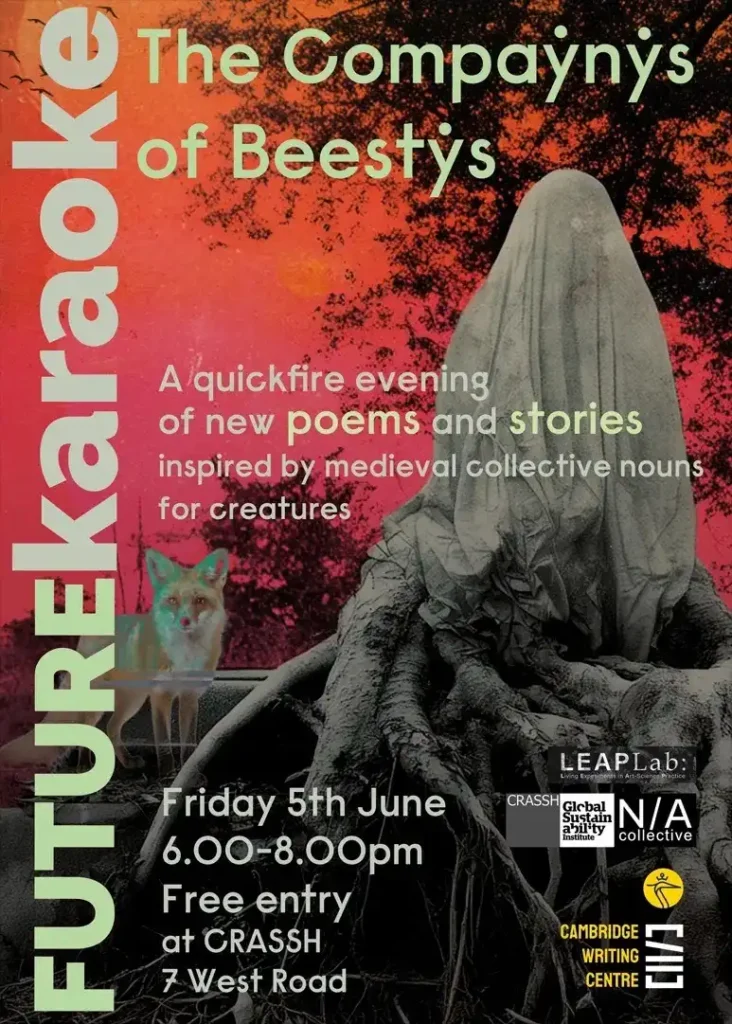
The Centre has also collaborated with external organisations, including CRAASH’s Weirding Sustainability Festival, where it incorporated sustainability-themed creative work into one of its regular spoken-word events.
Community engagement plays a key role in the Centre’s activities. Through its mailing list and partnerships, it promotes literary events across the region and works alongside organisations including Mill Road Poetry, Cambridge Poetry Festival, CB1, museums and Cambridge Libraries. ‘Our relationship with all these groups is constantly evolving,’ Stone says.
‘Sometimes it’s just the case that one or more of us is in the audience, or swapping notes with the organisers!’
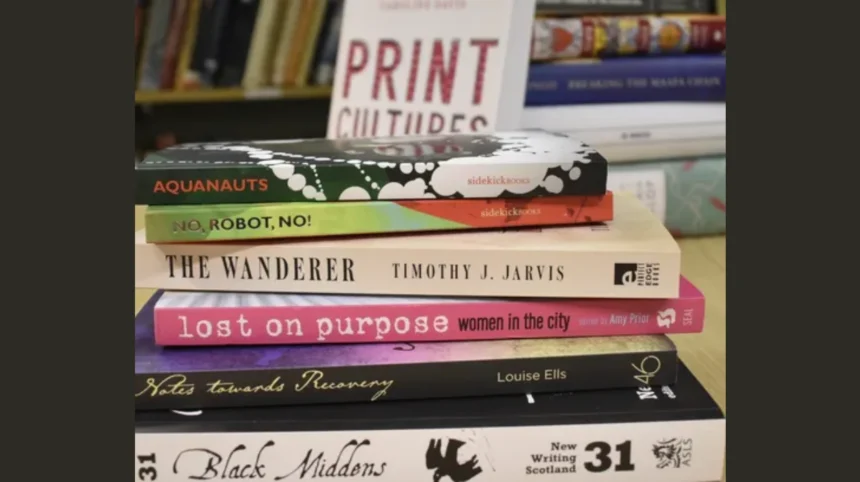
The Centre’s commitment to collaboration extends beyond Cambridge. Its partner organisations include the National Centre for Writing, a leading literature organisation based in Norwich that promotes the power of storytelling for personal, social and community development, and Sidekick Books, an independent press specialising in collaborative poetry anthologies and experimental literary projects. Stone himself co-runs Sidekick Books alongside fellow poet Kirsten Irving, further strengthening the Centre’s links with the wider literary community.
Looking Ahead
Looking ahead, Stone is particularly excited about the next chapter of Cambridge Poetry Festival, which will take place this autumn with ARU hosting part of the programme.
‘There will be variations on some of Cambridge’s regular poetry and spoken word nights, guest reading and some interesting games for people to play,’
he says.
For the future, the Cambridge Writing Centre hopes to become an accessible entry point for anyone interested in creative writing, whether they are experienced writers, aspiring authors or simply curious about the research taking place at ARU.
‘We’d like it to be an entry point for people into the local writing scene and creative writing research, as well as extending their own writing ambitions,’
Stone says.
He acknowledges that many people can feel intimidated by creative writing courses, workshops or academic spaces.
‘There are lots of people who want to write but are worried about not being good enough, or not fitting in,’ he explains.
‘There are also people who assume academia is quite stuffy and precious about sharing its resources.’
The Centre hopes to challenge those perceptions by creating welcoming opportunities for people to explore writing, connect with others and develop their creative confidence.
Reflecting on the wider role of ARU within the city, Stone points to a principle that continues to guide the Centre’s work.
One of the things I love about ARU is its commitment to being culturally integrated into Cambridge and the surrounding area—not apart from it or above it. I’d like to think Cambridge Writing Centre is one expression of that commitment.’
As it continues to grow, the Cambridge Writing Centre is helping to bridge the gap between academic research and public creativity, ensuring that storytelling, literary innovation and creative exploration remain open to everyone.
Readers interested in upcoming events, workshops and collaborations can follow the Cambridge Writing Centre on Bluesky at @aruwriting.bsky.social.