

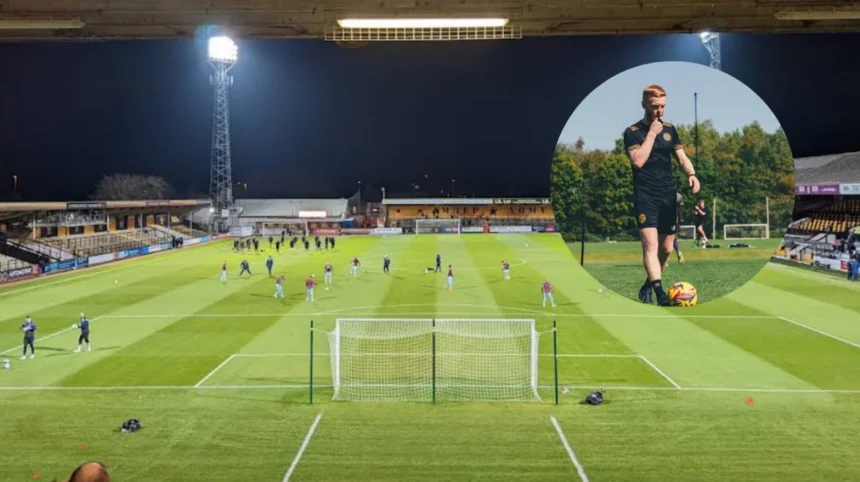
Key Points
- Cambridge United have confirmed Liam O’Neil as First Team Coach ahead of the 2026/27 season.
- O’Neil is stepping up from his role as Under 18s Head Coach after two and a half years leading the club’s scholars.
- He previously came through Cambridge United’s Academy, returned to the club in 2017, and made more than 150 appearances as a player.
- After retiring in 2023, he moved into coaching and helped develop the club’s next generation of players.
- Neil Harris said O’Neil’s qualities as a player and coach, plus his understanding of the club, make him a strong addition to the first-team staff.
- Cambridge United said O’Neil’s appointment is part of the club’s long-standing association with him and a recognition of his development.
- The club congratulated him and wished him success in his new role.
Cambridge United (Cambridge Tribune) June 09, 2026 – Cambridge United have confirmed that Liam O’Neil will join Neil Harris’ first-team coaching staff as First Team Coach ahead of the 2026/27 season, marking a promotion from his role as Under 18s Head Coach. The club said the move continues O’Neil’s long association with Cambridge United, after he progressed through the Academy, returned in 2017, and made more than 150 appearances for the U’s before moving into coaching in 2023.
Cambridge United said O’Neil has spent the past two and a half years leading the club’s scholars and has played a key role in the development of young players. The club framed the appointment as a natural next step in a career that has stayed closely tied to Cambridge United. O’Neil’s pathway from Academy player to senior squad member, and then to coach, was presented as part of the club’s internal development structure.
The statement also made clear that O’Neil will join the first-team staff before the 2026/27 campaign begins. That timing suggests the club wants him integrated into preparations well before the new season starts. His move from youth football into the senior setup gives Cambridge United another coach with a detailed understanding of the club’s players and culture.
Why is his background significant?
O’Neil’s background matters because he has been connected to Cambridge United across several stages of his career. He started in the Academy, returned in 2017, and went on to make over 150 appearances for the club, which gives him strong institutional knowledge. After retiring from playing in 2023, he did not leave the club environment but moved directly into coaching, taking responsibility for the Under 18s.
That route gives him experience from both sides of the game: as a player in the senior dressing room and as a coach working with younger prospects. Cambridge United’s announcement suggests the club values that combination. It also indicates that the club sees him as someone who can translate its standards to the first-team environment.
What did Neil Harris say?
Neil Harris said O’Neil represented the club with “huge passion, pride, determination and desire” and added that he has developed into a coach with the same qualities. Harris also said he has enjoyed watching O’Neil’s progress over the past couple of seasons and believes he has worked hard to earn the chance. The Head Coach described him as a strong fit for the coaching team, saying his qualities complement both Harris and Adam in important ways.
Harris also stressed O’Neil’s understanding of Cambridge United itself. He said O’Neil knows the standards expected at the club, the bond with supporters, and what it means to wear the shirt. That detail points to the club valuing not just coaching ability, but also familiarity with its identity and expectations.
What role did he have before this?
Before this appointment, O’Neil was Under 18s Head Coach and was responsible for leading the club’s scholars. Cambridge United said he held that post for the past two and a half years. During that period, he helped develop the next generation of players within the Academy structure.
His earlier appointment into coaching came after his retirement in 2023. Rather than moving away from football, he stayed with Cambridge United and took on a development role. The club’s latest decision now brings that work closer to the senior side.
How does this affect the first team?
The appointment is likely to strengthen the link between the Academy and the first team. A coach who has worked closely with young players can help create clearer pathways for progression. That can be useful when a club wants its best youth players to understand what is required at senior level.
It may also help the first-team staff maintain continuity in style and standards. Because O’Neil already knows the club’s structure, there is less need for a lengthy settling-in period. For Cambridge United, this looks like a promotion designed to reward development and keep knowledge inside the club.
What is the wider significance?
This move reflects a common football trend of promoting trusted internal figures into senior roles. Clubs often do this when they want staff who already understand the environment, the support base, and the demands of the job. In Cambridge United’s case, O’Neil’s history with the club gives the appointment added weight.
It also shows that academy coaching can lead directly into first-team responsibility. For younger staff and current scholars, that can be a positive signal about the club’s pathway. Cambridge United’s message was not only about changing personnel, but also about recognising the value of long-term commitment.
Background of this development
O’Neil’s association with Cambridge United stretches back to his early days in the Academy. He later returned in 2017 and became a long-serving player for the club, making more than 150 appearances. After retiring in 2023, he moved into coaching and became Under 18s Head Coach, where he spent two and a half years developing young players.
His appointment now completes a clear progression from Academy player to senior footballer, then youth coach, and now first-team coach. Cambridge United’s announcement presents that journey as an example of internal growth within the club. It also underlines the club’s confidence in people who have already proven themselves inside its system.
Prediction for supporters
For Cambridge United supporters, the appointment may be seen as a positive sign of continuity and identity. A coach who knows the club well may help preserve standards that supporters expect from the team. It could also improve the transition of talented young players into the first-team squad over time.
For the club’s younger audience, including Academy players and scholars, the move may be especially meaningful. It shows that progress through the system can lead to senior opportunities within the same club. If O’Neil’s influence is successful, the main effect may be a stronger development pathway rather than an immediate headline change on the pitch.