
Cambridge provides an exceptional environment for remote professionals prioritizing robust technological infrastructure, world-class intellectual history, and high safety standards. However, the extreme cost of living, limited late-night venues, and low nomad density require careful consideration before planning a long-term stay.
- What is the actual cost of living for remote workers in Cambridge?
- How reliable is the internet and workspace infrastructure in Cambridge?
- What are the transportation options for navigating Cambridge efficiently?
- How safe is Cambridge for international remote workers and solo travelers?
- What cultural and recreational activities are available in Cambridge?
- What are the primary drawbacks of choosing Cambridge for remote work?
- What is the long-term future of remote work infrastructure in Cambridge?
- Frequently Asked Questions
The city of Cambridge, located in the east of England, serves as the administrative center of Cambridgeshire and forms the core of the Silicon Fen innovation ecosystem. The municipality maintains a population of approximately 120,000 residents, including over 24,000 students matriculated at the University of Cambridge. For remote workers, the location offers a unique juxtaposition of medieval architectural heritage and advanced scientific research hubs. The geographic compact nature of the city permits efficient navigation without relying on automotive transit systems. Remote professionals find reliable municipal utilities, widespread cellular coverage, and an abundance of academically oriented public spaces.
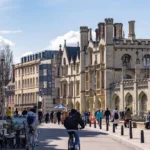
The historical trajectory of Cambridge as an intellectual center dates back to its incorporation as a market town and the subsequent founding of the university in 1209. This academic lineage has directly influenced the modern urban layout and economic composition of the municipality. The preservation of historical colleges, such as King’s College and Trinity College, creates an inspiring aesthetic landscape for visiting professionals. This heritage is supported by modern public infrastructure projects designed to integrate historical preservation with contemporary technological access. Digital nomads can experience an environment shaped by centuries of scientific discovery, from the work of Isaac Newton to modern artificial intelligence developments.
Evaluating the practical utility of Cambridge requires looking at specific quality-of-life data points compiled for international remote workers. The general Nomad Score for the municipality reaches 3.08 out of 5, indicating a moderate rating driven by conflicting environmental factors. The primary detractor remains the financial threshold required to maintain residency, with average monthly nomad expenditures reaching 4,557 dollars. Conversely, the city scores exceptionally high in categories regarding personal safety, environmental air quality, and linguistic accessibility. Remote workers who operate within high-revenue brackets find the city highly functional, whereas budget-conscious travelers face significant financial constraints.
The long-term value of visiting Cambridge lies in its capacity to connect remote workers with high-value professional networks and educational resources. The presence of international research facilities and corporate technology campuses creates distinct opportunities for cross-industry collaboration. Nomads specializing in software engineering, biotechnology, and academic writing benefit from proximity to the local knowledge economy. While the city does not offer a tropical resort environment, its institutional stability and cultural depth provide significant professional advantages. The decision to visit depends on whether a nomad values academic infrastructure over affordable consumer prices.
What is the actual cost of living for remote workers in Cambridge?
The average monthly cost of living for a digital nomad in Cambridge is approximately 4,557 dollars, making it one of the most expensive destinations in the United Kingdom. This high financial requirement is driven by premium rental prices, expensive hospitality services, and national consumer taxation.
To understand the financial structure of the city, one must analyze the individual cost categories that compose the monthly budget of a remote worker. Housing represents the largest single expenditure, with a standard one-bedroom studio apartment in the city center averaging 1,594 dollars per month. Short-term accommodation options, including localized Airbnb listings and corporate apart-hotels, command median prices of 3,279 dollars and 3,374 dollars per month respectively. Travelers utilizing standard hotels on a short-term basis encounter average nightly fees of 158 dollars. These real estate metrics reflect the intense demand for space within the strictly preserved historic core of the municipality.
Daily consumer expenditures further elevate the baseline budget necessary for sustained remote work operations within the Cambridgeshire region. A standard dinner at a mid-range restaurant costs approximately 15 dollars, while a basic 0.3-liter soft drink averages 1.34 dollars. Social expenditures include items like a localized cafe beer priced at 6.70 dollars and a standard espresso beverage costing 4.02 dollars. Mobile telecommunications data packages containing approximately 10 gigabytes of data require a monthly payment of 17 dollars. These combined factors necessitate a high earning threshold, forcing many temporary residents to seek alternative budget strategies.
Comparing the expenditure levels of nomads against other demographic groups reveals the distinct financial premium placed on flexible, short-term residency. Local permanent residents maintain an average monthly expenditure of 1,929 dollars, which is substantially lower due to long-term housing agreements. Expatriates operating on formal corporate relocation packages spend an average of 2,928 dollars per month. Families requiring multi-bedroom accommodations encounter high systemic costs, averaging approximately 6,750 dollars every month. This data demonstrates that short-term, uncontracted digital nomads face the highest proportional living costs within the local economy.
How reliable is the internet and workspace infrastructure in Cambridge?
Cambridge offers highly reliable internet infrastructure with median fixed broadband speeds of 23 megabits per second alongside extensive cellular data availability. The city features structured coworking spaces, specialized innovation hubs, and quiet public libraries optimized for professional remote workflows.
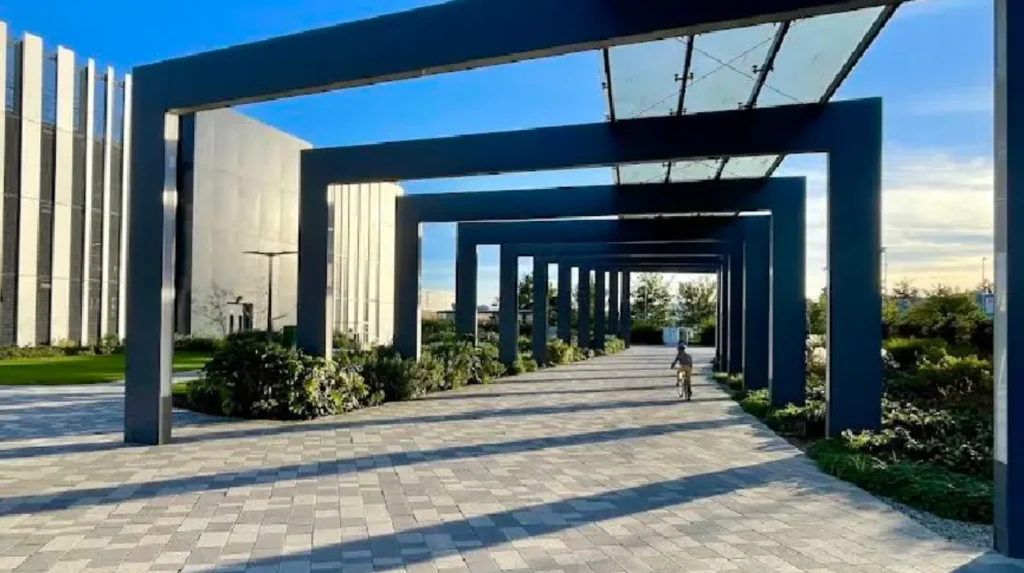
The technological ecosystem of the city relies on a robust fiber-optic data grid that provides consistent uptime for corporate and residential users. While the average recorded speed of 23 megabits per second satisfies standard video conferencing requirements, premium connections exceed 100 megabits per second. The regional telecommunications network supports comprehensive fourth and fifth-generation cellular signals across all urban districts. Digital professionals requiring continuous connectivity experience minimal disruption, ensuring seamless integration with international corporate networks. The municipal power grid displays high operational stability, showing no vulnerability to systemic blackouts or voltage fluctuations.
Dedicated professional environments provide remote workers with structured alternatives to residential spaces or informal cafe configurations. The Cambridge Business Lounge serves as a primary coworking hub, offering hot desk subscriptions at a median cost of 348 dollars per month. Additional venues include innovation spaces within the Silicon Fen districts, such as the Bradfield Centre situated on the Cambridge Science Park. These facilities provide enterprise-grade infrastructure, including private meeting rooms, ergonomic furniture, and direct networking links to local technology companies. Utilizing these specialized spaces allows visiting workers to maintain high productivity levels while engaging with local industry professionals.
Informal workspaces encompass a variety of public venues, academic libraries, and commercially operated cafes distributed across the central municipal territory. The city features historic university institutions that offer quiet study environments, though access to core college libraries often requires formal academic credentials. Independent cafes located along Regent Street and Mill Road frequently accommodate remote workers, though seating capacities remain physically constrained during peak hours. Free public wireless internet access across the broader city remains limited, requiring reliance on private commercial networks or mobile data tethering. Remote workers must strategically plan their daily locations to ensure access to adequate power outlets and quiet acoustic backdrops.
What are the transportation options for navigating Cambridge efficiently?
The primary mode of inner-city transportation in Cambridge is cycling, supported by extensive municipal bike lanes and dedicated pedestrian pathways. The city is highly compact, allowing remote workers to travel across major commercial and academic districts without utilizing automotive transport.
The urban design of Cambridge prioritizes non-motorized transit, establishing the municipality as one of the premier cycling cities within the United Kingdom. The local infrastructure includes specialized routes like England’s first cycle street, which optimizes safety by limiting automotive speeds and prioritizing bicycle movement. Another significant transport link is the A10 cycle ride, which expands off-road routes from the village of Melbourn directly into the Trumpington district. These integrated pathways allow digital nomads to rent bicycles cheaply and navigate the entire city center safely within fifteen minutes. The minimal reliance on automobiles reduces personal transportation expenses while providing consistent travel times unimpacted by urban traffic congestion.
Public transit systems complement the cycling infrastructure, offering connections to outlying residential zones and major regional transport facilities. The Cambridgeshire Guided Busway represents a major transit innovation, utilizing dedicated concrete tracks to provide rapid, unobstructed bus travel to surrounding villages. Regular municipal bus networks operate from the central station at Drummer Street, providing access to Cherry Hinton, Chesterton, and the Cambridge Science Park. For long-distance travel, the primary Cambridge Railway Station provides direct, high-speed rail connections to London King’s Cross within approximately forty-eight minutes. A secondary station, Cambridge South, links the southern biomedical campus directly to the national rail network.
Automotive transit options within the historical core face strict regulatory limitations designed to reduce emissions and preserve old infrastructure. The municipality utilizes a network of five distinct Park and Ride facilities situated on the urban periphery to intercept incoming vehicle traffic. Within the city center, taxi services operate continuously, with Uber serving as the primary digital application for on-demand rideshare transportation. Parking fees within central garages, such as the Grand Arcade car park, remain high to discourage personal vehicle utilization. Remote workers find that operating a personal automobile within the city is unnecessary and logistically inefficient compared to cycling.
How safe is Cambridge for international remote workers and solo travelers?
Cambridge exhibits low crime rates and high safety scores, making it an exceptionally secure environment for international remote workers. The city provides a welcoming environment for diverse demographics, including solo female travelers and members of the LGBTQ+ community.
Statistical evaluations of public safety in Cambridgeshire reveal low rates of violent crime and property offenses relative to major global cities. The municipal police force maintains an active presence, employing targeted enforcement actions to address localized issues like anti-social behavior or retail theft. For example, the local authorities utilize temporary home partial closure orders to suppress persistent neighborhood disturbances and maintain community standards. Isolated criminal incidents, while rare, are met with swift judicial action, including prosecution for severe offenses or public safety violations. Digital nomads can walk through all major urban sectors during late-night hours without encountering systemic security threats.
The societal framework of the city displays high levels of tolerance, cultural inclusivity, and openness toward international visitors and remote professionals. The local population possesses a high average education level due to the university, which correlates with low rates of xenophobia or social discrimination. The city achieves top ratings for inclusivity, establishing a supportive environment where foreign workers can operate without facing systemic cultural barriers. Solo female travelers find the city easy to navigate, as public spaces are well-illuminated and emergency services respond rapidly. The general public atmosphere is respectful, professional, and conducive to unhindered personal and occupational activities.
Despite the favorable safety profile, visiting remote workers must maintain standard awareness regarding petty crime, particularly bicycle theft. Bicycle larceny represents the most frequent property crime in the municipality, given the high density of valuable bikes parked in public areas. Travelers must utilize heavy-duty locking mechanisms and secure their transport within designated, well-lit monitoring zones or indoor storage facilities. Financial crimes, including online rental scams targeting short-term visitors on unverified housing boards, require careful verification of digital lease agreements. Adhering to standard safety practices ensures that a nomad’s stay remains entirely free from significant administrative or personal disruptions.
What cultural and recreational activities are available in Cambridge?
The cultural landscape of Cambridge features historic university architecture, world-class museums, traditional river punting, and annual public festivals. These amenities provide diverse recreational options for remote workers looking to balance their professional schedules with cultural exploration.
The architectural heritage of the University of Cambridge serves as the primary visual and cultural anchor for the entire municipal region. Visitors can explore thirty-one distinct constituent colleges, each possessing unique archives, manicured quadrangles, and historic dining halls dating back centuries. The river Cam flows directly past these academic grounds, creating the geographic backdrop for the traditional activity known as river punting. This recreation involves navigating flat-bottomed boats using long wooden poles, providing views of iconic structures like the Mathematical Bridge and Sighs Bridge. Remote workers frequently utilize these scenic riverside spaces for mental relaxation and casual social gatherings after concluding their work.
The municipality houses a high concentration of cultural institutions that offer free educational experiences to the general public. The Fitzwilliam Museum stands as the flagship institution, preserving extensive collections of antiquities, historical artifacts, and European fine art masterpieces. Additional specialized venues include the Sedgwick Museum of Earth Sciences, the Museum of Archaeology and Anthropology, and the Kettle’s Yard contemporary art gallery. These institutions provide quiet spaces for intellectual enrichment, requiring no admission fees for standard exhibitions. Remote workers operating on limited budgets can access these cultural resources without impacting their daily operational expenditures.
Public outdoor spaces and community events provide seasonal entertainment that fosters social cohesion among residents and temporary visitors. The city maintains expansive communal parklands, including Parker’s Piece, Jesus Green, and the Midsummer Common, which host various public gatherings. Annual cultural milestones include the Strawberry Fair, a free music and arts festival that celebrates local creative communities every summer. The city also hosts the Cambridge Folk Festival and various technology expositions that draw international audiences to the region. These communal gatherings provide valuable opportunities for solitary remote workers to interact with the broader civic population.
What are the primary drawbacks of choosing Cambridge for remote work?
The primary disadvantages of working remotely from Cambridge include the high cost of living, a quiet nightlife scene, and low digital nomad community density. The city presents limited networking opportunities for travelers outside the specialized fields of academia and high-tech research.
The prominent economic hurdle is the elevated consumer price index, which can rapidly deplete the financial resources of independent remote workers. Unlike traditional digital nomad hubs located in Southeast Asia or Southern Europe, Cambridge offers no significant financial arbitrage opportunities. The high cost of basic services, short-term housing, and hospitality forces individuals to maintain substantial income levels to avoid financial strain. Budget travelers often find that the financial inputs required to reside here outweigh the immediate experiential returns. This economic reality drives many flexible professionals to choose more affordable regional cities across the United Kingdom.
The social structure of the city features a quiet nightlife sector that may disappoint individuals seeking vibrant evening entertainment options. Most commercial establishments, including cafes, retail shops, and traditional pubs, close early relative to major global metropolitan centers. The entertainment options are heavily influenced by the academic calendar, resulting in reduced social activity during summer university vacation periods. The city lacks a diverse club scene or extensive midnight dining options, creating a quiet atmosphere after standard business hours. Remote workers accustomed to energetic, round-the-clock metropolitan environments often find the local lifestyle excessively quiet or socially isolating.

Erik Haiczinger
Finally, the local digital nomad community remains small, accounting for less than one percent of the temporary visitor population. The majority of transient residents consist of formal university students, academic researchers, and corporate technicians affiliated with major scientific enterprises. Consequently, traditional nomad meetups, coliving facilities, and community networks are underdeveloped compared to dedicated remote work destinations. Making friends outside established academic cohorts or corporate structures can prove challenging for independent freelancers. Remote workers must be self-reliant and proactive to establish meaningful social connections during their residency.
What is the long-term future of remote work infrastructure in Cambridge?
The long-term future of remote work infrastructure in Cambridge is tied to the expansion of build-to-rent housing projects and smart city transport initiatives. The regional government continues to invest heavily in technological integration, commercial real estate developments, and clean energy transportation.
The municipal urban planning framework increasingly incorporates flexible living configurations designed to accommodate transient, high-skilled professional populations. Recent real estate initiatives focus on constructing build-to-rent housing communities situated near major transportation junctions like the Cambridge North station. These modern developments integrate residential units with shared workspaces, high-speed telecommunications infrastructure, and direct access to municipal transit routes. This shift helps address the structural shortage of flexible housing options that previously constrained visiting remote workers. The continuous expansion of these managed residential projects provides predictable, utility-inclusive accommodations tailored for digital professionals.
Technological advancements within the Greater Cambridge region continue to focus on artificial intelligence applications, biomedical research, and digital healthcare platforms. Local innovation forums regularly open applications for venture capital funding, accelerating the growth of technological start-ups within the Silicon Fen. This economic concentration ensures that the underlying digital infrastructure remains advanced, providing remote workers with access to cutting-edge networks. The presence of global technology firms guarantees the continued availability of technical support, high-speed hardware, and sophisticated cybersecurity provisions. The local economy is structured to sustain high-technology operations, ensuring its long-term relevance to the global digital workforce.
The evolution of municipal transportation emphasizes environmental sustainability, carbon reduction, and expanded regional connectivity across the Cambridgeshire sector. Infrastructure investments aim to expand off-road cycling highways and implement zero-emission autonomous transit shuttles within corporate campuses. The integration of the local innovation ecosystem with broader national initiatives, including tech launchpads linking Cambridge to London, enhances regional mobility. These systemic improvements allow remote workers to travel efficiently between urban research centers and rural residential districts. The long-term trajectory points toward a highly integrated, technologically advanced, and sustainable urban environment optimized for professional productivity.
Frequently Asked Questions
Is Cambridge a good place for digital nomads on a budget?
Cambridge is not recommended for budget-conscious digital nomads due to high consumer prices and expensive short-term accommodation options. Single studio apartments in the city center average 1,594 dollars monthly, and daily living costs match London standards. Remote workers seeking high financial arbitrage opportunities will find better value in alternative regional destinations.
Which coworking spaces are best for remote workers in Cambridge?
The Cambridge Business Lounge serves as a primary hub, providing hot desk subscriptions for approximately 348 dollars per month. The Bradfield Centre, situated within the Cambridge Science Park, offers excellent corporate infrastructure tailored for technology professionals. Various central cafes provide secondary options, though seating capacities remain physically constrained during peak business hours.
How do remote workers travel around Cambridge safely?
Cycling represents the most efficient and safest method for navigating the compact urban geography of Cambridge. The city features dedicated infrastructure, including England’s first cycle street and the expanded A10 off-road cycle pathway. Public transport alternatives include the Cambridgeshire Guided Busway and direct rail links from the central station.
Are there active digital nomad communities in Cambridge?
The dedicated digital nomad population is small, comprising roughly one percent of the temporary residency demographic within the city. Most transient individuals are university students, academic researchers, or corporate technicians attached to local scientific enterprises. Independent remote workers must actively seek out local tech meetups or coworking events to build professional networks.
What are the main internet speeds available in Cambridge?
The average fixed broadband speed across municipal workspaces and residential properties centers around 23 megabits per second. High-speed fiber connections exceeding 100 megabits per second are available within structured coworking spaces and modern office developments. The entire urban area maintains comprehensive fourth and fifth-generation cellular coverage for mobile data users.