

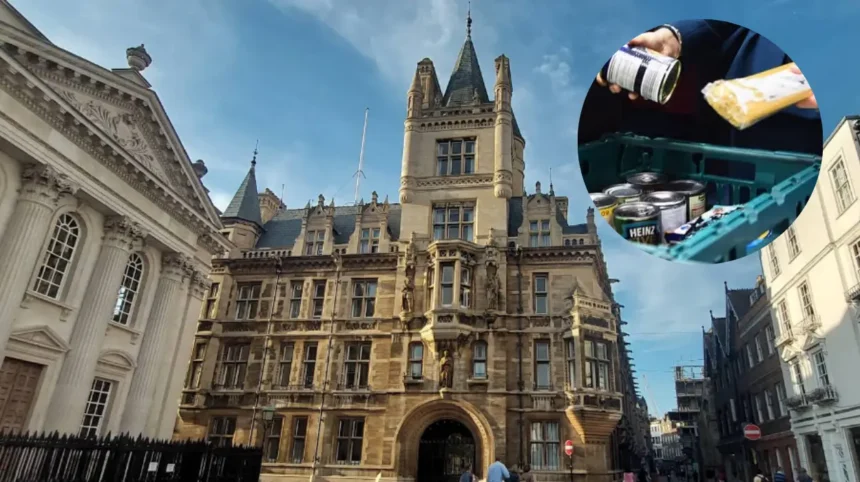
Key Points
- Cambridge charity say the city’s high living costs are forcing some people in work to rely on subsidised food support.
- BBC Politics East reported that rising living costs are creating problems for low-wage employees in Cambridge.
- Cambridge City Council says the city has a wide local food-justice network, including more than 25 organisations tackling food insecurity.
- The council says its support includes food redistribution, holiday meals and community grants.
- Cambridge has been recognised with a Sustainable Food Place Gold Award for its work on food justice.
- The city’s food insecurity response includes food banks, social supermarkets, food clubs and community meal projects.
Cambridge City Council(Cambridge Tribune) May 24, 2026 – the city’s high cost of living is pushing some workers toward food aid, with charities saying people who have jobs still need help buying basic food. BBC Politics East reported that the rising cost of living is affecting low-wage employees in Cambridge and making day-to-day living harder for some households. The issue sits within the broader cost of living crisis, where essential items such as food and fuel rise faster than incomes.
Charity and council material from Cambridge shows that food insecurity is already being handled through a wider local support network. The city says more than 25 organisations are involved in the local food justice alliance, working alongside food banks, food clubs, social supermarkets and volunteer-led meal projects. That network exists because the pressure is not limited to people without work, but extends to households whose earnings are no longer enough to cover essentials.
What did the BBC report?
According to BBC Politics East, the main development is that a charity has warned that living in Cambridge has become so expensive that some people in employment need subsidised food. The report places the problem in the context of the city’s wider affordability strain, which is affecting workers on lower wages. That framing matters because it shows the issue is not only about unemployment or emergency poverty, but also about working households.
The BBC story identifies cost as the central pressure point, rather than one single incident or policy change. In practical terms, that means the story is about a growing mismatch between wages and everyday bills in one of the UK’s more expensive cities. The report also points toward the role of charities in filling gaps where normal household budgets no longer stretch far enough.
How are local groups responding?
Cambridge City Council says the city’s food-justice ecosystem includes direct support, surplus-food redistribution, social food projects and volunteer-run services. The council lists Cambridge City Foodbank Welcome Centres, the Fairbite Food Club Network, an independent social supermarket, an independent food bank and several community meal schemes. It says these efforts are backed by volunteers and coordinated through broader food-justice work.
The council also says it helps by distributing surplus food, funding holiday lunch programmes and supporting the Food Justice Network. In 2023-24, it recorded 25,029 visits to community food hubs, 36 holiday lunch events, 1,935 meals provided across Cambridge and 852 Christmas hampers supporting 3,007 people. Those figures show the scale of demand already being met through local food support.
Why does this matter now?
The timing matters because Cambridge has already been dealing with food insecurity as a public issue, not a hidden one. The city says it received a Sustainable Food Place Gold Award in 2024, which it says recognised the local work on food justice as nationally important. That suggests the city’s support system is active, but also that the pressure remains significant enough to keep demand high.
The wider policy background is that councils and charities across the UK have been trying to reduce the impact of rising prices on residents. East Cambridgeshire, for example, publishes cost-of-living support that includes grants, food vouchers and debt advice, reflecting how common these pressures have become locally. In Cambridge, the focus is now on sustaining support for working people as well as the most vulnerable households.
What does the data show?
Cambridge Sustainable Food and Feeding Britain-linked material suggests food insecurity in the city is not new. Feeding Britain’s Cambridge page cites research showing adults in the city experienced hunger, struggled to access food, or worried about running out of food. The city council also says food insecurity affects lives and health more than ever before.
The local food network described by the council is broad enough to suggest a coordinated response rather than a single emergency measure. It includes meal projects, food clubs, a social supermarket and community cafés, alongside foodbank support. That breadth matters because people who are working but under financial strain may need different support from people in crisis.
What happens next?
Cambridge’s response appears likely to continue through grants, volunteer support and food redistribution rather than one-off interventions. The council says it remains committed to finding sustainable ways to support vulnerable residents beyond the immediate challenges of the pandemic and the cost of living crisis. That indicates the issue is being treated as a long-running local concern rather than a temporary spike.
For workers, the practical effect is likely to be continued reliance on subsidised food clubs, food banks and community meal projects if rents, bills and food prices stay high. For employers, the story suggests that low pay in an expensive city can translate into wider pressure on staff wellbeing and retention. For local services, the demand for help is likely to remain elevated if wage growth does not keep pace with living costs.
Background of the development
Cambridge has spent several years building a coordinated food-justice system through council support, community organisations and surplus-food partnerships. The city says its work expanded during the pandemic and continued into the cost-of-living period, with food insecurity remaining a visible issue. In that context, the latest BBC report is part of a longer pattern of concerns about affordability in one of the UK’s most expensive cities.
Prediction
If living costs remain high, more working households in Cambridge are likely to need some form of food support, especially those on lower wages. That would put continued pressure on foodbanks, food clubs and council-backed community meal schemes. The development may also sharpen debate about local pay, affordable housing and the role of public support in cities where employment does not guarantee food security.