

Key points
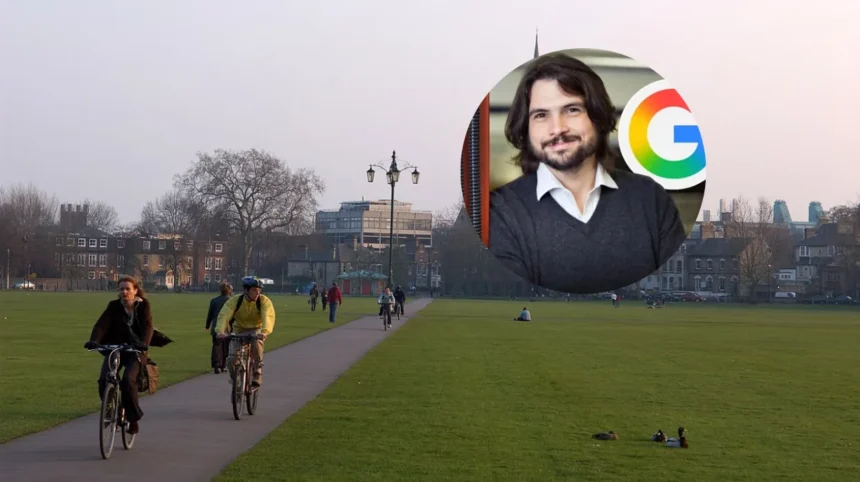
- Google DeepMind has created a new in‑house “Philosopher” position and appointed Cambridge‑based AI ethicist and philosopher Dr Henry Shevlin to fill it.
- The role focuses on machine consciousness, human–AI relationships, and readiness for artificial general intelligence (AGI).
- Shevlin is currently Associate Director (Education) at the Leverhulme Centre for the Future of Intelligence at the University of Cambridge, where he also co‑leads a Master of Studies in AI Ethics and Society.
- He will join Google DeepMind in May 2026, while continuing his Cambridge roles on a part‑time basis.
- The appointment reflects a broader trend of leading AI labs bringing in philosophers, ethicists and cognitive scientists to address the societal and moral implications of advanced systems.
Cambridge(Cambridge Tribune) April 25, 2026 – The University of Cambridge and Google DeepMind have quietly reshaped the AI ethics landscape by placing one of the UK’s most prominent AI ethicists inside the world’s leading AI lab in a newly created “Philosopher” role.
- Key points
- Which areas of AI will the new Philosopher tackle?
- How does this fit with Shevlin’s existing work at Cambridge?
- Why is a philosopher inside Google DeepMind significant?
- How do other outlets describe Shevlin’s background and thinking?
- What does this mean for internal AI ethics at DeepMind?
- Background of the development
- What broader trend in AI does this exemplify?
- Prediction: How this development could affect different audiences
- What could this mean for regulators and policymakers?
- How might affected industries and the public perceive this?
According to reporting by The Times of India, Google DeepMind has created a bespoke “Philosopher” job title and recruited Henry Shevlin, a Cambridge‑based philosopher and AI ethicist, to occupy it. The role is explicitly framed around machine consciousness, human–AI relationships, and AGI readiness, signalling that DeepMind now wants dedicated philosophical analysis woven into the core of its research pipeline.
Writing on LinkedIn, Shevlin himself stated that he is “joining Google DeepMind as a Philosopher – yes, actual title”, and described it as “a rare privilege to work on questions I’ve spent my career thinking about, now with the resources and urgency that come with being inside one of the world’s leading AI labs”. Coverage in NDTV notes that this is one of the more unusual job titles yet seen in the tech industry, underscoring how deeply AI companies are now investing in ethics‑adjacent roles.
Which areas of AI will the new Philosopher tackle?
As reported by NDTV, Shevlin’s work at DeepMind will centre on three broad themes: machine consciousness, human–AI relationships, and preparation for AGI‑level systems. Machine‑consciousness research asks whether AI systems can have subjective experiences, and how one might detect or measure consciousness‑like properties in neural networks.
Explaining his own stance, Shevlin has publicly estimated that current large‑scale models have around a 20 per cent chance of possessing some form of experience, a view that positions him as neither a hard skeptic nor a full‑blown consciousness‑realist about today’s systems. Such judgements feed into broader debates about moral status: if an AI were conscious, would it deserve rights, protections, or at least special ethical consideration?
Human–AI relationships concern how people interact with increasingly anthropomorphic systems, including questions about trust, deception, emotional bonding, and manipulation. And AGI readiness ties into safety frameworks, governance, and scenario planning for systems that might approach or exceed human‑level general intelligence.
How does this fit with Shevlin’s existing work at Cambridge?
As detailed by Moneycontrol, Shevlin is Associate Director (Education) at the Leverhulme Centre for the Future of Intelligence at the University of Cambridge, a leading research hub devoted to the long‑term impacts of AI and related technologies. He also co‑leads a Master of Studies in AI Ethics and Society, a graduate‑level course that trains students and professionals to grapple with governance, bias, policy, and philosophical questions around AI.
NDTV reports that Shevlin has confirmed he will continue to hold these Cambridge positions on a part‑time basis while taking up the DeepMind role from May 2026, creating an unusual bridge between academic ethics institutes and a corporate AI lab. This dual affiliation may allow Cambridge‑based research groups to stay closely informed about internal DeepMind thinking on consciousness and safety, while DeepMind gains access to independent academic critique.
Why is a philosopher inside Google DeepMind significant?
Technology coverage by TopStockAlerts highlights that DeepMind’s hiring of Shevlin reflects a broader shift in the AI industry: labs are no longer leaving ethics and cognition to external watchdogs, but are embedding philosophers, ethicists, and cognitive scientists directly into product and research teams.
NDTV frames the move as a response to the “growing complexity” of AI development, in which questions about consciousness, moral status, and long‑term risk are no longer purely theoretical but have practical bearings on how systems are designed, tested and deployed. By giving a philosopher a formal, in‑house title, DeepMind signals that these questions are now treated as core R&D terrain, not just PR or compliance‑driven add‑ons.
How do other outlets describe Shevlin’s background and thinking?
A YouTube news‑style explainer summarises Shevlin as an Oxford‑educated philosopher specialising in cognitive science and animal minds, and notes that his move to DeepMind marks a “significant shift” in how philosophy is integrated into AI development. The video emphasises that his work on non‑human minds – including animals – informs how he might approach questions about machine consciousness and moral status.
Meanwhile, Moneycontrol’s feature “Meet Henry Shevlin: The philosopher hired by Google DeepMind” describes him as a researcher who has published on how to detect consciousness‑like properties in neural networks, and who has spent years interrogating whether AI systems could ever count as morally considerable agents. This body of work positions him as a central figure in the emerging subfield of machine consciousness and AI ethics.
What does this mean for internal AI ethics at DeepMind?
Industry commentary shared by The Rundown newsletter notes that Shevlin’s appointment is part of DeepMind’s broader effort to “deal with the ethical questions around advanced AI” at a time when regulators and civil‑society groups are increasingly scrutinising the conduct of major labs. The newsletter underlines that his focus on machine consciousness, human–AI interaction, and AGI preparedness aligns with several of the most contentious open‑ended questions in the field.
By embedding a philosopher directly into DeepMind, the company may be attempting to institutionalise a more systematic approach to concepts such as:
- When, if ever, an AI system might have a moral status akin to that of humans or animals.
- How designers should handle anthropomorphism in interfaces that might mislead users into attributing feelings or intentions to systems that lack them.
- How scenarios around AGI should inform near‑term safety requirements, transparency norms, and governance structures.
Background of the development
How did this “Philosopher” role arise within DeepMind?
The appointment of a dedicated philosopher did not emerge in isolation. Over the past five years, DeepMind and its parent company Google have added multiple ethics and safety teams, including groups focused on AI safety, fairness, transparency, and long‑term risk, as widely covered by technology and policy outlets.
However, explicit engagement with philosophical questions about consciousness and moral status has remained relatively peripheral, often handled ad‑hoc through collaborations rather than fixed internal roles. Shevlin’s hire can therefore be seen as a formalisation of these concerns into a distinct job family – comparable to the way “AI safety engineers” and “ethics researchers” have become recognisable positions across the industry.
What broader trend in AI does this exemplify?
Analysis shared by TopStockAlerts argues that DeepMind’s move reflects a wider strategy among AI giants to expand beyond pure engineering and bring in disciplines such as philosophy, cognitive science, and neuroscience to help navigate the societal implications of their tools.
This trend is mirrored elsewhere: other labs and big‑tech AI divisions have begun hiring ethicists, sociologists, and even political theorists to advise on issues ranging from algorithmic bias to lab‑governance structures and international regulation. The DeepMind “Philosopher” role is one of the most overt examples yet of this pattern, because it elevates a traditionally academic discipline into a clearly defined, titled position within a leading AI lab.
Prediction: How this development could affect different audiences
For AI researchers and engineers at DeepMind and beyond, the creation of a “Philosopher” role may gradually shift the internal culture toward more explicit discussion of moral status, consciousness, and human–AI interaction during model design and deployment.
If Shevlin’s work is trusted by DeepMind leadership, product teams may begin routinely consulting philosophical frameworks before deciding, for instance, how anthropomorphic a chatbot should be, or how to interpret ambiguous signals about model behaviour that might resemble rudimentary awareness or preference. Over time, this could lead to more standardised ethical checklists or design guidelines that explicitly reference questions about consciousness and moral status, even if those questions remain technically unresolved.
What could this mean for regulators and policymakers?
For regulators and policymakers, DeepMind’s appointment may reinforce the idea that leading AI labs are taking philosophical and ethical uncertainties seriously, which could influence how rules around AI safety, transparency, and human oversight are drafted.
However, it may also raise new questions: if a major lab thinks it needs an in‑house philosopher, does that imply that current regulations are too narrow, focusing mostly on bias, privacy, and misuse, while neglecting questions about moral status, machine suffering, and long‑term personhood‑like categories for AI systems? Legislators might respond by either demanding more transparency about how such internal advisors are used, or by creating external advisory bodies that mirror DeepMind’s internal structure.
How might affected industries and the public perceive this?
For industry watchers and the general public, the existence of a “Philosopher” at DeepMind is likely to sharpen both fascination and unease about the direction of AI.
On one side, it may reassure some observers that serious consideration is being given to questions about machine consciousness and AGI‑level risks, rather than treating AI as merely a technical tool. On the other, it may heighten concerns about anthropomorphism, with users wondering whether companies are deliberately designing systems that blur the line between tool and pseudo‑person, potentially influencing trust, emotional attachment, and even legal responsibility.
In summary, the appointment of a Cambridge‑based philosopher to a bespoke “Philosopher” role at Google DeepMind is not just a quirky title change. It signals a deeper institutionalisation of ethics and philosophy within one of the world’s most powerful AI labs, and may quietly reshape how researchers, regulators, and the public think about the moral and existential stakes of advanced artificial intelligence.