
Key Points
- A Cambridge resident has condemned the state of city roads as “disgraceful” and pavements as “dangerous”, saying everyday journeys now feel unsafe for drivers, pedestrians and cyclists.
- The criticism centres on pothole‑scarred streets, uneven and cracked pavements, and trip hazards made worse by winter weather and standing water.
- Residents have reported vehicles being damaged, including punctured tyres and suspension problems, as they weave around deep potholes across Cambridge and surrounding villages.
- Pedestrians – particularly older people, parents with buggies and those with disabilities – are said to face an “obstacle course” of rutted slabs, puddles, overgrown hedges and pavement parking.
- Campaigners from groups such as Cambridge Living Streets have warned that poor pavements and cluttered walkways make basic trips “quite dangerous now” on some streets.
- An online petition calling for resurfacing on one key route says the “ever-worsening and dangerous condition” of the road forces cyclists either into traffic or onto pavements, increasing risks for everyone.
- Public reporting platforms show hundreds of complaints about road defects and “bad state of roads and pavements” across Cambridgeshire, including Cambridge neighbourhoods.
- Cambridgeshire County Council has acknowledged a sharp rise – around 300% – in pothole reports, blaming severe winter weather and an £800m road‑maintenance backlog built up over “decades of underfunding”.
- The council says it is receiving £188m in multi‑year government funding for roads but estimates it needs £230m over the same period and faces difficult choices over which locations to prioritise.
- Local residents say short‑term pothole patches “don’t last long” and complain that some roads look “like a war zone” or a “death trap”, demanding “lasting repairs” instead of repeated temporary fixes.
- Campaigners argue that poor surfacing and damaged pavements are not just an inconvenience but a road‑safety issue, pointing to collisions, falls and near misses linked to potholes and narrow, cracked footways.
- The county council insists it is investing tens of millions of pounds in maintenance and reconstruction, promising repair programmes on the worst‑affected stretches in coming weeks and months.
- Residents and community groups are urging councillors to prioritise residential streets and busy walking routes, warning that without action more people will be hurt and local businesses will suffer.
- Online forums show some Cambridge residents describing driving through parts of the city and nearby villages as “an adventure” as they swerve around large potholes and broken edges of the carriageway.
- Cyclists report being forced out of bus lanes and cycle lanes to avoid wheel‑damaging holes, while some drivers mount pavements to bypass defects, adding to the dangers for people on foot.
- Community voices say they feel “ignored” despite repeated complaints, petitions and social media posts highlighting the scale of the problem on city roads and pavements.
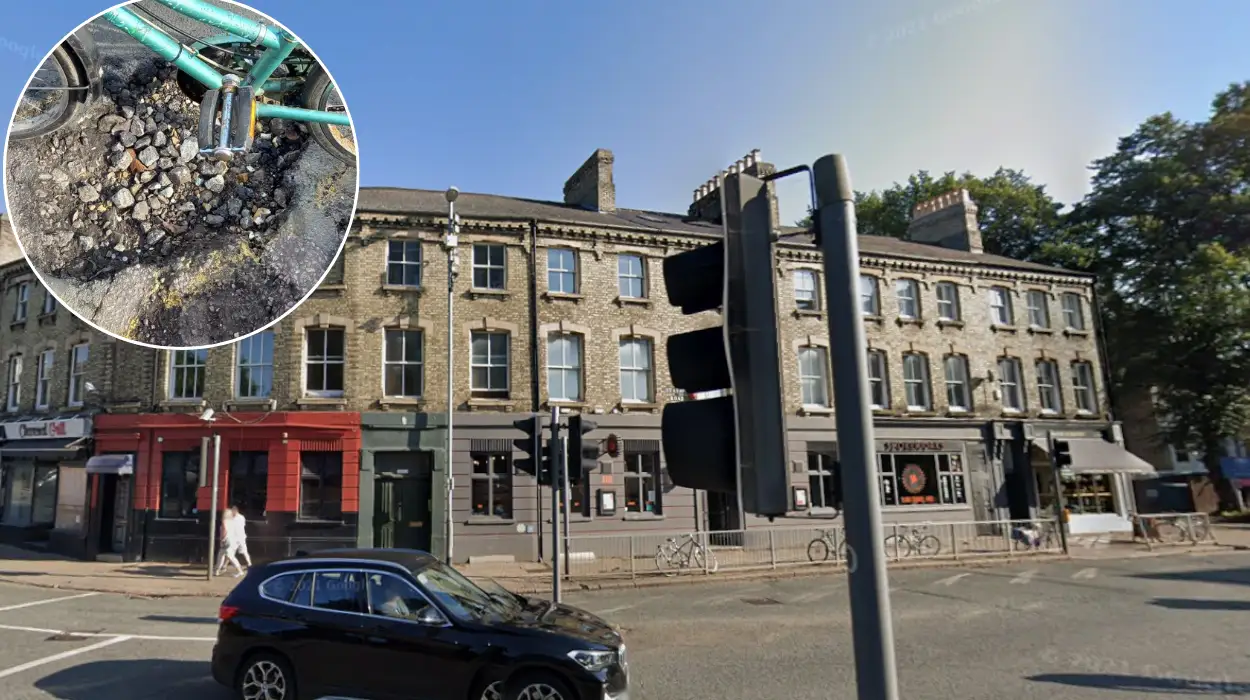
Cambridge (Cambridge Tribune) March 13, 2026 – A Cambridge resident has branded the city’s roads “disgraceful” and its pavements “dangerous”, accusing local authorities of failing to keep people safe as crumbling surfaces, deep potholes and rutted footways turn everyday journeys into a constant hazard for drivers, cyclists and pedestrians alike.
- Key Points
- How has the Cambridge resident described the city’s ‘disgraceful’ roads and ‘dangerous’ pavements?
- Why are residents saying everyday journeys in Cambridge feel unsafe?
- What specific problems are being reported with Cambridge’s pavements?
- How widespread are road and pavement complaints across Cambridge and Cambridgeshire?
- What impact are poor roads and pavements having on residents and businesses?
- How have online communities in Cambridge responded to the state of roads and pavements?
- What is Cambridgeshire County Council saying about potholes, roads and pavements?
- What solutions are residents and campaigners proposing for Cambridge’s ‘dangerous’ streets?
- How does this wider context relate back to the Cambridge resident’s ‘disgraceful’ and ‘dangerous’ claims?
How has the Cambridge resident described the city’s ‘disgraceful’ roads and ‘dangerous’ pavements?
As reported by contributors to Cambridgeshire‑focused reporting platforms and highlighted in BBC local coverage referencing the original Cambridgeshire Live article, the unnamed Cambridge resident has complained that deteriorating road surfaces across the city are now so poor that they feel unsafe to use. They describe streets pitted with potholes, with some holes large and deep enough to jolt vehicles violently or damage wheels, forcing motorists to zigzag along carriageways in a way they say resembles an obstacle course.
According to public reports collated on FixMyStreet and cited by local media, residents have repeatedly logged issues such as “nearly whole length of road is potholded”, “dangerous pothole narrow road” and “bad state of roads and pavements”, referring to locations in and around Cambridge. On online forums, one Cambridge driver wrote that they were “doing a slalom everywhere” to get around defects, while another said a local road surface was so broken that it felt “like the surface of the moon”, capturing the frustration behind the “disgraceful” description.
The “dangerous pavements” complaint reflects long‑standing concerns that cracked slabs, uneven surfaces and standing water create trip hazards and force people into the road. As outlined by the Cambridge branch of walking charity Living Streets, pavements in many residential areas are “cracked and rutted, causing trip hazards and puddles to form”, with poorly sited street furniture, bins and overgrown hedges adding to what they call a pedestrian “obstacle-course”.
Why are residents saying everyday journeys in Cambridge feel unsafe?
As noted by contributors to cambridge on Reddit, drivers describe having to swerve sharply around potholes on key city routes and neighbouring roads, fearing that if they do not they will “smash suspension or drive into oncoming traffic”. One user said that driving on a particular stretch after a roundabout towards Gilbert Road made them think they were
“going to burst all [their] tyres”, while another described the road through Coton as having a surface that is simply “gone”, comparing it to taking one’s life in one’s hands to avoid “cliff edge drops at the sides of the road”.
Cyclists have echoed these fears, telling fellow residents online that trying to avoid potholes is “awful”, especially on busy routes such as Hills Road where they say they must pull out of bus lanes into faster traffic to skirt wide craters. On FixMyStreet and in a formal e‑petition to Cambridgeshire County Council about Cambridge Road, residents warn that the “ever-worsening and dangerous condition” of road surfaces forces cyclists to veer around holes, either out into live traffic or up onto the pavement, creating new risks for pedestrians.
Pedestrians, particularly those who are older, mobility‑impaired or pushing prams, report that uneven pavements, ponding water and clutter such as badly parked vehicles and commercial displays make walking unnerving. In an article for East Anglia Bylines, journalist Mike Scialom reported Cambridge Living Streets vice‑chair Linda Jones as saying of Mill Road that “for pedestrians, the street’s quite dangerous now”, citing tripping, pavement parking and narrow walkways that can force people into the road when they meet.
What specific problems are being reported with Cambridge’s pavements?
As highlighted by the Cambridge Living Streets “Pavement Survey” and associated commentary, many pavements in the city are described as cracked, rutted and prone to puddles that hide defects, creating slip and trip hazards. The group notes that poorly positioned street furniture and bins often narrow the usable width of footways, while overgrown hedges and “botanical obstructions” further constrict space, especially on residential streets.
In East Anglia Bylines’ coverage of conditions on Mill Road, Linda Jones is quoted as saying that people “trip and fall”, citing pavement parking, bike parking where it should not be, and the spread of tables and chairs from nearby shops as problems that make it hard to navigate the street, particularly for those with mobility aids or pushchairs. She points out that on one side of Mill Road the footway is so narrow that two large people cannot walk side by side without one stepping into the carriageway, underscoring the complaint that pavements are effectively pushing pedestrians into traffic.
Unregulated pavement parking is another major concern. Cambridge Living Streets argues that cars and vans mounting pavements both obstruct pedestrians and contribute to further cracking and subsidence of slabs, despite the county council having powers to act. This aligns with broader comments from local campaigners, reported by East Anglia Bylines, that thousands of people “walk and wheel” along busy streets every day and “deserve an improved pedestrian experience”, with current conditions described as unsafe.
How widespread are road and pavement complaints across Cambridge and Cambridgeshire?
FixMyStreet’s summary reports for Cambridgeshire illustrate how complaints about potholes, subsiding carriageways and defective pavements stretch across the county, from central Cambridge to smaller communities. Entries listed over recent months include “nearly whole length of road is potholded”, “10cm deep pothole”, “large pothole spanning section of road”, “loose curbstone”, “slab is loose” and a general report titled “bad state of roads and pavements”.
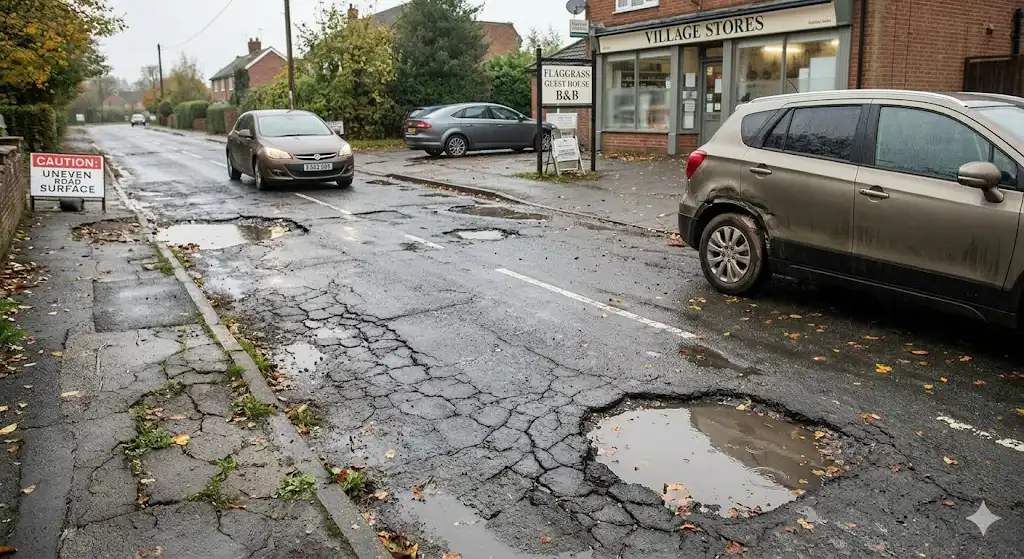
Beyond the city itself, BBC News reporter Kevin Church’s coverage of Flaggrass Hill Road in March, Cambridgeshire, quotes residents describing a road that has become “unsuitable for use”, with potholes filled with rainwater and surfaces so poor that one resident, Denise Pearce, likens the appearance to a “war zone”. Pearce tells the BBC she has received negative reviews for her bed and breakfast “solely due to the street conditions”, estimating around 20 potholes plus what “resembles [a] lake” at the top of the road and advising guests to drive at “one mile [an] hour” to avoid damage.
In another BBC report on Forty Foot Bank, journalist Nikki Fox relays how Benwick resident Alan Whitney has previously described that road as a “death trap”, saying its condition seems to worsen weekly, with subsidence causing cracks and uneven surfaces. Cambridgeshire County Council has announced a six‑week closure there for “extensive reconstruction and resurfacing”, explicitly acknowledging the scale of work required. These examples, cited by BBC News as “other local news sites” when pointing to the Cambridgeshire Live story about the Cambridge resident’s complaints, show that concerns about “disgraceful” roads and “dangerous” pavements fit into a wider county‑wide pattern.
What impact are poor roads and pavements having on residents and businesses?
Residents who spoke to the BBC about Flaggrass Hill Road explained that the crumbling surface has financial, emotional and practical consequences. Bed and breakfast owner Denise Pearce said her business suffers “unfavourable reviews” because of the road, while another resident, Emma Watts, told the BBC that “our homes are suffering, our cars are being damaged”, adding that winter rains make matters worse and that the state of the road is “disheartening”.
In the Cambridge Road resurfacing petition, residents warn that ongoing deterioration is causing “vehicle damage, typically punctures”, and that for cyclists, unavoidable potholes may cause falls with “significant injury”. The petition stresses that some cyclists resort to riding on pavements to protect themselves from traffic and defects, which then poses hazards to pedestrians, showing how one set of problems can feed into another.
As reported by East Anglia Bylines, community groups argue that hazardous pavements affect not just safety but the character and economy of streets like Mill Road, where pedestrian footfall is vital for local traders. Linda Jones and fellow campaigners say they are presenting a petition to Cambridgeshire County Council calling for more investment to make such streets better, insisting that people who walk and wheel along them “deserve an improved pedestrian experience”.
How have online communities in Cambridge responded to the state of roads and pavements?
On Reddit’s /r/cambridge forum, residents have for several years used threads to vent about the condition of local roads and pavements, adding texture to the concerns later echoed in Cambridgeshire Live’s reporting. In one widely discussed post titled “Dear Cambridge Council… please fix the bloody roads”, user “Narwhal1986” wrote that “nearly every street has a sizable hole” and described almost losing a dental filling while driving along Victoria Avenue, a comment that captures both humour and exasperation.
Other Reddit users have chimed in with specific locations they feel are particularly bad. One contributor complained that a road resurfaced around late January or early February reopened with potholes appearing again within weeks, calling the work a “complete waste of money/effort”. Another labelled a local route “the worst I’ve ever seen it”, saying that driving through Coton meant navigating a road surface “like the surface of the moon”, while cyclists highlighted full‑width potholes in bus lanes that they “can’t avoid”, forcing abrupt manoeuvres.
In a separate discussion prompted by an article titled “Why isn’t Cambridge better?”, Reddit user “ChezDudu” argued that the primary issue with roads and pavements is wear from motor traffic, suggesting that removing cars would dramatically cut maintenance needs. They claimed that streets dedicated solely to pedestrians require so little upkeep that “you won’t notice”, reinforcing the perspective from campaigners that current conditions are not inevitable but reflect policy choices.
What is Cambridgeshire County Council saying about potholes, roads and pavements?
In a recent BBC News report on pothole complaints, journalist Ben Schofield set out how Cambridgeshire County Council is grappling with a surge in defect reports. He reported that the council has seen a “300% jump in pothole complaints”, with Councillor Alex Beckett, chair of the Highways and Transport Committee, attributing part of the increase to severe January weather while also pointing to an £800m maintenance backlog caused by “decades of underfunding”.
As Schofield reported, the council says it will receive £188m over four years from the government as part of a wider programme to “resurface roads and tackle the pothole crisis”. However, councillors told the BBC that government figures suggest they actually need £230m in the same period, leaving a gap of around £42m and obliging them to prioritise certain roads and pavements over others. The authority has approved tens of millions of pounds for road maintenance and improvements county‑wide, including specific schemes such as the reconstruction of Forty Foot Bank and repairs on Flaggrass Hill Road.
In the Flaggrass Hill Road piece, a county council spokesperson told BBC News they “recognise the deterioration” on that road and nearby Fen Road in March, adding that cold, wet winter weather accelerates the breakdown of surfaces. They said repair work was “due to start shortly” and was expected to be finished by the end of the following week, mirroring the council’s broader claim that it is working through the backlog as resources allow. Similarly, in Nikki Fox’s report on Forty Foot Bank, a spokesperson explained that “extensive reconstruction and resurfacing” would be required because of recent subsidence, and set out a timetable for a multi‑week closure and diversion routes.
What solutions are residents and campaigners proposing for Cambridge’s ‘dangerous’ streets?
Campaigners in Cambridge tend to present the state of roads and pavements not only as a funding issue but as a question of priorities and street design. In the Mill Road article, East Anglia Bylines reported that Cambridge Living Streets and partner organisations are petitioning the county council for more investment to make busy walking routes safer and more pleasant, highlighting the need for better surfaces, less pavement parking and re‑balanced space to favour people on foot and using mobility aids.
The Living Streets pavement survey is positioned as a practical tool to push change. The group explains that one reason “too little action has been taken” is the absence of a comprehensive register of problems, so they are asking residents to submit details of cracked, rutted and obstructed pavements in order to build a catalogue that can be presented to the county and city councils. They also point out that existing legal powers to tackle pavement parking are not being fully used and urge authorities to enforce against vehicles that block footways and contribute to damage.
Online, some residents are calling for a more radical shift away from car‑dominated streets. In the Reddit discussion cited above, “ChezDudu” suggests that removing cars from many roads would dramatically reduce wear and cut the “endless expense” of repairs, arguing that pedestrian and bike‑only routes require far less upkeep. Others, posting in response to stories about neglect and closures, urge the council to adopt longer‑lasting repair methods rather than patching the same potholes repeatedly, reflecting comments from residents like Denise Pearce who told the BBC that previous fixes on Flaggrass Hill Road “didn’t last long”.
How does this wider context relate back to the Cambridge resident’s ‘disgraceful’ and ‘dangerous’ claims?
Taken together, the testimonies gathered by local media, campaign groups and online communities help to set the scene for the Cambridge resident’s condemnation of “disgraceful” roads and “dangerous” pavements reported by Cambridgeshire Live and flagged as “other local news” by BBC News. Their remarks echo the language of residents elsewhere in Cambridgeshire who describe some roads as “like a war zone” or a “death trap”, and align with petitions that characterise key routes as “ever-worsening and dangerous”.
At the same time, statements from Cambridgeshire County Council show that officials do not dispute the existence of serious problems, instead emphasising resource constraints, weather impacts and long‑term underinvestment. The tension between local frustration and official explanations underpins ongoing debates about how quickly and how far the council can move to repair roads, resurface pavements and redesign streets to prioritise safety for those walking, cycling and driving in Cambridge.