

Key Points
- Pothole reports to Cambridgeshire County Council have surged from 500 per week to more than 2,000, representing a 300% increase.
- The council is managing a backlog of 5,400 potholes awaiting repair, despite fixing over 1,000 in a single week.
- Crews have been increased from 8 to 30 to tackle the repairs during peak pothole season (January to February).
- Cambridgeshire faces an £800 million road maintenance backlog due to decades of underfunding.
- The council needs £230 million over four years but government funding is £188 million; nationally, £7.3 billion package announced with £2.1 billion conditional on strategies.
- £58 million allocated for road maintenance in 2026-27; recent resurfacing on Great Shelford to south Cambridge road after over a year of complaints.
- Councillor Alex Beckett, chair of Highways and Transport Committee, attributes rise to January’s harsh winter conditions including snowfall and ice.
- Contractor M Group criticised for “ridiculous”, “unbelievable” pothole repairs failing within weeks under £51m/year contract; council demands better quality.
- Highways reporting tool upgraded; all reports migrated with fine-tuning ongoing.
- Residents like Denise Pearce in March describe roads as “war zone”; Janette Page and Andrea Curkovic in St Neots call for full resurfacing.
Cambridge (Cambridge Tribune) March 11, 2026 – Pothole reports submitted to Cambridgeshire County Council have surged from 500 weekly to over 2,000, marking a 300% increase that has left the authority grappling with a significant backlog of road repairs. The council has highlighted an £800 million maintenance deficit built up over decades of underfunding, while seeking an additional £42 million from the government over the next four years. This escalation follows harsh January weather and comes amid criticism of contractor repairs, with crews now tripled to address the crisis.
- Key Points
- Why have pothole reports jumped 300% in Cambridgeshire?
- How is the council responding to the pothole surge?
- What criticism has the council’s contractor faced?
- What are residents saying about Cambridgeshire’s roads?
- What funding challenges does the council face?
- When and how are potholes repaired?
Why have pothole reports jumped 300% in Cambridgeshire?
The dramatic rise in pothole complaints stems directly from severe winter conditions that exacerbated existing weaknesses in the county’s ageing road network. As reported by BBC News, Councillor Alex Beckett, chair of the Highways and Transport Committee, stated that “the snowfall and icy conditions experienced in January had led to a rise in reports concerning potholes.” The council has noted that decades of insufficient funding have created an £800 million backlog, leaving roads “very old” and prone to breaking up during freeze-thaw cycles.
Yahoo News coverage echoes this, quoting the council:
“The government is indicating that they are making their largest investment in highways to date, which we acknowledge. However, they are providing us with £188 million over four years, while their own calculations suggest we actually require £230 million in that timeframe.”
Recent resurfacing of the key route between Great Shelford and south Cambridge, prompted by complaints over a year old, underscores how delays compound the problem.
HI HUB reports that the three months from January to February constitute “peak pothole season,” with the council’s teams “working around the clock.” At the end of January, 5,400 potholes awaited repair county-wide, despite over 1,000 fixed in one week.
How is the council responding to the pothole surge?
Cambridgeshire County Council has more than tripled its repair capacity in response to the crisis. As detailed by HI HUB, the number of pothole crews has risen from eight to 30, with expectations of significantly more fixes. Cllr Alex Beckett said:
“Driving, cycling or walking around the county there’s no getting away from the fact it’s pothole season and battling them is our top priority.”
The council’s official statement confirms:
“In the past week, the council has repaired over 1,000 potholes.”
It has also allocated £58 million for road maintenance and enhancements in 2026-27, aiming to get “ahead of the problem.” Additionally, an upgraded highways reporting tool has been introduced, migrating all existing reports, though “occasional unexpected messages” are being fine-tuned.
BBC News reports that the Department for Transport’s £7.3 billion national investment includes £2.1 billion conditional on councils proving effective pothole strategies, allowing residents to hold authorities accountable.
What criticism has the council’s contractor faced?
Quality of repairs has drawn sharp rebuke from council officials. BBC News revealed that under its £51 million per year contract with M Group, some pothole fixes have been labelled “ridiculous,” “unbelievable” and “extremely poor workmanship,” failing within weeks. One council note stated: “The photo captures everything,” regarding multiple small patches instead of a single proper repair.
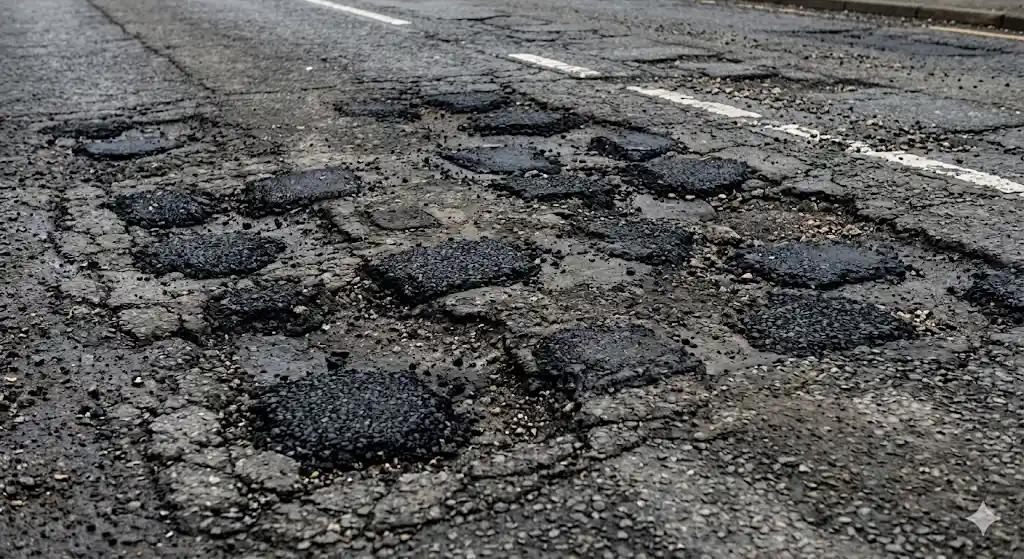
In a St Neots case on Priory Road, repairs two weeks old were deemed “not satisfactory at all,” with marked areas ignored and dimensions undersized; “the potholes were only completed 14 days ago and are already failing,” the assessment concluded. March highways committee documents noted “response times and quality of work remain ongoing concerns.”
M Group responded: they are working “jointly” with the council to deliver over 50,000 pothole repairs annually “within the necessary standards.” Cllr Alex Beckett, via Cambs News, added: “We are always pushing for better quality… Not all repairs will be perfect, but when they do not meet our standards we do not pay for it or we get them redone.” GB News quoted council documents:
“Clearly shows where pothole needed repair as breaking up but wasn’t carried out… very poor workmanship in my opinion.”
What are residents saying about Cambridgeshire’s roads?
Local voices reflect widespread frustration. In March, BBC News quoted Denise Pearce, who runs a bed and breakfast on Flaggrass Hill Road:
“Embarrassment over the road’s appearance, likening it to a ‘war zone'”; she called for “lasting repairs” as the road, filled with rainwater potholes, is “not suitable for use.”
On Priory Road in St Neots, resident Janette Page said:
“I don’t understand why they can’t undertake a complete renovation of the entire road; it likely comes down to budget constraints.”
Neighbour Andrea Curkovic added:
“I’m worried that the work being done is pointless. Realistically, perhaps resurfacing the road might be more beneficial than the repairs currently being attempted.”
Facebook posts highlight repeated fixes on peat-affected roads, with calls to address the funding deficit.
What funding challenges does the council face?
Funding shortfalls underpin the crisis. The council requires £230 million over four years per government calculations, but Cambridgeshire and Peterborough Combined Authority receives £188 million. Cllr Beckett noted:
“While we’re now investing record amounts, refreshing our roads, and getting ahead of the problem, decades of underinvestment have sadly left us with a very old network.”
Nationally, the £7.3 billion package demands proof of efficient use. HI HUB and BBC coverage emphasise the council’s push for more resources amid rising reports.
When and how are potholes repaired?
Repairs prioritise severity: urgent hazards fixed swiftly without marking, others marked yellow and addressed within set timelines. The expanded 30 crews focus on high-volume fixes during peak season. Cllr Beckett thanked the public for patience as efforts intensify.
This comprehensive response draws from official statements and media scrutiny, painting a picture of a council under pressure but mobilising resources amid resident demands for lasting solutions.