
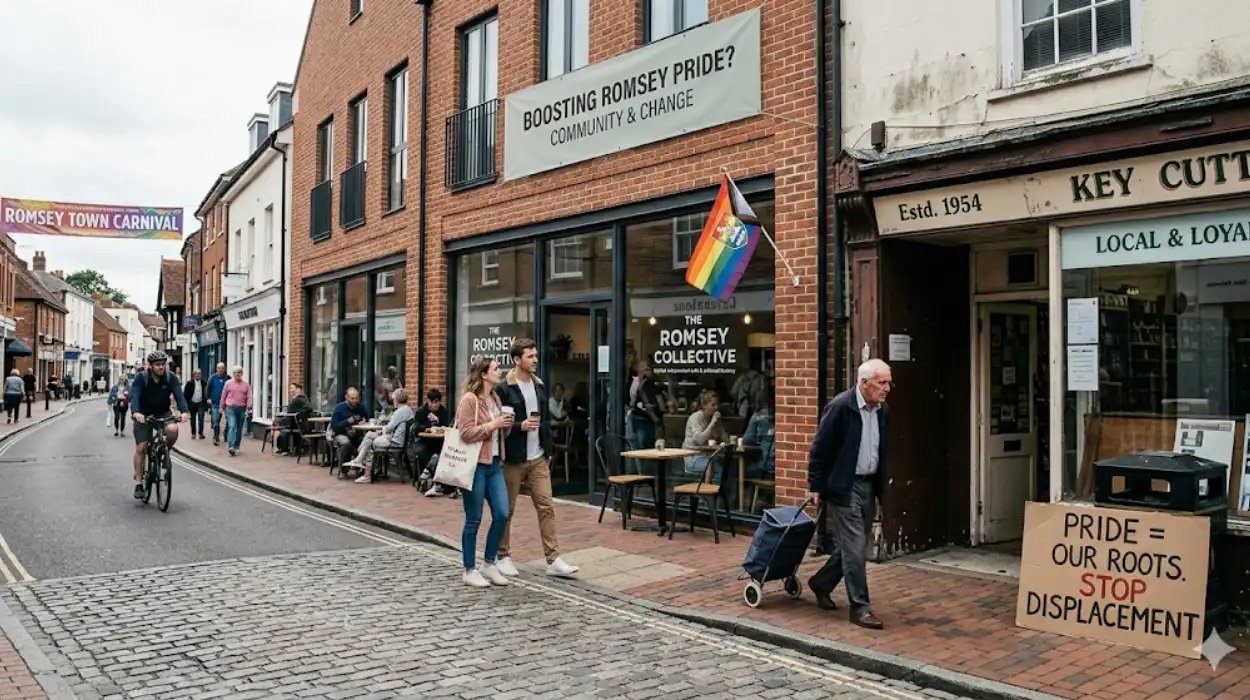
Romsey, a dynamic ward in southeast Cambridge, embodies the tension and triumph of urban evolution. Originally built for railway workers, this area now navigates the influx of professionals amid soaring housing costs, yet its residents fiercely maintain a sense of belonging.
Historical Roots of Romsey
Romsey Town emerged in the late 19th century as Cambridge expanded beyond its medieval core. Developed primarily between 1885 and 1895, the neighbourhood’s street layout followed ancient field boundaries from the Enclosure Acts of the 1800s, transforming open fields into terraced housing for industrial workers.
The arrival of the railway in the mid-19th century defined Romsey’s identity. Homes were constructed to accommodate railway employees, with the Romsey Town Lime and Cement Works, established in 1892, marking early industry at the intersection of Mill Road and Brookfields. Street names like Malta, Cyprus, and Suez reflect the high Empire era, evoking imperial pride while underscoring the working-class origins.
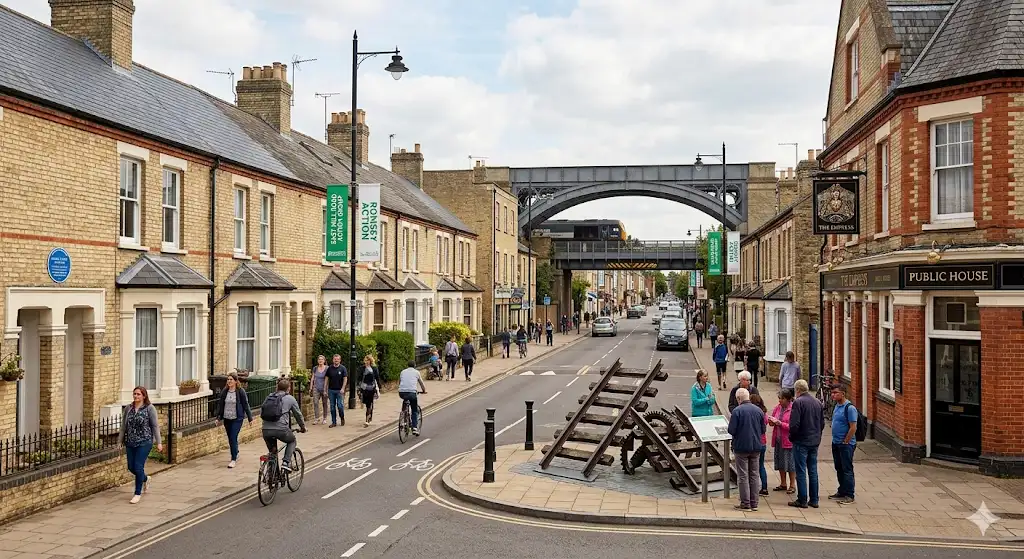
By the early 20th century, Romsey solidified as a self-contained community. The Romsey railway heritage sculpture at Cavendish Road and Mill Road corner commemorates this legacy, installed through community input from groups like the East Mill Road Action Group and Romsey Action. This historical foundation laid the groundwork for a resilient neighbourhood spirit that persists today.
The Rise of Gentrification Pressures
Gentrification in Romsey mirrors broader Cambridge trends, where population growth outpaces housing supply. Cambridge’s population surged 17.6% from 2011 to 2021, reaching nearly 150,000, with Romsey’s Victorian terraces attracting young professionals drawn to the city’s tech and university hubs.
Property prices exemplify this shift. On Romsey Terrace, average sold prices hit £700,000 in the last year, up 69% from the prior year and 33% above the 2019 peak of £525,000. Citywide, forecasts predict 3-5% annual increases through 2026, fueled by tech sector expansion employing over 65,000 and limited new builds fewer than 1,000 homes yearly against a 2,000+ need.
This influx has transformed the demographic. Once a working-class enclave for railway labourers, Romsey now blends long-term families with academics and tech workers. A 2014 resident poem highlighted tensions, decrying “foul-mouthed little boys” amid upscale changes, signaling early friction as the area earned nicknames like Cambridge’s “new Islington.” Demand from London migrants and hybrid workers, bolstered by transport links like East West Rail, intensifies these pressures.
Impacts on Housing and Daily Life
Rising costs strain original residents, pushing some toward city edges. Romsey’s proximity to Mill Road its bustling commercial spine amplifies appeal, with independent shops and eateries drawing higher-income buyers who renovate terraces, altering the streetscape.
Household compositions reflect adaptation. From 2011 to 2021, Cambridge saw couples without children rise to 18.3% of households, while lone-parent families increased to 8.1%, indicating diverse needs amid gentrification. In Romsey, this manifests in debates over developments, with council investments like £120,000 for north Cambridge facilities including Romsey Mill mentoring aiming to mitigate displacement.
Yet, challenges persist. Limited supply and green belt protections exacerbate affordability issues, with average city prices at £507,000 in 2025, up 7.4% annually. Residents voice concerns over lost community hubs, echoing town-gown tensions where university privileges historically clashed with local life, though modern gowns symbolize fading divides.
Pillars of Community Pride
Romsey’s pride shines through enduring institutions like Romsey Mill, founded in 1980 by five churches led by Rev Peter Phenna. Housed in a former Methodist chapel bought in 2002 and renovated by 2007, it supports 2,600+ youth and families yearly with programs like Step-Up education for 14-16-year-olds and young parents’ courses.
The centre fosters skills in mentoring, bike mechanics, and arts, recently bolstered by council funding for youth engagement. Events like the Mill Road Winter Fair celebrate multiculturalism, with Caribbean and South Asian influences enriching festivals and cuisine since the late 20th century.
Community activism reinforces this. Groups like Romsey Action and the Mill Road History Project shape heritage projects, ensuring railway legacy endures. Ross Street Community Centre, managed by the council, hosts private groups, empowering locals to address aspirations. These efforts cultivate belonging, countering gentrification’s erode of traditional ties.
Balancing Change and Tradition
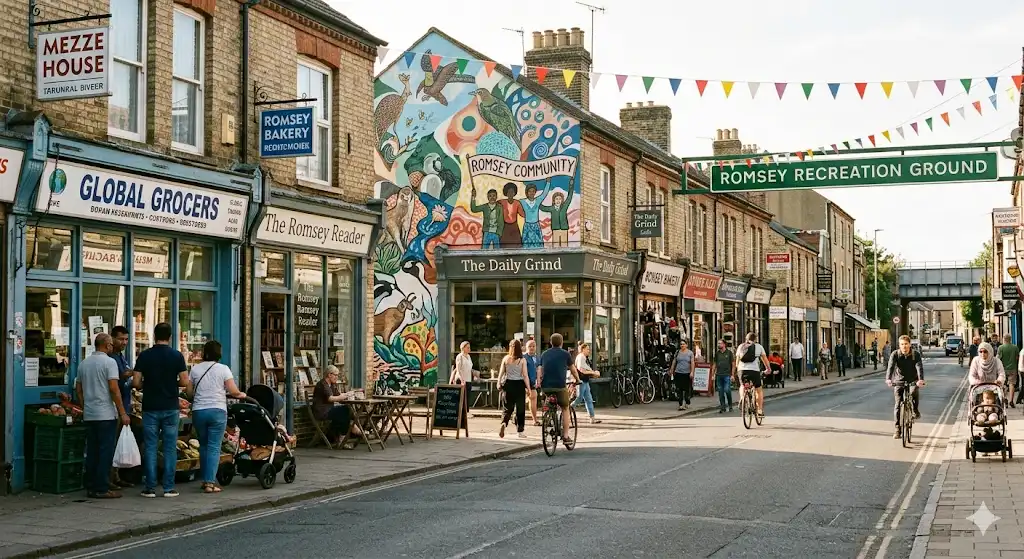
Romsey exemplifies measured evolution. While property booms signal upscale shifts, community-led regeneration preserves character. The bohemian vibe street art, vintage shops, and Cambridge Junction’s cultural hub draws visitors seeking authentic Cambridge beyond colleges.
Diversity bolsters resilience. Median age stable at 31, with 25-34-year-olds at 20.5%, Romsey mixes ages and backgrounds, from families to creatives. Initiatives like creative arts clubs for teens on identity bridge divides, fostering citizenship.
Critics note risks: a 2014 poem captured bleakness amid “listless” youth, but responses emphasize pride in the area’s “vibrant, multicultural” fabric. Council collaborations with residents prioritize needs, as in viability assessments for facilities like Chesterton Working Men’s Club.
Cultural and Economic Vibrancy
Mill Road anchors Romsey’s economy, offering global eateries and boutiques that thrive on local loyalty. This “other side” of the road contrasts student-heavy Petersfield, providing relaxed, community-focused commerce.
Cultural spots like Romsey Recreation Ground invite picnics, while River Cam paths offer respite. The neighbourhood’s artistic spirit murals and performances positions it as a “bohemian gem,” attracting tourists and residents alike.
Economically, tech proximity benefits without overwhelming. While prices rise, independent businesses endure, supported by events sustaining footfall year-round.
Future Prospects for Romsey
Looking ahead, Romsey’s trajectory hinges on inclusive growth. With Cambridge’s tech boom and university expansion, demand persists, but community facilities signal commitment to equity.
Projections of steady price rises underscore urgency for affordable housing, yet Romsey Mill’s expansion to South Cambridgeshire and Peterborough hints at scalable models. Regeneration, like railway sculptures, honors history while welcoming change.
Resident feedback drives progress, from council ward pages to partnerships. As gentrification continues, Romsey’s pride rooted in railways, faith-based outreach, and multicultural fairs ensures it remains a cohesive haven.
Navigating Tensions Constructively
Historic town-gown rivalries, once fueled by student privileges like mandatory gowns until 1965, have softened, but economic divides echo them. Romsey channels this into positive action, with churches and councils bridging gaps.
Programs empowering disadvantaged youth combat “listlessness,” turning potential conflict into collaboration. This proactive stance positions Romsey as a model for Cambridge’s east side.
In essence, gentrification elevates Romsey’s profile, but community pride safeguards its soul. Victorian homes may fetch premiums, yet Mill Road’s buzz and Romsey Mill’s outreach keep it grounded.