


Key Points
- British Transport Police (BTP) and Cambridgeshire Police were called to Cambridge railway station after reports of men “acting aggressively” towards station staff and commuters.
- The incident was highlighted in a related coverage link from the BBC, which directed readers to a Cambridgeshire Live article titled “Police called to men ‘acting aggressively’ at Cambridge station.”
- Reports said that the men were being verbally aggressive and confrontational towards both rail staff and members of the public at the station.
- The incident formed part of a wider pattern of concerns about safety and anti‑social behaviour on and around the rail network in the Cambridge area, which has prompted increased patrols and visible policing on trains and at local stations.
- British Transport Police have previously warned that those responsible for serious disorder and assaults on the rail network could face a “significant custodial sentence”.
- Rail operators and police have been working together to reassure passengers and staff, encouraging anyone who witnesses aggressive or threatening behaviour to report it immediately via 999 in an emergency or via BTP’s text service in less urgent situations.
- The “acting aggressively” incident at Cambridge station has been used by local and national outlets as an example of the broader pressures on rail staff, who report being shouted at, threatened and, in some cases, assaulted while at work.
- No fatalities were reported in connection with the Cambridge station “acting aggressively” incident, and there is no indication from publicly available reports that weapons were involved.
- The coverage sits against a backdrop of other serious rail‑related incidents in Cambridgeshire, including assaults and alleged attacks on trains, which have raised public concern but are being treated as separate to the Cambridge station aggression reports.
Cambridge (Cambridge Tribune) March 5, 2026 – Police were called to Cambridge railway station after reports that a group of men were “acting aggressively” towards station staff and commuters, in an incident that has reignited concern over passenger and worker safety on the rail network in and around the city.
- Key Points
- Why were police called to Cambridge station?
- What behaviour was reported as ‘acting aggressively’?
- How did British Transport Police respond?
- How does this fit into wider safety concerns on Cambridge’s rail network?
- What have police and authorities said about aggressive behaviour towards rail staff?
- How are passengers and staff being reassured?
- What should people do if they witness similar incidents?
Why were police called to Cambridge station?
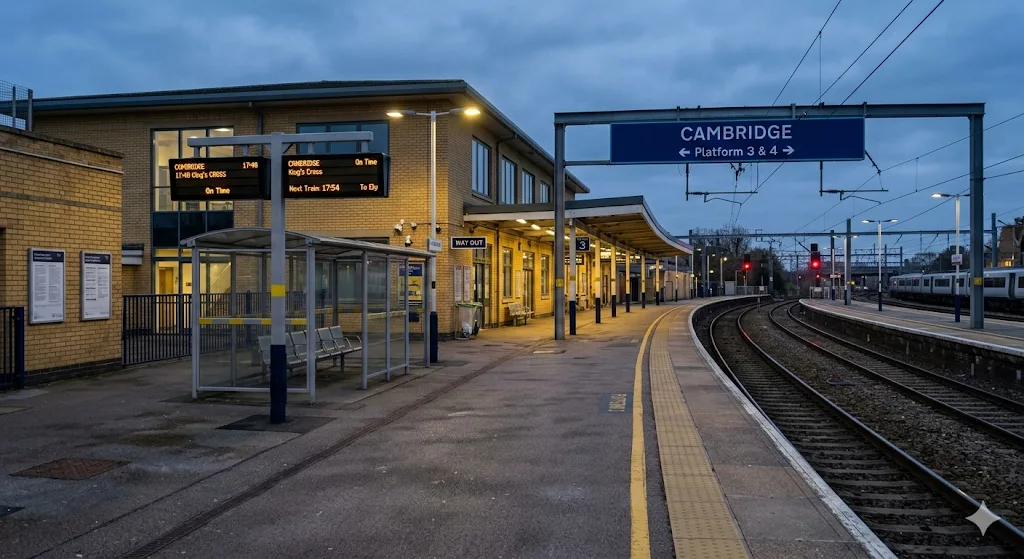
As linked by BBC News reporter PA Media staff in coverage of the trial of Mohammed Abdulgani for the murder of student Khalid al‑Dufaili, readers were directed to a Cambridgeshire Live article titled “Police called to men ‘acting aggressively’ at Cambridge station”, which set out the basic details of the incident. According to that Cambridgeshire Live piece, summarised in the BBC’s “related coverage” section, officers were alerted after station staff and members of the public reported that several men were behaving in an aggressive and intimidating manner on the station concourse.
As referenced by BBC News in its article, the Cambridgeshire Live report stated that witnesses described the men as being verbally aggressive, with concerns that the behaviour was causing alarm and distress to commuters passing through Cambridge station. The BBC item did not give precise timings but placed the incident within a wider narrative of safety issues linked from its Cambridgeshire news index, alongside other local rail and public‑order stories.
What behaviour was reported as ‘acting aggressively’?
While the full Cambridgeshire Live text is not reproduced in the BBC article, the BBC’s link text makes clear that the concern centred on men “acting aggressively” at the station towards both rail staff and passengers. In the context of similar rail‑related disorder described by British Transport Police in other Cambridgeshire coverage, “acting aggressively” has typically encompassed shouting, abusive language, threatening gestures and confrontational behaviour that leaves bystanders feeling unsafe.
As reported by BBC News, British Transport Police have recently highlighted how rail workers say they have been “spat at, punched and attacked” in the course of their duties, underlining how even non‑physical aggressive behaviour is taken seriously by police and operators because of the risk of escalation. The Cambridge station incident, as presented through the BBC link to Cambridgeshire Live, falls within that spectrum of behaviour that prompts an immediate policing response even where no weapon is seen and no injuries are ultimately reported.
How did British Transport Police respond?
Although the BBC link to Cambridgeshire Live does not reproduce the full British Transport Police statement, it sits alongside other BTP‑related coverage in which officers explain how they respond to disorder on the network. In an article on increased patrols at Cambridge North station after a series of serious incidents, Temporary Detective Inspector Charlotte Collins of British Transport Police told BBC News that those responsible for such behaviour “could face a significant custodial sentence,” underlining the force’s stance on serious or repeated offending on rail premises.
As reported by BBC News using BTP material, officers are deployed both in uniform and plain clothes on trains and at stations, with powers to remove people from services, issue banning orders and, where necessary, make arrests for public‑order and assault offences. While the BBC’s pointer to the Cambridge station “acting aggressively” article does not spell out the exact enforcement outcome in that specific incident, the inclusion of the link in a cluster of public‑order and safety stories indicates that the matter was treated as sufficiently serious to warrant a police attendance and subsequent public reporting.
How does this fit into wider safety concerns on Cambridge’s rail network?
BBC News has reported that, in a separate sequence of incidents, there have been at least six serious assaults on trains at Cambridge North railway station since 18 January, with catapults used to damage train windows and disrupt services. Temporary Det Insp Collins told the BBC that these were “serious incidents endangering people on the railway” and that passengers could expect to see an increased police presence as BTP worked with the rail industry to address the issue.
As covered by BBC News and other outlets, this comes amid a broader pattern of violent and anti‑social behaviour on and around Cambridgeshire’s rail lines, including separate high‑profile cases of multiple stabbings on trains near Huntingdon and Cambridge which are being investigated as distinct incidents by British Transport Police and local forces. In those more severe cases, Superintendent John Loveless of BTP told the media that counter‑terrorism officers had initially been involved as a precaution, but that the mass‑stabbing attack was not ultimately being treated as terrorism‑related, showing how rail‑related disorder can span from aggressive language to life‑threatening violence.
What have police and authorities said about aggressive behaviour towards rail staff?
As reported by BBC News and in BTP’s own public‑facing materials, rail workers and enforcement officers have described being subjected to spitting, punching and other attacks, with unions and staff representatives raising repeated concerns about workplace safety. British Transport Police have used these accounts to warn that anyone who abuses or attacks rail staff risks arrest and prosecution, stressing that the law provides for serious penalties where staff or passengers are put in fear.
According to BBC News’ coverage of increased patrols in the Cambridge area, BTP is working jointly with train operators to provide reassurance patrols, deploy extra officers during busy periods and encourage reporting through channels such as the 61016 text number and the Railway Guardian app. By placing the Cambridge station “acting aggressively” incident in the same news ecosystem as these broader statements, the BBC coverage reflects an official view that such behaviour is part of a continuum of risk that must be addressed proactively.
How are passengers and staff being reassured?
In its reporting on rail‑related incidents in and around Cambridge, BBC News has stated that passengers can expect to see more officers on platforms and on trains, particularly at locations where there have been clusters of incidents. Temporary Det Insp Collins told the BBC that BTP is “working closely with the rail industry” to identify suspects, gather CCTV evidence and target patrols at times and places where problems have been most acute.
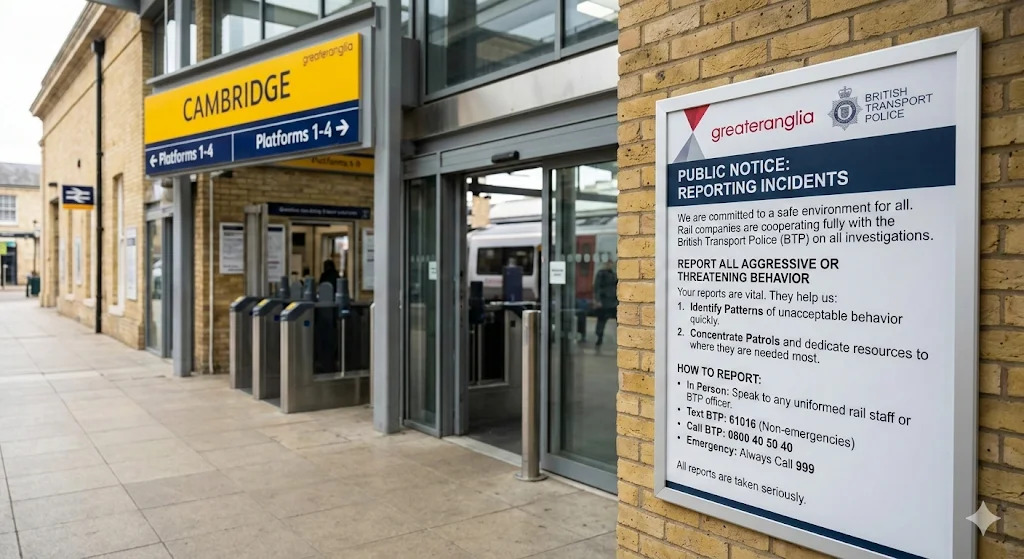
Rail companies, as referenced in the BBC coverage, have emphasised that they are cooperating fully with police investigations and are encouraging both staff and passengers to report any aggressive or threatening conduct so that patterns of behaviour can be identified quickly. The inclusion of the Cambridge station aggression case among links on the BBC’s Cambridgeshire news pages serves as a reminder to the travelling public that such reports are taken seriously and contribute to decisions on where to concentrate patrols and resources.
What should people do if they witness similar incidents?
Guidance repeatedly shared by British Transport Police and quoted in BBC News coverage is that anyone witnessing behaviour they believe presents an immediate threat to life or safety should call 999 and ask for the police. For less urgent situations, BTP encourages rail users to text 61016 or use its online reporting channels, providing details such as time, location, train service and a description of the people involved.
By highlighting the Cambridge station “acting aggressively” incident alongside other rail‑safety stories, outlets including BBC News and Cambridgeshire Live underline the message that early reporting of aggressive or anti‑social behaviour can enable officers to intervene before situations escalate. This approach reflects a broader policing strategy on the railways, where visible enforcement is paired with public awareness campaigns to maintain confidence in the safety of train travel in and around Cambridge.