
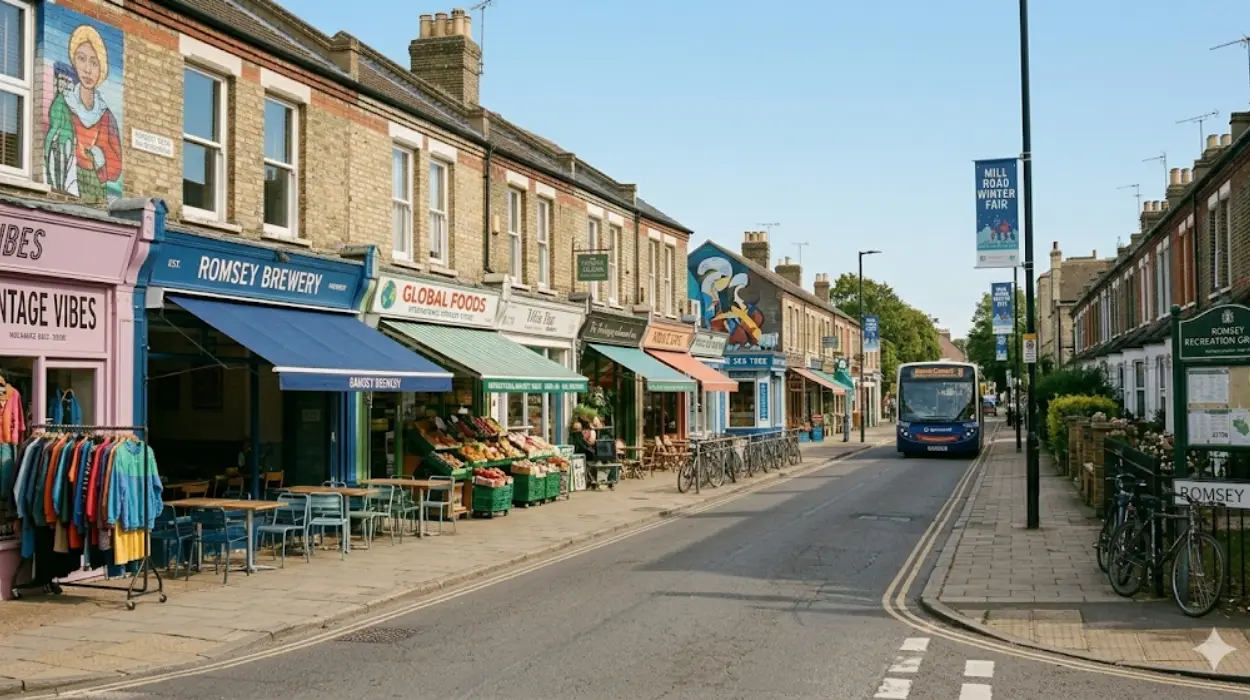
Romsey, often called Romsey Town, is a compact residential area just off Mill Road on the south‑east side of Cambridge, separated historically from the city centre by the railway line and bridge on Mill Road. Built largely between the 1880s and early 1900s, it developed as a dense grid of terraced streets that housed railway and engineering workers during Cambridge’s industrial expansion.
- A Distinct Identity Shaped by the Railway
- Community Spirit and Local Life
- Housing Stock and the Appeal of Victorian Terraces
- Demographics: Young, Diverse and Growing
- Location, Connectivity and Everyday Convenience
- Culture, Character and the Mill Road Energy
- Conservation, Streetscape and Urban Character
- Change, Gentrification and Housing Pressures
- Investment Prospects and Long‑Term Appeal
- Why Romsey Keeps Being Talked About
Today, Romsey is a formal electoral ward of Cambridge with an estimated population of over 10,600 residents and a land area of around 1.49 square kilometres, making it one of the more densely populated and urban parts of the city. This mix of historic housing stock, walkable streets, local shopping and social spaces now places Romsey among the most talked‑about areas for young professionals, families, investors and long‑term Cambridge residents alike.
A Distinct Identity Shaped by the Railway
Romsey’s character is rooted in its origins as a railway suburb on the “town” side of the Mill Road bridge, historically perceived as separate from the university‑dominated heart of Cambridge. The expansion followed the Enclosure Acts of the nineteenth century, which converted open fields into smaller land holdings that could be assembled and sold for housing as the town grew.
Most of Romsey’s houses were built between roughly 1885 and 1895, with the street pattern still reflecting former field boundaries and creating the tight network of roads that exists today. The majority of properties are narrow, two‑storey brick terraces with slate roofs, tall chimneys and long back gardens; in their original form, many had outside toilets and simple interiors aimed at working households rather than the university elite. Over time, the area developed its own shops, churches and leisure facilities, becoming a nearly self‑contained neighbourhood where work, school and entertainment could all be reached on foot or by bicycle.
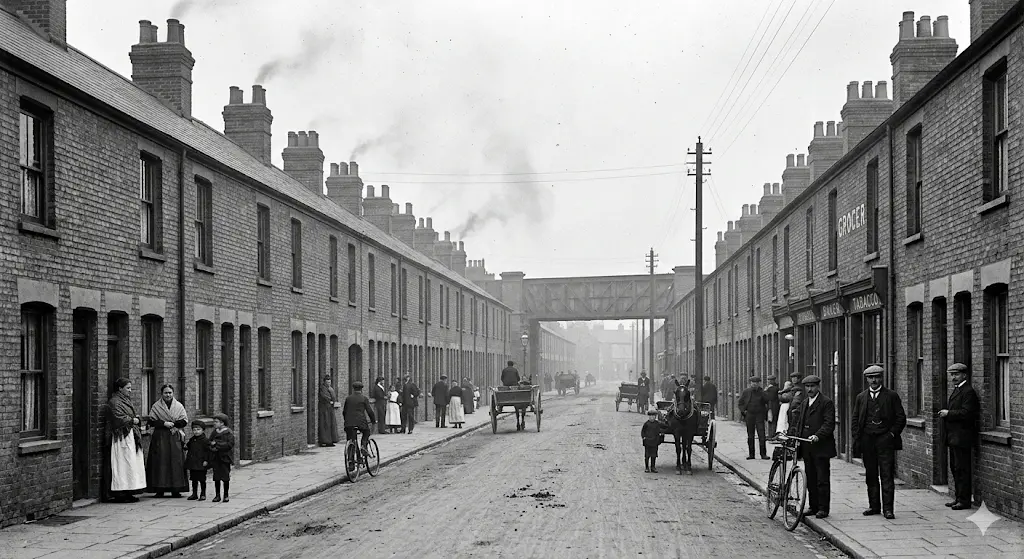
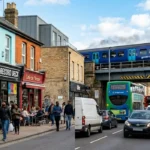
The Mill Road bridge and railway tracks created a physical and psychological boundary, reinforcing Romsey’s reputation as “over the bridge” and outside the genteel university quarter, a distinction that still colours local identity even as the community has diversified and house prices have risen.
Community Spirit and Local Life
Romsey has long been known for a strong sense of local community, built around its terraces, cul‑de‑sacs and the role of Mill Road as a social hub. Because many side streets end in cul‑de‑sacs, most journeys traditionally funnelled residents towards Mill Road, where they met neighbours on their way to work, shops or school, reinforcing everyday familiarity and informal support networks.
By the early twentieth century, the stretch of Mill Road serving Romsey supported a remarkable range of small businesses, including butchers, bakers, fishmongers, drapers, household furnishers, timber merchants and cycle shops, demonstrating how self‑sufficient the area had become. Churches and chapels, such as the Methodist church built on Mill Road in the late nineteenth century and later extended, provided additional focal points for social life and community organisation. This long tradition of local enterprise and social infrastructure underpins Romsey’s present‑day reputation as a lively, close‑knit part of Cambridge.
Housing Stock and the Appeal of Victorian Terraces
One of the main reasons Romsey is so frequently discussed among buyers, renters and investors is its distinctive Victorian and Edwardian housing stock. The neighbourhood is dominated by rows of brick terraces, typically one or two bays wide, with slate roofs, original chimneys and timber joinery, giving streets a cohesive historic character that many people now find highly desirable.
Within these terraces, there were historically clear social gradations. Some streets had slightly wider frontages; a frontage of about 15 feet allowed for a hall and separate front room, while narrower plots meant the front door opened directly into the front room. Houses usually had three bedrooms, sometimes with internal layouts that required walking through one bedroom to reach another, illustrating the pragmatic design of working‑class housing of the time. More upmarket properties, often occupied by higher‑paid railway staff such as engine drivers, featured bay windows and small front gardens, giving them a more substantial presence despite still being part of the terraced pattern.
In recent decades, many of these houses have been modernised internally while retaining their period facades, combining historic charm with contemporary comforts and significantly adding to Romsey’s appeal for urban professionals who want character properties within easy reach of central Cambridge.
Demographics: Young, Diverse and Growing
Romsey is part of a wider Cambridge that has grown steadily over recent decades, with the city’s overall population reaching around 145,700 by the 2021 census. At ward level, Romsey’s population was just under 10,200 in the 2021 census and is estimated to have risen to over 10,600 by 2024, reflecting continued demand for housing and its central location.
The demographic profile shows a predominance of working‑age adults: in 2024 estimates, over 8,000 residents were aged between 18 and 64, while fewer than 1,000 were 65 or older. This age structure supports a vibrant local economy of cafes, shops and services catering to students, early‑career professionals and young families. Romsey is also notably diverse, with 2021 census data indicating significant numbers of residents born outside the UK and a mix of ethnic backgrounds, including White, Asian, Black, Arab, mixed and other groups. Across Cambridgeshire, Romsey is among several wards that have seen sizeable increases in residents born in the Middle East and Asia between 2011 and 2021, reinforcing its role as a multicultural urban neighbourhood.
This combination of youth, diversity and population growth fuels much of the current interest in Romsey, positioning it as an area that reflects contemporary Cambridge rather than just its historic university image.
Location, Connectivity and Everyday Convenience
Romsey’s location is one of its greatest strengths, especially for those who want to live close to the city centre without being directly in the tourist‑dominated core. From central Cambridge, residents can walk or cycle along Mill Road, crossing Parker’s Piece and the Mill Road bridge before arriving in the heart of Romsey’s residential streets and local shops.
The area sits close to the main Cambridge railway line and is within easy reach of Cambridge railway station, which links the city to London, Stansted Airport and other regional destinations. Historically, the railway both shaped the neighbourhood and separated it from central Cambridge; now, improved transport links and the city’s cycling infrastructure make the area more connected than ever. Everyday convenience is further enhanced by the presence of local primary schools, places of worship, small parks and an assortment of independent and national retailers along Mill Road, meaning many residents can live largely car‑free lifestyles with essential services nearby.
For commuters, students and families balancing work, study and childcare, this blend of connectivity and self‑sufficiency remains a key reason why Romsey continues to attract attention.
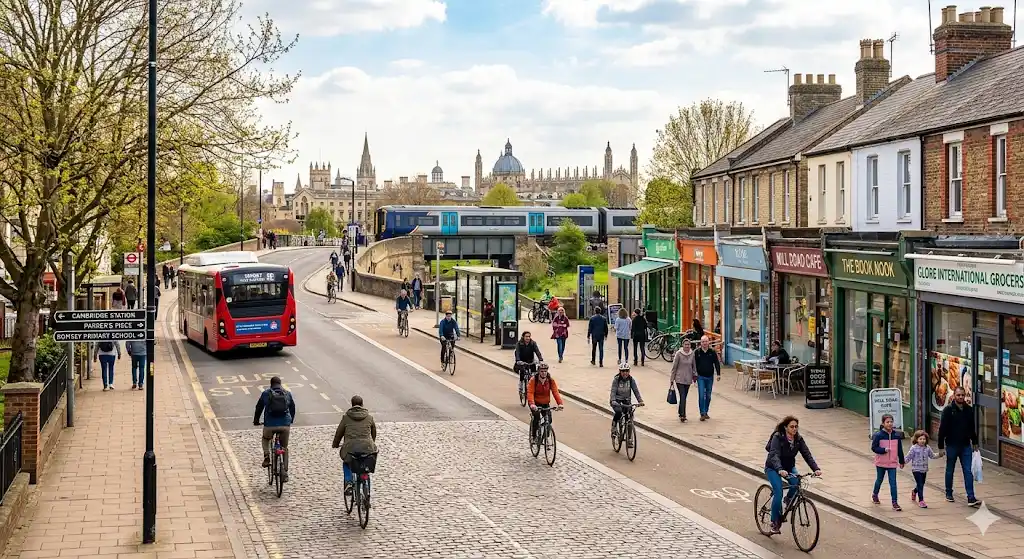
Culture, Character and the Mill Road Energy
Romsey’s cultural appeal is closely intertwined with the broader Mill Road area, which is widely recognised in Cambridge for its independent businesses and multi‑ethnic character. While Mill Road as a whole spans both Petersfield and Romsey, the section “over the bridge” has historically had a particularly strong working‑class and community‑driven identity, reflected in local traditions and activism.
Residents have often emphasised Romsey’s reputation for neighbourliness and informal street‑level interaction, built up over generations of families living in close quarters and meeting daily along the main road. Over the late twentieth century, as Cambridge’s economy shifted from heavy industry and rail to services, technology and education, Romsey experienced demographic change but retained much of its everyday, lived‑in feel. Academic and community research on the area has described it as a “community in transition”, adapting to new economic realities while preserving long‑standing local networks and a sense of belonging that continues to attract new residents.
This layered character at once historic, working‑class in origin, and now increasingly cosmopolitan adds depth to Romsey’s reputation and keeps it in conversations about the most authentic places to experience Cambridge beyond the colleges and river.
Conservation, Streetscape and Urban Character
Part of what makes Romsey visually distinctive is the coherence of its built environment, which has been recognised in conservation studies and local planning documents. The area’s terraces, many dating from 1880 to 1910, share common materials brick walls, slate roofs, timber sash windows and prominent chimneys that create a consistent streetscape, even where individual houses differ in detailing.
Interspersed among the housing are former public houses, industrial buildings, stables and workshops, many of which have been converted to residential or community uses while retaining their original structures. This gives the neighbourhood an architectural texture that speaks to its industrial past and adds visual interest at street level. Conservation assessments have highlighted the importance of preserving these features, not only for heritage reasons but also because they contribute to Romsey’s overall attractiveness and distinctiveness within Cambridge’s urban fabric.
As demand for housing and modern amenities increases, managing change while respecting these historic patterns is a central planning challenge, and one of the factors that keeps Romsey in wider discussions about sustainable urban development in Cambridge.
Change, Gentrification and Housing Pressures
Romsey’s popularity has not come without tensions, and debates over gentrification and affordability are a significant part of why the area is so often discussed. Over the latter half of the twentieth century and into the twenty‑first, shifts in employment from rail and engineering to education, technology and professional services have altered the local social mix, bringing in more middle‑class residents and commuters.
Research on housing and society in Romsey from 1966 to 2006 describes how the neighbourhood moved from a largely working‑class enclave to a more mixed and upwardly mobile community, with rising house prices and modernisation of the historic terraces. While these changes have improved property conditions and amenities, they have also raised concerns about the displacement of long‑standing residents and the erosion of traditional social networks. The ongoing balancing act between preserving community identity and accommodating new demand is one of the reasons Romsey often features in local discussions about planning, social equity and the future of Cambridge’s housing market.
Because of these dynamics, Romsey serves as a case study locally and in academic work for how older urban neighbourhoods evolve under the pressure of economic change, making it a focal point for both policy debate and media interest.
Investment Prospects and Long‑Term Appeal
From an investment perspective, Romsey’s compact streets, proximity to central Cambridge and strong rental demand make it a highly visible neighbourhood for buyers considering the city. The combination of period housing, good transport links and a predominantly working‑age population creates favourable conditions for both owner‑occupiers and landlords targeting professionals and students who want to live near employment centres and the university.
Population estimates showing continued growth in the ward, from around 7,980 residents in 2001 to over 10,600 by 2024, indicate sustained demand for housing and services over more than two decades. At the same time, Cambridge’s wider economic profile as a centre for higher education, research and technology underpins the long‑term stability of local property markets in areas like Romsey. For many observers, this blend of historical charm, urban convenience and solid demographic fundamentals helps explain why Romsey regularly appears in conversations about where to live or invest in Cambridge.
Importantly, the area also benefits from the broader appeal of Cambridge as a desirable place to live, work and study, with Romsey offering a more grounded residential environment compared to the tourist‑focused centre, which enhances its perceived value among a wide range of potential residents.
Why Romsey Keeps Being Talked About
Romsey’s prominence in conversations about Cambridge stems from the convergence of several long‑term trends rather than any single factor. Its origins as a railway suburb gave it a distinctive working‑class identity and physical separation from the university core, yet over time it has become tightly integrated into the daily life of the modern city. The enduring appeal of its Victorian and Edwardian terraces, many carefully modernised, sits alongside an increasingly diverse and youthful population, reflecting broader demographic changes across Cambridge.
The neighbourhood’s walkability, proximity to central amenities, and continuing role as a hub for independent businesses along Mill Road ensure that it feels active and lived‑in, not merely residential. Conservation efforts and heritage recognition underscore its architectural value, while ongoing discussions about affordability, gentrification and community cohesion keep Romsey at the centre of debates on how Cambridge should grow.
All of these elements together make Romsey one of the most talked‑about areas in Cambridge: a historically grounded, culturally rich and strategically located neighbourhood whose story mirrors the wider evolution of the city itself.