


Petersfield and Romsey sit side by side along Cambridge’s famous Mill Road, separated only by the railway bridge yet offering noticeably different lifestyles. For anyone planning to live in Cambridge, understanding these differences is essential to choosing the right area for your budget, commute, and everyday life.
- Location and Boundaries
- Historical Background and Character
- Housing Types and Property Market
- Demographics and Community Profile
- Crime and Safety Perception
- Amenities, Shops, and Everyday Convenience
- Transport, Commuting, and Connectivity
- Schools, Families, and Green Space
- Lifestyle: Atmosphere, Noise, and Nightlife
- Who Should Choose Petersfield?
- Who Should Choose Romsey?
- Petersfield vs Romsey: Making Your Decision
Both areas are close to the historic city centre, rich in independent shops and cafes, and popular with students, young professionals, and families, but they have distinct characters and housing markets. This guide compares Petersfield vs Romsey in terms of location, history, housing, amenities, transport, schools, and overall feel, so you can decide where you should live in Cambridge’s Mill Road corridor.
Location and Boundaries
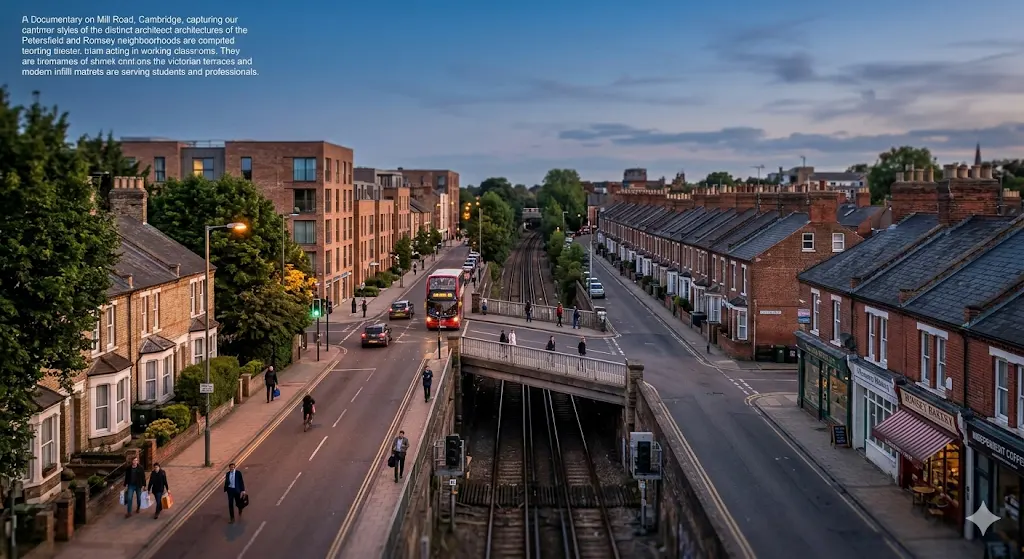
Petersfield lies to the west of the railway line, stretching from the edge of Parker’s Piece and East Road out towards the tracks that divide it from Romsey. It covers streets running off the western section of Mill Road, along with green spaces such as Donkey Common and nearby play areas, placing residents within easy walking distance of the historic core of Cambridge.
Romsey, often called Romsey Town, sits east of the railway bridge on Mill Road and consists mainly of tight-knit residential streets running at right angles to the eastern end of Mill Road. These streets form a dense residential grid with front doors opening directly onto the pavement, giving Romsey a village-like feel despite its urban location.
If you want to be closer to the city centre, major university sites, and the main station, Petersfield generally wins on pure proximity. If you prefer a slightly more residential, “small-town” atmosphere, Romsey’s location just beyond the bridge can feel more self-contained and community focused.
Historical Background and Character
Mill Road itself is one of Cambridge’s historic routes leading out of the city centre, and its development shaped both Petersfield and Romsey. Petersfield grew as the city expanded eastwards, with a mix of older terraces, later infill, and modern developments reflecting its position between the centre and the railway. Today, its character blends traditional Victorian and Edwardian streets with newer apartments serving students and professionals attracted by the short walk into town.
Romsey developed later, especially after mid‑19th‑century enclosure and the expansion of the railway network, which created strong demand for housing for railway workers. Much of Romsey’s dense terraced housing was built in the decade after 1885, and its street pattern and building style still reflect those working‑class origins. Over time, Romsey has evolved into a highly sought‑after neighbourhood with a reputation for a strong sense of community, local activism, and independent spirit.
Culturally, people often describe Petersfield as slightly more central and mixed in use, while Romsey is seen as more overtly residential with a distinct identity centred around its side streets and the eastern stretch of Mill Road.
Housing Types and Property Market
Both Petersfield and Romsey are dominated by period housing, but the exact mix and feel differ in ways that matter when you are choosing where to live.
Petersfield offers a blend of older terraced homes, converted houses, and newer flats, particularly around the railway and close to the station. Local authority data shows that Petersfield has several thousand properties and a relatively high median property price, reflecting high demand for its central location. The ward profile reports a median property price of around £462,500, indicating that Petersfield sits toward the higher end of Cambridge’s housing market.
Romsey is famous for its long runs of narrow Victorian terraces, where front doors open directly onto the pavement and gardens are small or absent. It has a strong reputation as a vibrant and diverse neighbourhood with a real village atmosphere, and its property market is particularly attractive to young professionals who value character homes and community feel. Descriptions of the area highlight that prices, while not cheap by national standards, are often considered reasonable compared with some of Cambridge’s most expensive districts, making Romsey a popular choice for those seeking value within the city.
Overall, Petersfield typically commands higher prices due to its ultra‑central position and strong appeal for students and commuters, while Romsey offers slightly more approachable terraces and a tight‑knit residential feel, particularly attractive if you prioritise character over immediate proximity to the very centre.
Demographics and Community Profile
Petersfield’s demographics reflect its central, mixed, and highly educated population. Area insight reports show a high proportion of residents in professional and managerial occupations and a notably high share of residents with degree‑level education or equivalent. A large segment of the population is aged 20 to 39, and there is a significant student presence, with students accounting for well over a third of residents. Many households are one‑person homes, reflecting the appeal of the area for young professionals and postgraduates.
Romsey’s population is also mixed, but its history as a former working‑class, railway‑worker district and its terraced housing stock contribute to a different social dynamic. It has become increasingly popular with young professionals and families who appreciate its community‑oriented streets, local schools, and active neighbourhood networks, while still retaining a strong sense of local identity.
In broad terms, Petersfield feels more transient and student‑heavy, especially near larger developments and main roads, while Romsey often feels more settled and neighbourly, with long‑term residents and a strong local culture around Mill Road’s eastern section.
Crime and Safety Perception
When choosing where to live, safety and the perception of crime are natural concerns. Data for Petersfield as a ward shows an annual total crime rate of around 159 crimes per thousand residents, described as a medium level compared to other wards in England and Wales. Detailed breakdowns highlight typical urban issues such as public order offences, criminal damage, vehicle crime, and burglary, but also show that within the ward there are areas with lower crime ratings alongside pockets with higher levels.
Neighbourhood insight tools classify Petersfield’s crime level in the mid‑range compared with national figures, noting an “average” crime rate and ranking it around the middle when set against other locations. Because Petersfield sits close to the city centre, major roads, and late‑night activity, it can naturally experience more recorded incidents than quieter peripheral suburbs.
Romsey is also an inner‑city neighbourhood and therefore not free of crime, but it is often perceived as residential and community‑oriented, with active residents’ groups and local engagement. Comparative crime tools allow you to view Romsey alongside Petersfield and other Cambridge wards, indicating that both areas fall into the typical range for inner‑urban districts rather than either being an outlier for safety.
For prospective residents, the key takeaway is that both Petersfield and Romsey are busy urban neighbourhoods rather than quiet rural villages, and you should evaluate specific streets and pockets rather than relying solely on ward‑level averages.
Amenities, Shops, and Everyday Convenience
Mill Road is one of Cambridge’s liveliest streets, and it runs directly through both Petersfield and Romsey. It is known for its independent businesses, including multicultural food shops, cafes, restaurants, specialist grocers, and local services, giving the area a distinctive, cosmopolitan feel. This long strip effectively acts as the shared high street for residents on both sides of the railway line.
In Petersfield, amenities cluster around the western and central sections of Mill Road and nearby streets, with numerous supermarkets, small food stores, and local shops within half a mile of many addresses. Area insight reports list more than ten food stores within a short walking distance in central Petersfield, and residents mention convenient bus routes connecting to the station and city centre. Public open spaces such as Donkey Common and play areas at Flower Street and Ravensworth Gardens provide green pockets close to dense housing.
Romsey has a more explicitly “local high street” atmosphere along its stretch of Mill Road, with long‑standing independent traders, cafes, and services serving residents who often walk rather than drive. Historical accounts describe how a very wide range of shops grew up along Mill Road between the bridge and the end of the street, creating a central meeting point where neighbours encountered each other on their way to work, school, or the shops. This tradition continues today, contributing to Romsey’s reputation as a friendly, self‑contained community with everyday essentials on the doorstep.
If you value being within a short stroll of supermarkets, diverse food options, and small parks, both Petersfield and Romsey perform strongly, but Romsey’s eastern Mill Road can feel more village‑like while Petersfield offers closer access to larger city‑centre facilities.
Transport, Commuting, and Connectivity
One of the biggest reasons people choose to live in the Mill Road area is its excellent transport connectivity within Cambridge and beyond.
Petersfield has a particular advantage in terms of distance to Cambridge railway station and the historic centre. From many Petersfield streets you can walk to the station in a short time, making rail commuting to London, the Midlands, or other regional centres straightforward. Local insight reports highlight convenient bus routes running through the area to both the station and the city centre, underlining its strength as a base for commuters and students.
Romsey, while slightly further from the station, still enjoys good bus links and a straightforward walk or cycle along Mill Road to reach both the city centre and Cambridge station. Its location near the city’s ring road also makes it reasonably convenient for those who drive or use buses to access business parks and employment hubs on the outskirts. For everyday life, many Romsey residents rely on walking or cycling, with the bridge acting as the main connection towards the centre.
If rail commuting and the shortest possible walk to major university or city‑centre sites are top priorities, Petersfield has the edge. If you are comfortable with a slightly longer bike or bus journey in exchange for a more residential feel, Romsey still offers strong connectivity while feeling a touch further removed from the busiest parts of town.
Schools, Families, and Green Space
For families deciding between Petersfield and Romsey, access to schools and green space matters just as much as cafes and transport.
Ward‑level profiles show that Petersfield benefits from local play areas and public open spaces, including Donkey Common near Mill Road and multiple designated play spaces within the ward boundaries. Being so close to the city centre also places larger parks and college grounds within walking or cycling distance, although housing density means private gardens can be small, especially in terraced streets and flats.
Romsey’s terraced pattern means small gardens or yards are common rather than large private green plots, but families rely heavily on local parks, school grounds, and nearby open spaces just as they do in Petersfield. The neighbourhood’s strong community ties and walkable streets appeal to families who value a friendly, familiar environment where children can walk to school and parents can easily bump into other families along Mill Road.
Both areas fall within Cambridge’s wider network of primary and secondary schools, and parents typically consider specific catchments when choosing an exact street or property. For a family‑oriented lifestyle, Romsey’s village‑like community and side‑street layout are often seen as appealing, while Petersfield offers the benefit of centrality and proximity to a broader range of city resources.

Lifestyle: Atmosphere, Noise, and Nightlife
Lifestyle differences between Petersfield and Romsey often come down to subtle variations in atmosphere rather than dramatic contrasts.
Petersfield’s central location means it can be busier and sometimes noisier, particularly close to main roads, bus routes, and late‑night activity linked to the city centre. Area profiles note issues such as road traffic noise and the presence of facilities like a fire station, which contribute to background sound levels. At the same time, many residents praise the area as quiet and friendly once you leave the main roads, with a mix of houses and new builds creating a varied urban landscape.
Romsey, despite being just over the bridge, can feel distinctly more neighbourhood‑based, with quieter side streets and a strong sense of people knowing their neighbours. Historical and contemporary descriptions emphasise its dense grid of cul‑de‑sac‑like side streets where most journeys used to be on foot via Mill Road, reinforcing everyday interactions and community bonds. Today, Romsey retains a relaxed, local feel even while hosting popular cafes, pubs, and restaurants that give it an active social life.
If you enjoy being at the heart of the city’s energy and do not mind a certain level of urban noise, Petersfield is likely to suit you. If you prefer a more residential, village‑style atmosphere with strong local identity while still enjoying city amenities, Romsey is often the more natural fit.
Who Should Choose Petersfield?
Petersfield is an excellent choice if you:
- Want to be within easy walking distance of Cambridge station and the historic city centre, minimising your commute and maximising access to university and employment hubs.
- Prefer a highly educated, professional, and student‑rich environment with a large proportion of young adults and single‑person households.
- Are comfortable with medium levels of urban noise and activity in exchange for outstanding convenience, amenities, and transport links.
- Have a budget that stretches to higher median property prices, including modern flats and conversions in central locations.
For many new arrivals to Cambridge, especially those commuting by train or studying at nearby university departments, Petersfield offers a compelling mix of access and amenities that is hard to beat.
Who Should Choose Romsey?
Romsey is likely to suit you better if you:
- Value a strong sense of community, with a village‑like feel in dense terraced streets and a history of residents meeting regularly along Mill Road.
- Prefer characterful Victorian terraces with front doors opening onto the pavement and a generally more residential streetscape.
- Want to be close to independent shops, cafes, and restaurants, while feeling slightly removed from the busiest central nightlife and traffic.
- Are looking for a neighbourhood popular with young professionals and families, where real estate is described as attractive and friendly in atmosphere.
Romsey’s blend of historic housing, active local culture, and manageable property prices within the Cambridge context makes it a strong candidate for those seeking long‑term roots in the city.
Petersfield vs Romsey: Making Your Decision
Ultimately, choosing between Petersfield and Romsey means balancing centrality, budget, and lifestyle priorities within the compact geography of Cambridge’s Mill Road area. Petersfield leans towards convenience, proximity, and a slightly higher‑end, professional and student‑oriented demographic, reinforced by its higher median property prices and central location. Romsey leans towards community, character, and a village‑in‑the‑city atmosphere, backed by its terrace‑dominated streets, local history, and reputation as a vibrant yet friendly neighbourhood.
If you prioritise the shortest possible walk to the station and city centre, have a flexible budget, and enjoy being in the middle of things, Petersfield is often the better fit. If you prefer a strong neighbourhood identity, a more residential feel, and the charm of Victorian terraces with Mill Road’s independent scene at your doorstep, Romsey is likely to feel more like home.
By weighing these factors location, housing, demographics, safety, amenities, transport, and lifestyle you can confidently decide which side of the Mill Road bridge is the right place to live in Cambridge.