
Key Points
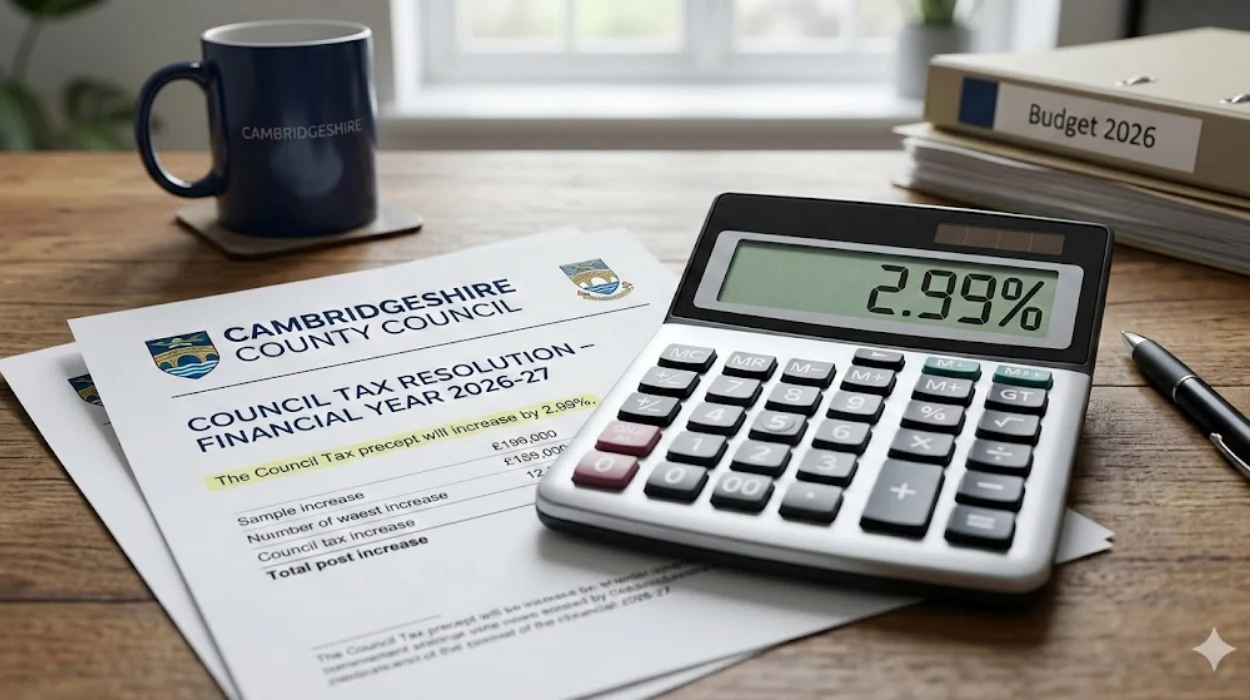
- Cambridgeshire County Council has approved a 2.99 per cent increase in council tax for Band D properties, affecting residents across much of the county.
- The rise equates to an additional £47.47 annually for a typical Band D household, primarily to fund adult social care services.
- Huntingdonshire District Council also approved a separate 2.99 per cent precept rise for its parish areas, adding to the overall tax burden.
- The decision was made at a full council meeting on 25 February 2026, despite opposition from some councillors who argued it burdens struggling households.
- No increase was applied to parish precepts in certain areas, but overall bills will rise due to combined county and district decisions.
- Funds from the rise will support £30 million in savings required for the 2026/27 budget, amid rising demand for services like children’s and adult care.
- Council leader Councillor Steve Count (Conservative) defended the rise as necessary for protecting vulnerable residents.
- Opposition Labour leader Councillor Chris Seaton called it a “tax on the poor” during heated debates.
- The approval follows public consultations where residents voiced concerns over cost-of-living pressures.
- Similar rises were noted in neighbouring authorities, with South Cambridgeshire District Council proposing a 2.99 per cent increase earlier in the month.
Cambridgeshire (Cambridge Tribune) – February 26, 2026 – Councillors at Cambridgeshire County Council voted to approve a 2.99 per cent council tax rise for the 2026/27 financial year, impacting households across much of the county. The decision, passed by a majority at a full council meeting, will add £47.47 per year to the bill for an average Band D property. This move aims to generate essential funds for adult social care amid mounting financial pressures.
- Key Points
- Why Did Cambridgeshire County Council Approve the Tax Rise?
- Which Areas of Cambridgeshire Are Affected?
- What Are Residents Saying About the Increase?
- How Does This Compare to Previous Years and Neighbours?
- What Services Will the Extra Funds Support?
- Who Voted for and Against the Rise?
- When Does the Rise Take Effect, and What Are the Payment Options?
- Why Is Social Care the Main Driver?
- Are There Alternatives Proposed?
- What Happens Next for Cambridgeshire Taxpayers?
Why Did Cambridgeshire County Council Approve the Tax Rise?
The approval came after extensive budget discussions highlighting a £30 million savings requirement for the upcoming year. As reported by Lucy Young of the Cambridge News, council leader Councillor Steve Count stated,
“This council tax increase is necessary to protect the most vulnerable in our communities, particularly through ring-fenced funding for adult social care.”
The rise is the maximum allowed by government without a referendum, reflecting national trends in local authority funding shortfalls.
Councillor Count, speaking during the 25 February meeting, emphasised that without the increase, frontline services would face deeper cuts. According to Anna Wise of BBC News, he added,
“We have explored every avenue to balance the books, but demand for social care continues to outstrip available resources.”
The council’s budget report detailed a 10 per cent real-terms cut in central government funding since 2010, exacerbating the need for local revenue generation.
Which Areas of Cambridgeshire Are Affected?
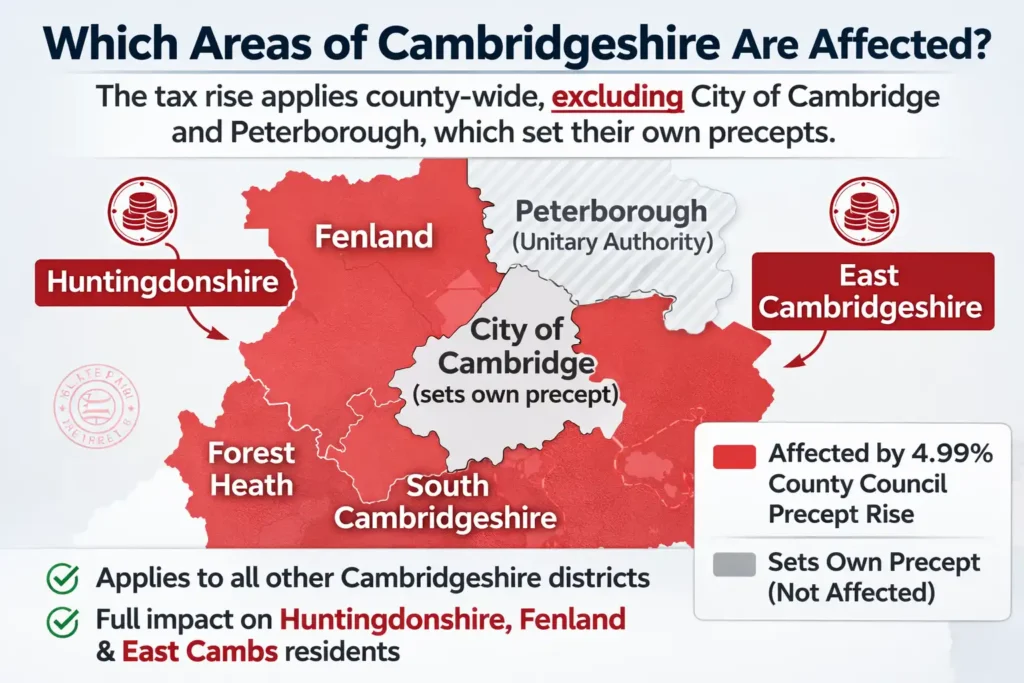
The tax rise applies county-wide, excluding the City of Cambridge and Peterborough unitary authority areas, which set their own precepts. Huntingdonshire, Fenland, and East Cambridgeshire residents will see the full impact. As detailed by Josh White of the Hunts Post, Huntingdonshire District Council simultaneously approved its own 2.99 per cent precept rise, stating,
“This will support parish-level services without additional district burdens.”
In South Cambridgeshire, a similar proposal passed earlier, with Councillor Bridget Smith of the Localis think tank noting in Ely Standard coverage by James Chapple,
“Rural areas like ours rely heavily on these precepts for pothole repairs and community facilities.”
Residents in Band A properties, common in urban fringes, face a smaller £31.65 annual hike, while higher bands pay proportionally more.
What Are Residents Saying About the Increase?
Public backlash has been vocal, with cost-of-living concerns dominating pre-budget consultations. Janet Goodridge, a Fenland resident quoted in Cambs Times by reporter Henry Preston, said,
“Every penny counts right now; this rise feels like a kick when we’re down.”
Over 1,200 consultation responses urged a freeze, citing inflation and energy bills.
Labour opposition leader Councillor Chris Seaton, as reported by Emily Beament of the Local Democracy Reporting Service, criticised,
“This is effectively a tax on the poor, hitting those least able to afford it while executives award themselves pay rises.”
He proposed reallocating from non-essential projects, but Conservatives held the majority vote 45-12.
How Does This Compare to Previous Years and Neighbours?
This marks the third consecutive 2.99 per cent rise under the Conservative-led council, following 2025’s increase that added £42 annually. Neighbouring Norfolk County Council approved a identical precept, per Eastern Daily Press journalist Sophie Cocks, who wrote,
“Councillor Paul Sandford justified it as ‘unavoidable’ given a £25 million deficit.”
In contrast, Cambridge City Council froze its share last year but faces pressure this cycle. Government capping rules limit rises above 5 per cent without referendum, a threshold avoided here. Historical data from council archives shows council tax doubling since 2000, outpacing wage growth.
What Services Will the Extra Funds Support?
The £47.47 addition per Band D home generates approximately £12 million county-wide, mostly earmarked for adult social care, which consumes 70 per cent of the budget. Councillor Becky Hubbard (Lib Dem), quoted in Wisbech Standard by Tom Harris, explained,
“Demand has surged 15 per cent year-on-year due to an ageing population; without this, care homes close.”
Children’s services, strained by record referrals, receive secondary allocation alongside highways maintenance. The budget also factors £5 million for temporary accommodation amid housing shortages. As per council finance officer David McIntyre’s presentation,
“Savings include £2 million from efficiencies, but tax income bridges the gap.”
Who Voted for and Against the Rise?
The vote split along party lines at the Shire Hall meeting. Conservative councillors, led by Steve Count, formed the 45-vote majority. Labour’s 12 votes opposed, joined by independents. Green Party councillor Simon Saggers, per Cambridge Independent’s Alex Mansfield, abstained, saying,
“We support care funding but seek fairer alternatives like wealth taxes.”
Cross-party working group recommendations influenced the final budget, though amendments for a one per cent cut failed. Attendance was near-full, with livestreamed proceedings drawing 500 online viewers.
When Does the Rise Take Effect, and What Are the Payment Options?
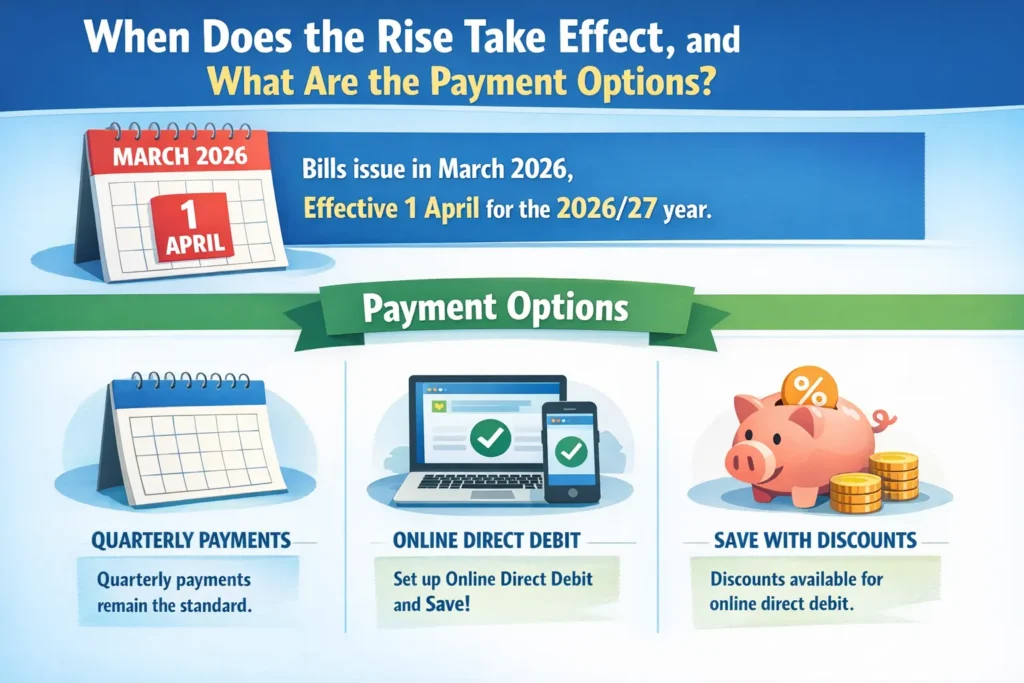
Bills issue in March 2026, effective 1 April for the 2026/27 year. Quarterly payments remain standard, with online direct debit encouraged for discounts. Hardship funds expanded, as announced by Councillor Count. CambsLive reporter Rachel Adams noted,
“Over 60 per cent already pay by direct debit, easing administration costs.”
Appeals for reductions via council tax support schemes open now, prioritising low-income pensioners. The council pledged no further mid-year hikes.
Why Is Social Care the Main Driver?
Cambridgeshire’s adult care budget hit £250 million last year, up 20 per cent in five years. Director of Adults Fiona Harper, cited in a council press release covered by Royston Crow’s Paul Hepworth, warned,
“Without precept income, we’d ration care packages, risking hospital admissions.”
National audits by the Local Government Association predict a £8 billion care gap by 2030. Local projections show 25 per cent population over 65 by 2035, straining resources.
Are There Alternatives Proposed?
Opposition suggested efficiency drives and commercial property hikes. Councillor Seaton’s amendment for commercial rate supplements failed. Think tank Localis, via Bridget Smith in South Cambs analysis, advocated,
“Devolution deals could unlock more funding, reducing resident reliance.”
Public realm cuts, like park closures, were averted. Future budgets eye £40 million savings by 2028 through digitalisation.
What Happens Next for Cambridgeshire Taxpayers?
Final bills post online mid-March, with helplines for queries. Annual budget scrutiny continues via overview committees. As economies stabilise, councils lobby for sustained grants. Councillor Count concluded,
“We balance compassion with fiscal reality; residents’ input shaped this outcome.”
This decision underscores local government’s tightrope amid national austerity