

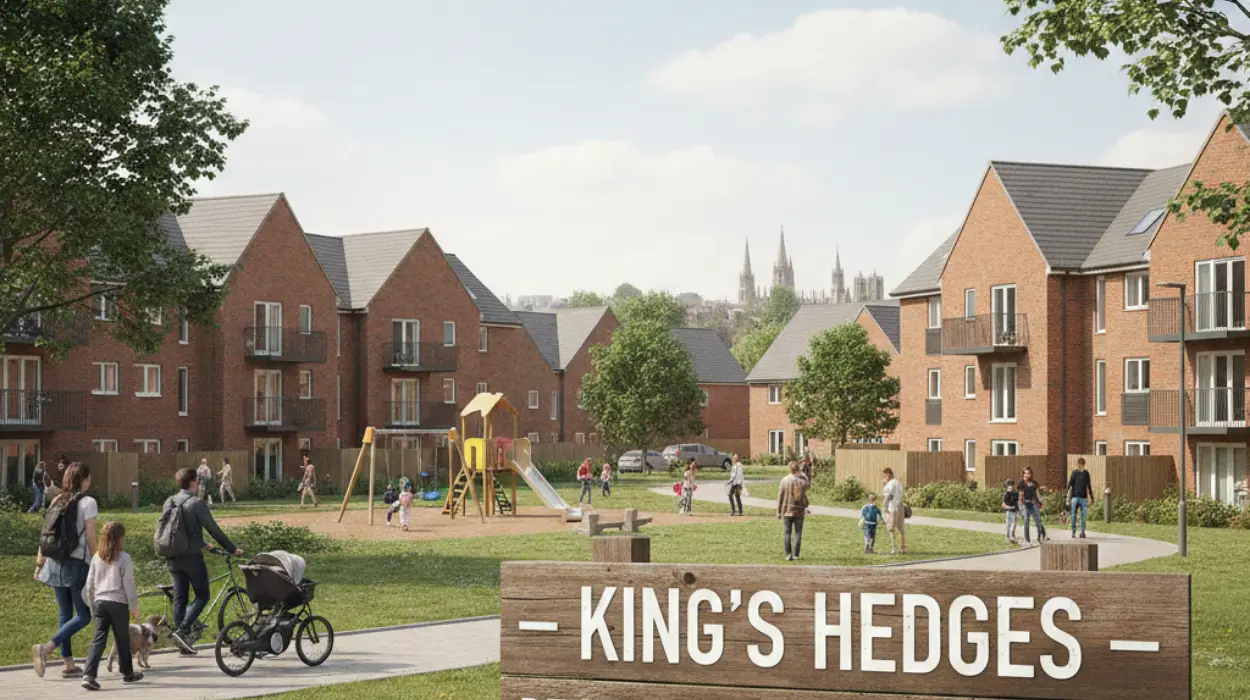
King’s Hedges in Cambridge stands out as a beacon of affordability amid the city’s soaring property market. While central Cambridge sees median home prices exceeding £470,000, this northern ward offers homes at significantly lower rates, making homeownership and renting viable for many. Its unique blend of council housing legacy, ongoing developments, and proximity to employment hubs keeps costs in check.
- Understanding King’s Hedges Location
- Current Housing Prices in the Ward
- Factors Keeping Prices Affordable
- Housing Stock and Development History
- Comparing to Central Cambridge Neighborhoods
- Amenities Enhancing Value Without Cost Hikes
- Income Levels and Buyer Demographics
- Future Outlook and Sustained Affordability
- Rental Opportunities Abound
Understanding King’s Hedges Location
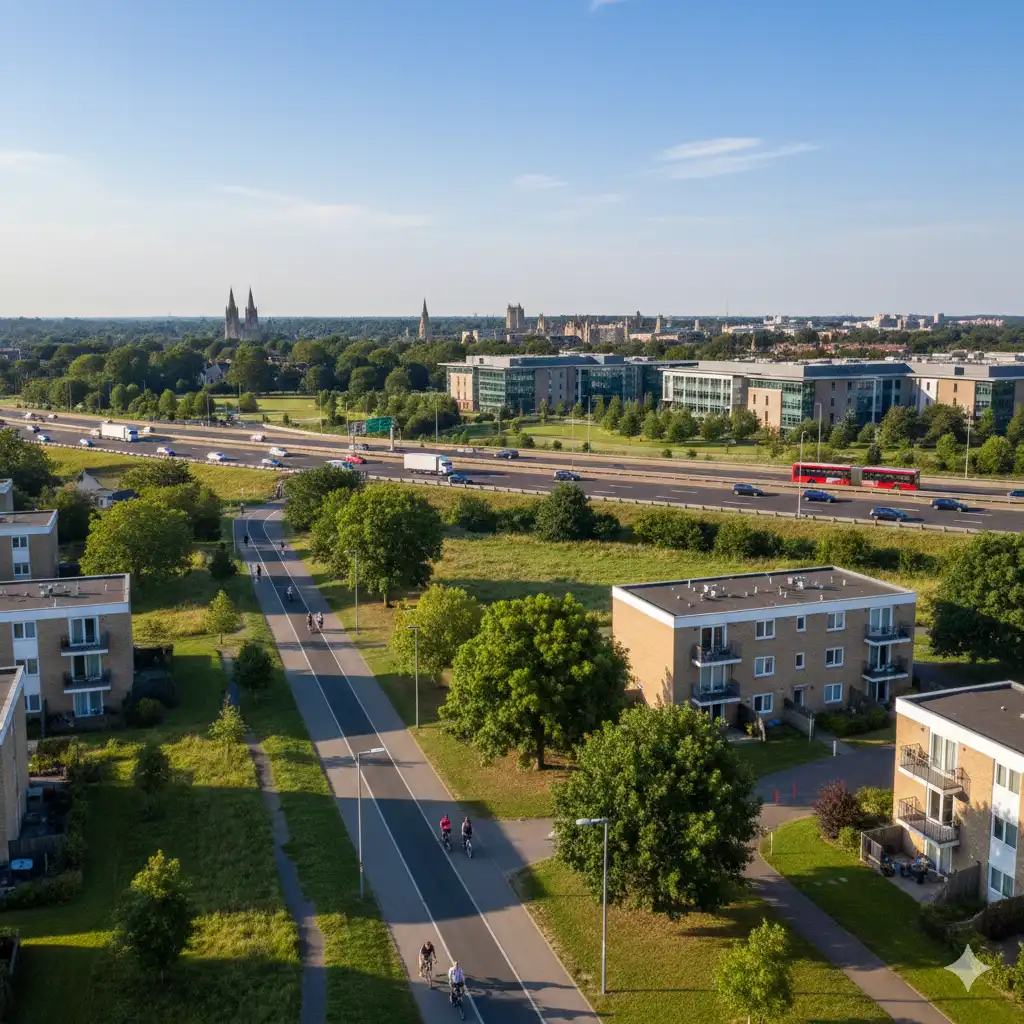
King’s Hedges occupies the northern fringe of Cambridge, bordered by the A14 and adjacent to the Cambridge Science Park. This positioning provides quick access to the city center via bus routes and the Guided Busway, while keeping residents away from premium central zones. The ward spans about 125 acres, developed primarily in the late 1960s as council housing to accommodate overspill from older city areas.
Historically, the land known as Albrach since the 13th century became King’s Hedges after enclosure in 1558, tied to ancient royal hunting grounds with guiding hedges. Modern development focused on pedestrian and cycling paths, fostering a car-light community that reduces living costs through lower transport needs. Today, with a population of around 11,099 as of 2021, it remains a residential haven with average wealth levels and moderate deprivation.
Current Housing Prices in the Ward
Average property values in King’s Hedges hover around £389,000, roughly 35% below Cambridge’s citywide median of £470,000 in early 2026. On King’s Hedges Road, recent sales average £393,000, with terraced homes at £370,000 and semis at £440,000 far more accessible than central flats exceeding £400,000. Entry-level one-bedroom flats start at £230,000-£320,000 for 40-50 square meters, ideal for first-time buyers.
Price per square meter stands at about £4,810, compared to Cambridge’s £5,150 average, reflecting slower growth amid stable demand. Over the past year, values rose 4.1%, but long-term trends show 17% growth in five years versus the city’s 6-7% annual jumps. This stability stems from the ward’s council-built stock, which dominates and tempers market speculation.
Factors Keeping Prices Affordable
Several elements ensure King’s Hedges bucks Cambridge’s high-cost trend. Its post-1967 council estate origins created a large pool of low-cost rentals and shared ownership options, preventing the speculative surges seen elsewhere. Recent data confirms value levels at the lower end, with one-bedroom flats valued around £125,000 in planning assessments, anchoring affordability.
Ongoing council initiatives add supply without inflating prices. Developments like the 75 affordable homes on Campkin Road, replacing outdated flats, include 100% affordable units with solar panels and green features. Modular homes off Northfield Avenue provide move-on housing for the homeless, part of a 540-unit council build program emphasizing sustainability. These efforts maintain a balanced market, contrasting with central Cambridge’s land scarcity.
Proximity to economic drivers like Cambridge Science Park supports jobs without residential premiums. The park generates wealth but leaves King’s Hedges as one of Cambridge’s more deprived wards economically, curbing gentrification. Stable inflation-adjusted growth flat to slightly positive despite 2-5% nominal rises reflects buyer caution amid mortgage rates, favoring affordability.
Housing Stock and Development History
King’s Hedges’ 1,570 households, built by 1986 in low-rise blocks, were designed for families relocating from central slums. Early challenges like vandalism gave way to a cohesive community, bolstered by cycling infrastructure that cuts commuting costs. Adjacent Orchard Park’s 2005 expansion and the 2011 Guided Busway enhanced connectivity without price hikes.
Council-led regeneration continues this legacy. The Campkin Road project delivers gas-free homes, biodiverse roofs, and a new community center, funded via investment partnerships to maximize affordability. Janet Jones Road’s modular units exemplify adaptive, eco-friendly builds for vulnerable residents. These prioritize need over profit, keeping market values grounded.
Comparing to Central Cambridge Neighborhoods
King’s Hedges shines in affordability metrics against pricier wards. Central areas command 50% premiums for similar flats, with city medians at £496,000 versus the ward’s £337,000-£393,000 averages. Price-to-income ratios, already high at 9.2 citywide, ease here due to lower entry points suiting median local earnings around £35,000.
While central spots like Petersfield hit £3,500 per sqm value levels, King’s Hedges aligns with Cherry Hinton at £2,500, offering larger homes for less. New-build premiums of 3-8% are muted by council supply, unlike speculative central developments. Renters benefit too, with local housing allowance gaps smaller in outer wards.
This table highlights the ward’s edge for budget-conscious buyers.
Amenities Enhancing Value Without Cost Hikes
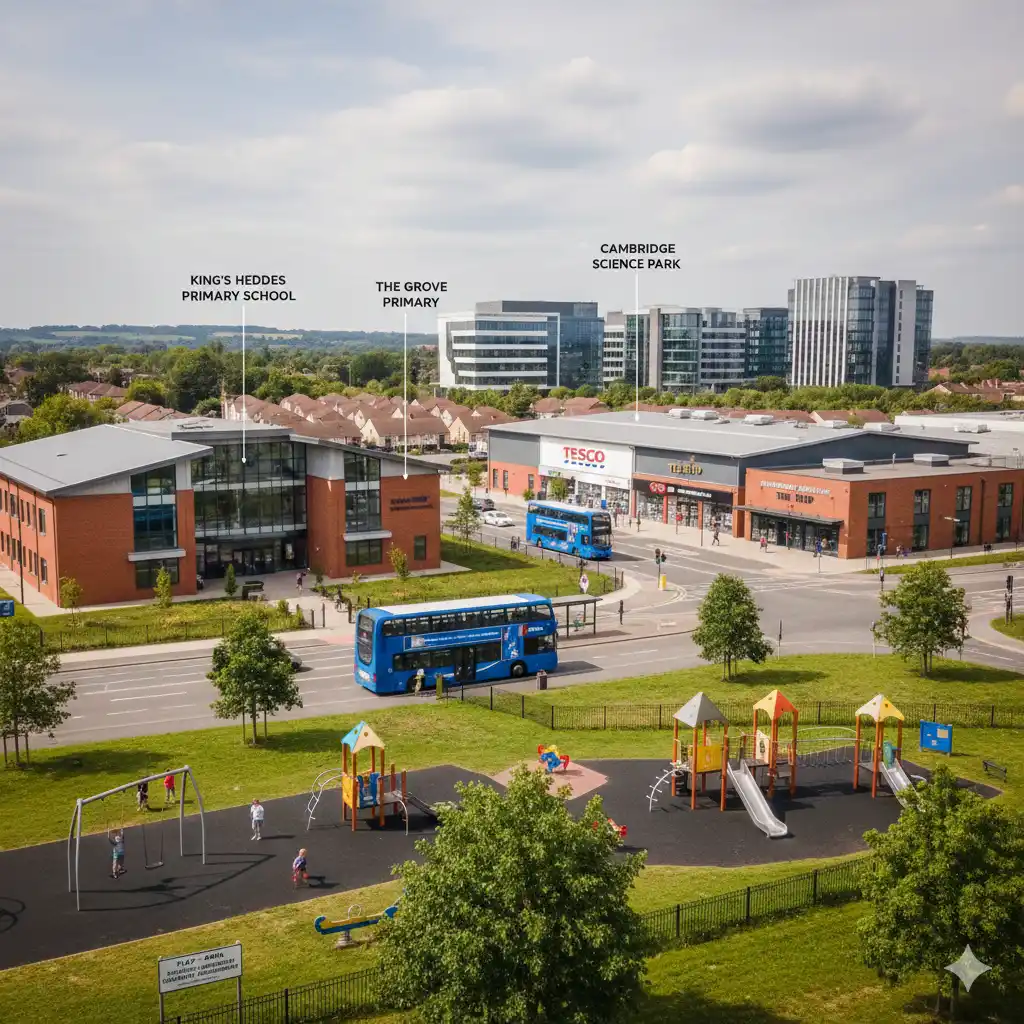
King’s Hedges balances affordability with quality living. Four “Good”-rated primary schools, including King’s Hedges and The Grove, serve families well. Tesco, Co-op, and local shops meet daily needs, while pubs like The Ship add community vibe.
Cambridge Regional College offers further education, and the Science Park provides jobs in tech and research—Cambridge’s leading cluster outside London. Low traffic noise (13% affected) and green spaces promote wellbeing, with play areas funded by developments. Bus links to the A14 ensure commutes under 20 minutes to center, slashing costs versus car-dependent areas.
Income Levels and Buyer Demographics
Residents enjoy average wealth (5/10) and professional occupations (5/10), with 6/10 degree-educated—aligning with Cambridge’s knowledge economy. Median pay at £34,821 citywide supports entry here, where lower quartile homes need £26,000-£39,000 net income versus £57,000+ centrally. This attracts young professionals, families, and key workers underserved by pricier zones.
Deprivation at 4/10 reflects economic challenges near high-wealth Science Park, but steady supply prevents exclusion. Greater Cambridge strategies target £20,000-£40,000 households with social rent, filling gaps unaffordable elsewhere.
Future Outlook and Sustained Affordability
Projections indicate modest growth, with councils planning more affordable units amid 33,500-home needs to 2031. Neighborhood Design Codes for Arbury/King’s Hedges ensure sustainable builds. Fuel poverty at 11.5% drives efficient new homes, aiding long-term costs.
Empty homes under 1% and viability assessments support delivery without bubbles. As Cambridge’s inequality persists top global science hub yet unequal King’s Hedges’ model endures. Buyers eyeing 2026 stability will find value persisting.
Rental Opportunities Abound
Renters fare well too, with council stock offering social rents at 45-55% market rates, affordable for £20,000-£40,000 earners. Private rents lag central premiums, bolstered by 31.6% private rental rise citywide but tempered here. New community facilities and parks enhance appeal without rent spikes.
In summary, King’s Hedges’ legacy of public housing, strategic developments, and locational perks cement its affordability.