

Key Points
- Why are Cambridge park and ride fares going up?
- What exactly is changing to adult and short hop tickets?
- How are child and group tickets affected?
- What are passengers and local users saying about the rise?
- How does Stagecoach justify value compared with city‑centre parking?
- What does this mean for wider transport and congestion plans?
- Adult return tickets on Cambridge park and ride services will rise from £4 to £4.50 from Sunday 22 February 2026, as part of Stagecoach East’s annual fares update.
- Short hop return tickets, including those between Babraham Road park and ride and Addenbrooke’s Hospital, and between Newmarket Road park and ride and the Abbey Stadium on match days, will increase to £3.80.
- Stagecoach East says the revised fares still offer “great value”, highlighting that an adult return of £4.50 includes up to 18 hours’ free parking and allows up to four children under five to travel free with the fare‑paying adult.
- Child return tickets on Cambridge park and ride services will be priced at £1 for children aged five to 15.
- Group tickets will also be impacted, with a Small Group DayRider set at £9 for up to three passengers travelling together, and a Large Group DayRider at £13 for up to five passengers.
- The adult park and ride return fare applies only on the specific park and ride route on which it is purchased; passengers who need to transfer between more than one bus must instead buy a Town Zone DayRider, now priced at £6.50.
- Some regular users have criticised the changes, arguing that the increase in bus fares and the need for additional tickets when changing buses in the city make journeys more expensive and less flexible.
- A Cambridge bus driver informed passengers that the ability to use a single park and ride return to transfer between park and ride services in the city centre will end with the new fares, prompting concerns among commuters.
- Stagecoach East maintains that, compared with city‑centre parking charges of up to £36.10 for more than five hours at the Grand Arcade, park and ride remains a significantly cheaper option for many travellers.
- The fare changes come amid wider debates in Greater Cambridge about the cost of public transport, car dependency and measures to reduce city‑centre congestion.
Cambridge (Cambridge Tribune) February 22, 2026 – Adult return and short hop return tickets on Cambridge’s park and ride bus network are set to rise in price from this weekend, as Stagecoach East implements a new fares structure that has drawn a mixed response from passengers and campaigners.
Why are Cambridge park and ride fares going up?
As set out in a detailed statement issued by Stagecoach East and reported by the Cambridgeshire Chambers of Commerce news service, the company is introducing its regular annual update to park and ride fares from Sunday 22 February 2026, affecting adult, child and group tickets across the network serving the city. Stagecoach East positions the increase as part of an effort to continue offering “great value options for travel” while responding to rising operating costs and maintaining frequent services into Cambridge.
According to the Chambers’ report, Stagecoach East emphasised that the new adult return fare of £4.50 still allows drivers to park for up to 18 hours free of charge and includes bus travel into the city, which the operator argues remains competitive when set against the cost of driving and parking in the city centre. In the same announcement, the company drew direct comparisons with the Grand Arcade car park, where all‑day weekend parking for more than five hours can cost £36.10, suggesting that the higher bus fares are offset by substantial savings on parking.
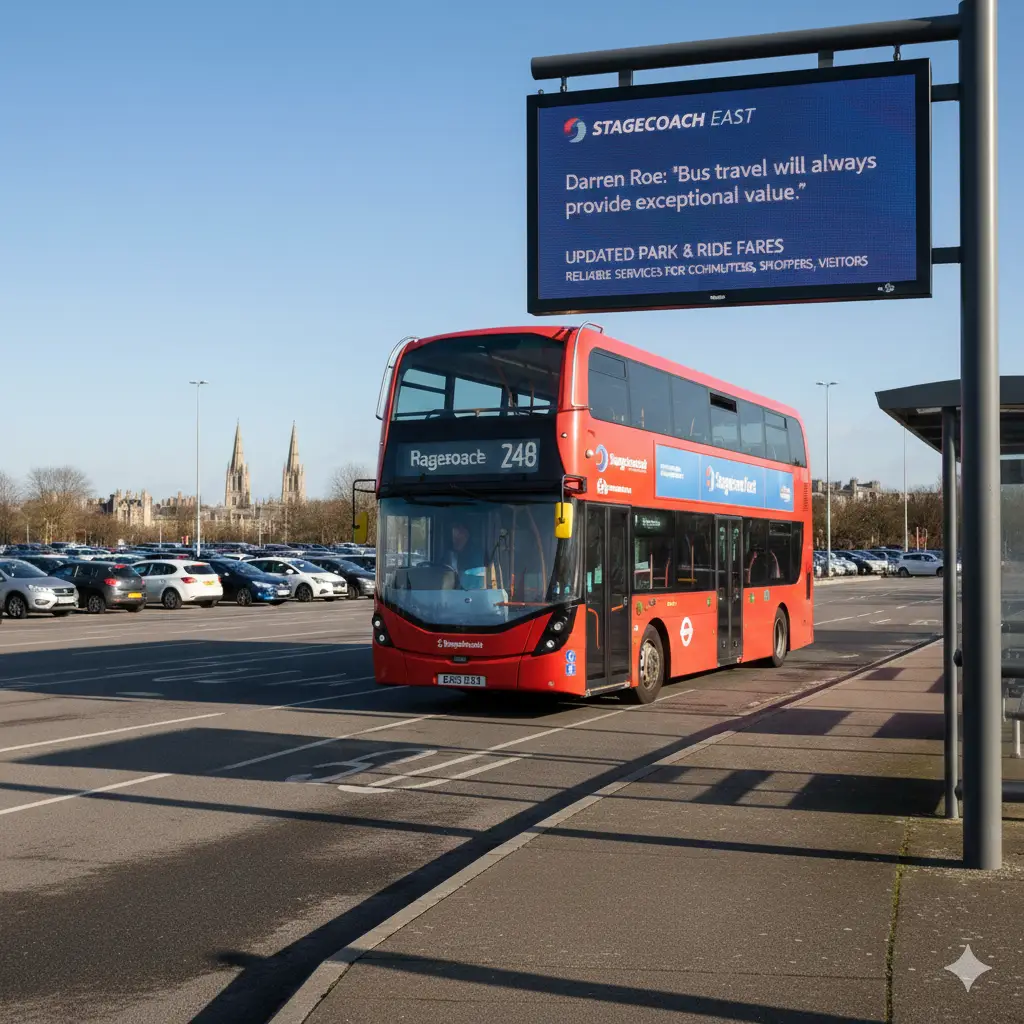
In a statement attributed to Darren Roe, Managing Director of Stagecoach East, and carried by the Chambers, the operator stressed that bus travel “will always provide outstanding value as a way to get out and about” and that the updated park and ride fares are intended to keep services accessible for commuters, shoppers and visitors. Roe argued that for a “thriving city, like Cambridge,” reliable park and ride services are central to enabling people to reach workplaces, shops, theatres and cinemas without the “stress and hardship” of driving through congested central streets and searching for a parking space.
What exactly is changing to adult and short hop tickets?
As outlined in the pricing information published by Cambridgeshire Chambers of Commerce, adult returns on Cambridge park and ride services will now cost £4.50, up from the previous £4 fare cited by local users posting about the change. The adult return ticket applies to a single park and ride route, offering a return journey into the city alongside up to 18 hours of free parking at the relevant park and ride site.
The same Chambers report confirms that short hop returns, used on specific shorter sections of the route, will be priced at £3.80. These short hop tickets cover journeys between Babraham Road park and ride and Addenbrooke’s Hospital, as well as between Newmarket Road park and ride and the Abbey Stadium on Cambridge United match days, with the return valid on that section only.
On the official Cambridge park and ride information site, return tickets are described as valid only on the day of purchase, with passengers needing to buy two single tickets if they plan to leave their vehicle for more than 24 hours and return the next day. That guidance makes clear that although parking is free for the first 18 hours, charges are applied for longer stays, and the bus ticket element is structured around same‑day travel.
How are child and group tickets affected?
The new fares schedule, as reported by the Cambridgeshire Chambers of Commerce, sets child return tickets at £1 for those aged between five and 15, continuing Stagecoach East’s policy of significantly reduced fares for younger travellers. In addition, the operator reiterates that up to four children under five can travel free with a paying adult holding a park and ride return, effectively enabling many families with very young children to travel at no extra cost beyond the adult fare.
For groups, the Chambers report notes that a Small Group DayRider ticket will be available at £9 for up to three people travelling together, while a Large Group DayRider will cost £13 and cover up to five passengers. These DayRider products are designed for outings with friends or family, allowing multiple journeys within the designated zone over the course of a day, and are presented by Stagecoach East as a way to keep per‑person costs relatively low even after the general fare increase.
Separately, the Cambridge park and ride information site explains that, if passengers board a park and ride bus, they may purchase standard Stagecoach products such as Dayriders and Megariders instead of a park and ride‑specific return, which can be attractive for those making multiple trips or connecting beyond the park and ride route. The same site sets out conditions for concessionary pass holders, who may continue to travel free within Cambridgeshire and Peterborough depending on the type of pass and time of travel, meaning not all regular users will be directly affected by the new cash fares.
What are passengers and local users saying about the rise?
On the community forum r/Cambridge, a user posting under the name “Time‑Influence4937” drew attention to the impending increase, stating that they “only became aware of it after a driver mentioned it” and warning fellow passengers that a £4 park and ride return would cost £4.50 “next week.” The same poster highlighted a change in ticketing rules, writing that the option to use a park and ride return to switch between park and ride buses in town would be removed, with passengers instead needing to buy a Stagecoach DayRider or a separate new ticket if they wished to transfer.
In that discussion, several contributors expressed concern that the higher fares and loss of free transfers would make park and ride less attractive compared with driving directly into the city. One commenter contrasted the cost for two adults using park and ride with the price of parking at Queen Anne Terrace, and also compared Cambridge’s offer with Oxford’s park and ride, which they described as allowing two adults and three children to travel for a single fee that includes bus transfers, suggesting Cambridge’s system now looks relatively poor value.
Other users in the same thread queried the structure and price of group tickets, asking whether higher‑priced options quoted by another commenter referred to group fares rather than standard returns, illustrating a degree of confusion about the different products and their conditions. While these online comments represent individual views rather than formal consultation, they underscore a perception among some local residents that the combination of fare rises and tighter transfer rules risks undermining the convenience that park and ride is supposed to deliver.
How does Stagecoach justify value compared with city‑centre parking?
In its promotional material and the release reported by the Cambridgeshire Chambers of Commerce, Stagecoach East heavily stresses the comparison between park and ride costs and central Cambridge parking charges. The company notes that an adult return of £4.50 with up to 18 hours’ parking included can be set against a headline figure of £36.10 for parking more than five hours at weekends at the Grand Arcade car park, a difference it presents as compelling for cost‑conscious visitors.
As reported in the Chambers’ article, Stagecoach East frames the new fares as still costing “less than the price of a high‑street latte,” even naming a Costa “Strawberry Coconut Matcha Iced Latte” priced at £6.25 to illustrate the point that a day’s return bus fare plus parking can be cheaper than a single premium coffee. The operator argues that when the avoided fuel costs, city‑centre congestion charges where applicable, and stress of urban driving are factored in, the updated park and ride fares remain a competitive and practical choice for many journeys into Cambridge.
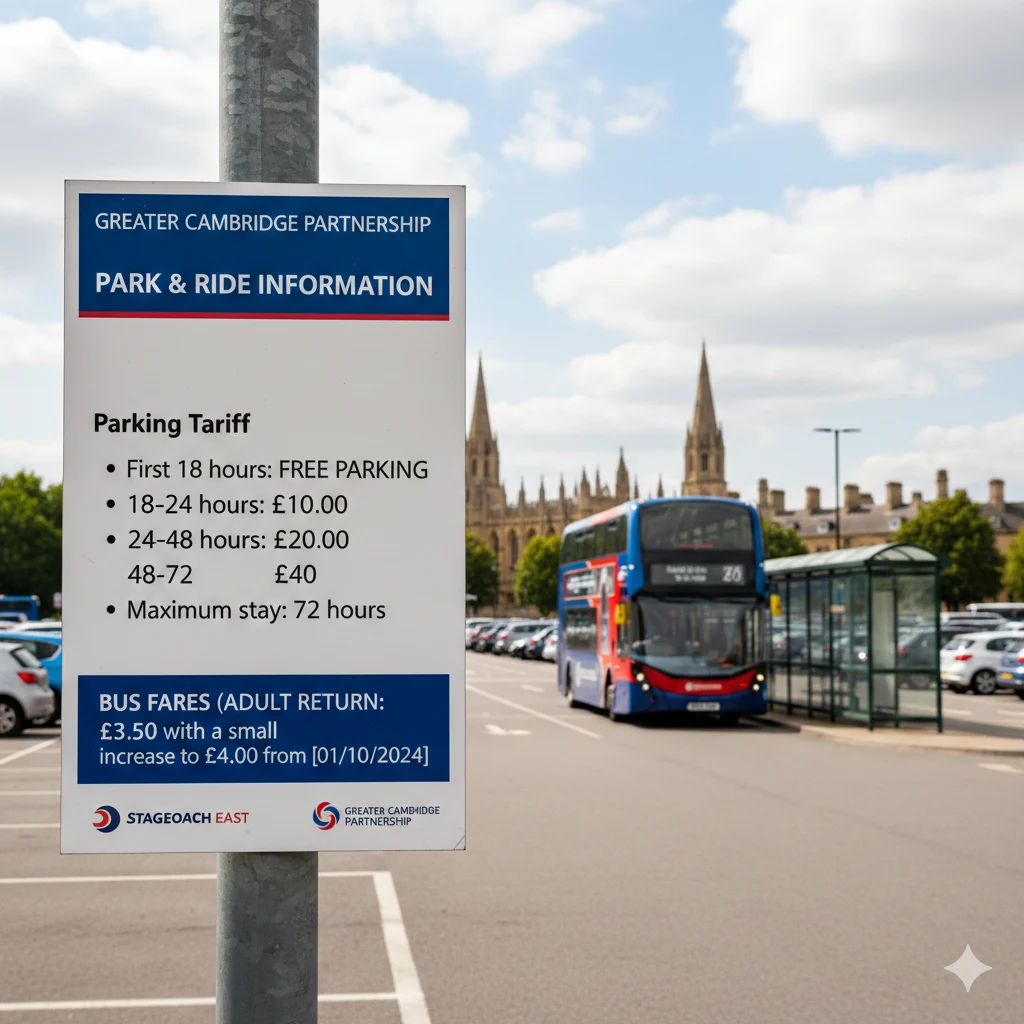
Documentation from the Greater Cambridge Partnership on park and ride options further shows that on‑site parking at Cambridge park and ride locations is generally free for the first 18 hours, with charges applying only for longer stays up to a 72‑hour maximum, reinforcing the idea that the main cost for most users is the bus fare rather than parking itself. That structure underpins Stagecoach East’s argument that even with a 50p rise on the adult return, the overall package compares favourably with paying directly for central parking, especially for those staying within the 18‑hour parking window.
What does this mean for wider transport and congestion plans?
The Greater Cambridge Partnership’s park and ride options report sets the fare changes against a broader context of efforts to reduce congestion, improve air quality and manage growth around Cambridge. The report explains that park and ride facilities play a key role as intercept points at the edge of the city, providing large‑scale free parking for limited durations and connecting travellers into the urban area by bus, with infrastructure such as waiting rooms, toilets and cycle parking.
In that assessment, the Partnership notes that parking is currently free for 18 hours, with charges after that and a maximum stay of 72 hours, and it highlights the importance of reliable and cost‑effective bus operations in persuading drivers to leave their cars at the edge of the city. The report discusses options for expanding or relocating certain park and ride sites, including Newmarket Road, as part of a “hybrid package” of improvements intended to support sustainable transport in the eastern approaches to Cambridge.
While the Partnership document does not set fares itself, its analysis suggests that pricing is one of several levers influencing whether drivers choose park and ride over driving into the city centre, alongside service frequency, journey time and perceived convenience. Against that backdrop, the latest Stagecoach East fare increases and ticketing changes will form part of the ongoing local debate over how best to balance affordability for passengers with the financial viability of bus services and the wider policy goal of reducing congestion in Cambridge.