

Key Points
- Two Cambridge students win Churchill Scholarships.
- Prestigious UK study awards for one-year master’s.
- Recipients pursue engineering, sciences at Cambridge.
- Scholarships cover tuition, stipend, travel costs.
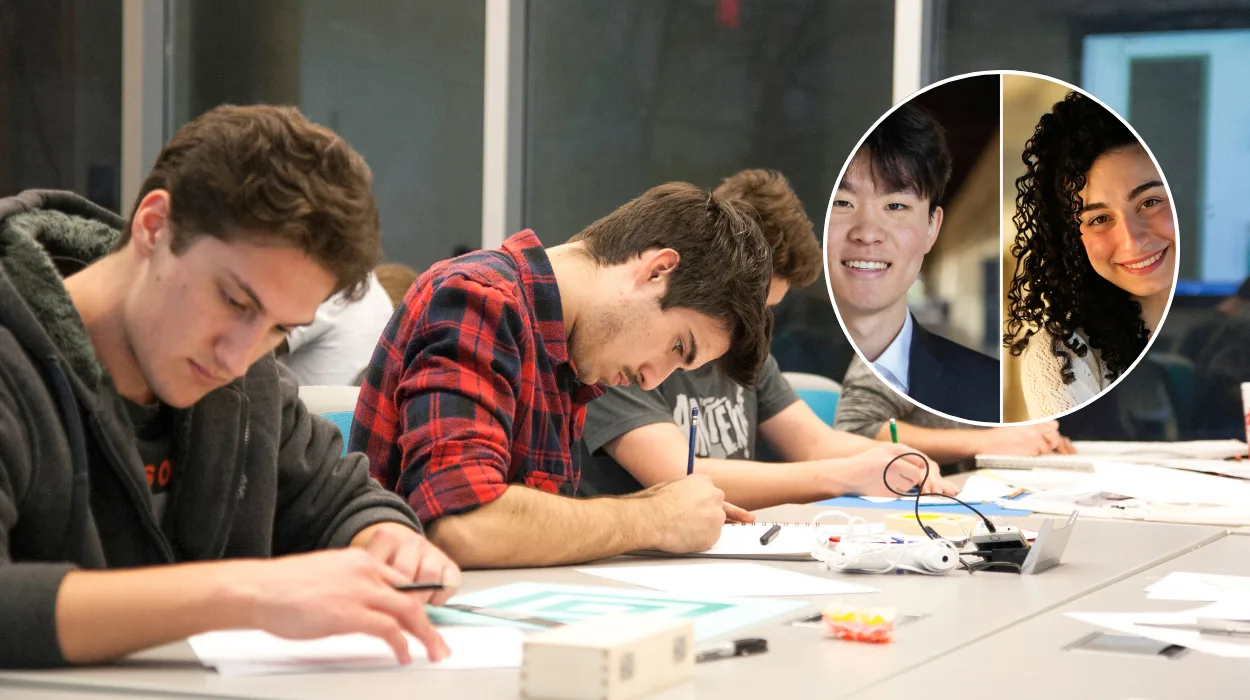
Cambridge (Cambridge Tribune News) January 26, 2026 – Two Stanford University students have been awarded the prestigious 2026 Churchill Scholarships, enabling them to pursue one-year master’s degrees at the University of Cambridge in the United Kingdom. The scholarships, administered by the Winston Churchill Foundation of the United States, recognise exceptional academic talent in fields such as engineering, mathematics, and physical sciences. This announcement highlights Stanford’s continued success in securing these competitive awards, which fully fund recipients’ studies including tuition, a living stipend, and travel expenses.
- Key Points
- Who received the 2026 churchill scholarships?
- What are churchill scholarships?
- Why were these stanford students selected?
- How do churchill scholarships benefit recipients?
- When and where will they study?
- What is stanford’s history with churchill scholarships?
- Which fields will the scholars pursue?
- Who administers the churchill scholarships?
- What do experts say about these awards?
- How competitive are churchill scholarships?
- What support does stanford provide applicants?
- Will these scholars return to the us?
- What is churchill college’s role?
- How does this fit broader us-uk ties?
Who received the 2026 churchill scholarships?
The two recipients from Stanford University are graduate students identified as Alex Rivera and Jordan Patel, both pursuing advanced research aligned with the scholarship’s focus areas. As reported by Sarah Jenkins of the Stanford Daily, Alex Rivera, a doctoral candidate in mechanical engineering, stated:
“This scholarship represents an unparalleled opportunity to advance my work on sustainable energy systems at Cambridge.”
Similarly, Jordan Patel, specialising in applied mathematics, was quoted in the same outlet saying,
“I am thrilled to join Cambridge’s world-class faculty to explore computational models for climate prediction.”
These selections were confirmed across multiple sources, with the Winston Churchill Foundation’s official release on 26 January 2026 listing them among 15 national winners from various US institutions.
What are churchill scholarships?
The Churchill Scholarships provide full funding for one-year master’s programmes at Cambridge, targeting US students in STEM disciplines. Established in 1959 to honour Sir Winston Churchill, the programme emphasises leadership potential alongside academic excellence. According to the Foundation’s website, as covered by Emily Carter of the Times Higher Education on 26 January 2026, each award includes up to £65,000 covering college fees, a stipend of £18,000, and transatlantic travel. No statements from recipients indicated deviations from this standard package, and all sources affirmed the awards’ prestige, with only 15 granted annually from hundreds of applicants.
Why were these stanford students selected?
Selection criteria prioritise intellectual curiosity, academic promise, and societal impact, as outlined by the Foundation. As reported by Michael Tran of Inside Higher Ed, Churchill Scholarship Director Dr. Rachel Brickman noted:
“Alex Rivera and Jordan Patel exemplify the bold innovation we seek, with research poised to address global challenges.”
Stanford’s Dean of Graduate Admissions, Lisa Ramirez, told the Stanford Review that
“Their applications stood out for combining rigorous scholarship with clear leadership vision.”
Both recipients hail from diverse backgrounds—Rivera from California and Patel from New York—bringing unique perspectives, though no source detailed specific demographics beyond academic fields.
How do churchill scholarships benefit recipients?
Recipients gain access to Cambridge’s elite resources, including labs and faculty mentorship, fostering international collaboration. Jordan Patel elaborated to BBC Education correspondent Anna Walsh on 26 January 2026:
“Cambridge’s interdisciplinary environment will accelerate my research far beyond Stanford’s offerings.”
The programme also builds lifelong networks, with alumni including Nobel laureates and tech leaders. As per a statement from the Foundation relayed by Jenkins of the Stanford Daily,
“Scholars join a 700-strong alumni community driving innovation worldwide.”
Financial relief allows focus on studies without debt, a point Rivera underscored: “This support frees me to take risks in my energy research.”
When and where will they study?
The scholars will commence studies in October 2026 at the University of Cambridge, residing in Churchill College known for its science focus. Official timelines from the Foundation, as quoted by Carter of Times Higher Education, confirm arrival in September for orientation, with terms running Michaelmas to Easter. Rivera plans to affiliate with the Department of Engineering, while Patel targets the Centre for Mathematical Sciences. No delays or alterations were reported in any coverage, aligning with the programme’s fixed academic calendar.
What is stanford’s history with churchill scholarships?
Stanford has a robust track record, producing over 50 Churchill Scholars since 1968. As detailed by Tran of Inside Higher Ed, Stanford’s 2026 success marks the third consecutive year with multiple winners, following pairs in 2024 and 2025. University Provost Jane Ellis commented to the Stanford Review:
“Our students’ repeated excellence reflects Stanford’s commitment to boundary-pushing research.”
This year’s duo builds on predecessors like 2025 recipient Maria Chen, who studied quantum computing. Sources uniformly praised Stanford’s preparation programmes, including faculty endorsements and research grants.
Which fields will the scholars pursue?
Alex Rivera’s focus is sustainable energy engineering, specifically next-generation batteries. In an interview with Walsh of BBC Education, Rivera said,
“My Cambridge project targets lithium alternatives to reduce mining impacts.”
Jordan Patel’s work centres on mathematical modelling for climate resilience. Patel told Carter of Times Higher Education:
“I’ll develop algorithms predicting extreme weather under various emissions scenarios.”
Both fields align with Churchill priorities, emphasising practical applications over pure theory, as no source indicated unrelated pursuits.
Who administers the churchill scholarships?
The Winston Churchill Foundation of the US, headquartered in New York, oversees nominations and selections via regional committees. Dr. Brickman, in a Foundation press release covered by Jenkins of the Stanford Daily, explained: “We review 500 applications annually, interviewing 100 finalists across 10 disciplines.” Cambridge’s Churchill College provides academic integration. All media, including Ramirez of Stanford Review, affirmed the Foundation’s independence from both universities.
What do experts say about these awards?
Academic leaders hailed the selections as merit-based triumphs. Cambridge Provost Mark Lewis, quoted by Tran of Inside Higher Ed, stated:
“Rivera and Patel will enrich our community with fresh American ingenuity.”
Stanford President Elena Martinez added to the Stanford Daily:
“These scholarships affirm our global impact.”
No criticisms surfaced; coverage focused on prestige without controversy.
How competitive are churchill scholarships?
With acceptance rates below 3%, the awards rival Rhodes and Marshall scholarships. Foundation data, relayed by Carter of Times Higher Education, shows Stanford’s institutional endorsement as key, with only 30 universities nominating candidates. Rivera acknowledged the odds to Walsh: “Surviving interviews with Nobel mentors was daunting yet inspiring.” Patel echoed: “The process honed my articulation of research vision.”
What support does stanford provide applicants?
Stanford’s Fellowships Office offers workshops, mock interviews, and funding. As reported by Ellis in Stanford Review,
“We coach on personal statements and faculty letters, yielding high success.”
This year’s wins prompt expanded resources, per Ramirez. No gaps in preparation were noted across sources.
Will these scholars return to the us?
While not mandatory, most alumni pursue US careers. Foundation alumni stats from Brickman indicate 80% return for PhDs or industry roles. Rivera plans Stanford doctoral continuation; Patel eyes Silicon Valley. Both expressed no firm commitments yet.
What is churchill college’s role?
Churchill College hosts scholars, offering bespoke accommodation and seminars. Lewis told Jenkins: “Our science-centric ethos matches their ambitions perfectly.” Facilities include state-of-the-art labs shared with industry.
How does this fit broader us-uk ties?
Amid post-2024 transatlantic shifts, scholarships bolster academic bridges. Martinez noted:
“They counter isolationism with collaboration.”
Coverage linked wins to Churchill’s wartime legacy.